

Vizag at inflection point: From Port City to powerhouse, says noted port evangelist
Says if leveraged intelligently, each major exit along this corridor - from Anakapalli to Gurralapalem and beyond - can emerge as a focused development node
image for illustrative purpose
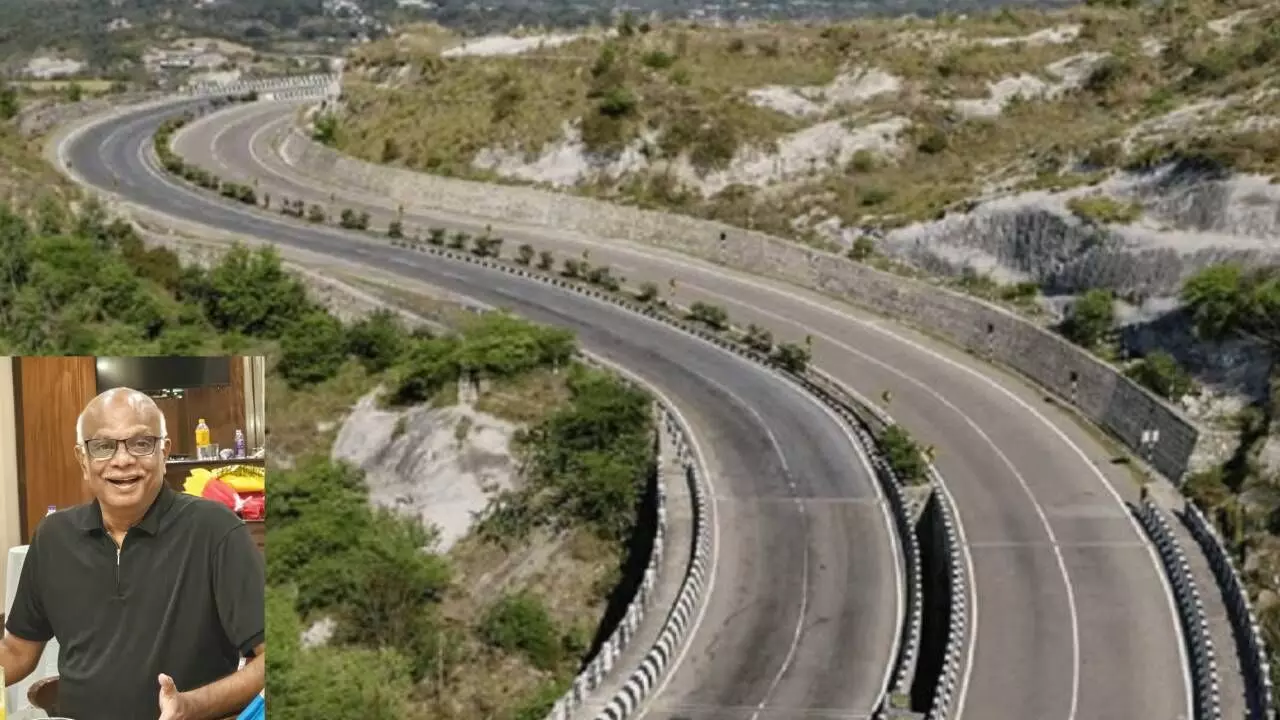
Visakhapatnam: Noted port evangelist Muralidharan Krishnamoorthy has said that Visakhapatnam, once known as a cluster of fishermen villages and subsequently transformed into a growing metropolis with rapid industrialisation, is taking the shape of a powerhouse with several mega investments in the pipeline.
Krishnamoorthy, former CEO of Andhra Pradesh Maritime Board, who hails from this city, told Bizz Buzz that for decades, Visakhapatnam has been known as India’s eastern maritime gateway — a dependable port city, a defence hub, and an industrial backbone of Andhra Pradesh. Having spent more than three decades in ports, logistics, and infrastructure development, he says he has seen Vizag evolving steadily. "Yet today, the city stands at a far more decisive crossroads than at any time in its recent history. What lies before us now is not incremental growth. It is the opportunity for structural transformation," he felt.
He pointed out that three powerful forces are converging in Vizag: digital infrastructure, port-led industrialisation, and next-generation connectivity. Investments in data centres and Global Capability Centres, the upcoming international airport at Bhogapuram, the proposed metro system, and new highway corridors are together laying the foundation for a truly integrated city-region. Alongside this, the vision of developing a new, well-planned city in the outskirts offers a rare chance to decongest the core and create space for future institutions, industries, and housing.
Krishnamoorthy said at the heart of this transformation is the Anakapalli–Vizag Bypass corridor, which already provides Vizag with a natural ring-road-like advantage. Starting from Anakapalli and extending around the city, this bypass has the potential to function much like Hyderabad’s Outer Ring Road — not merely as a transport facility, but as a powerful engine of urban and economic growth.
If leveraged intelligently, each major exit along this corridor — from Anakapalli to Gurralapalem and beyond — can emerge as a focused development node. These nodes can host integrated townships, educational and healthcare campuses, technology parks, logistics and industrial estates, and commercial hubs. Over time, they can absorb population growth, reduce pressure on the core city, and create multiple centres of employment and opportunity. He observed that this is precisely how Hyderabad’s ORR reshaped that city’s economic geography. It converted peripheral land into productive urban ecosystems. Vizag today has a similar moment before it — perhaps with even greater strategic advantage, given its port, airport, and coastal corridor. Equally significant is the strengthening of Vizag’s external connectivity — to central India, Telangana, and the eastern hinterland — through new and upgraded highway corridors. These routes are shrinking distances, improving reliability, and integrating Vizag more deeply into national supply chains. The city is steadily positioning itself as a gateway between the coast, the heartland, and global markets.
However, infrastructure alone does not create prosperity. It only enables it, he remarked and pointed out that the real test lies in governance, coordination, and execution. Roads, airports, ports, and metro lines must be supported by reliable water supply, power systems, drainage, housing, and social infrastructure. Land-use planning must be disciplined. Development must be guided, not left to chance. Without this, even the best infrastructure can produce congestion, inequality, and inefficiency.
"In this context, leadership matters. The experience of Andhra Pradesh shows that when political will, administrative focus, and professional execution come together, ambitious visions can be translated into reality. What many call the “Naidu magic” is, in essence, this ability to align vision with delivery. The scale of transformation that Vizag now requires can only be achieved through such sustained commitment," he opined.
To a question, he felt that equally important is investment in human capital. As digital services, advanced manufacturing, and high-value industries expand, Vizag must strengthen its universities, technical institutes, skilling centres, and research partnerships. A city grows sustainably only when its people grow with it.
From an economic perspective, Vizag is entering a virtuous cycle. Infrastructure attracts investment. Investment creates employment. Employment expands consumption and public revenues.
These revenues, if reinvested wisely, strengthen public services and reinforce growth. Protecting this cycle is the central policy challenge of the coming decade.
The expert said "as someone who has worked across greenfield ports, industrial corridors, and logistics systems, I firmly believe that Vizag possesses all the ingredients to become a model coastal metropolis for India."





