

Thrust on port-led economy, developing industrial clusters around ports, shipyards to propel growth in AP
Andhra Pradesh boosts growth with a strong port-led economy, developing industrial clusters around ports and shipyards to accelerate trade, jobs, and investments.
Thrust on port-led economy, developing industrial clusters around ports, shipyards to propel growth in AP
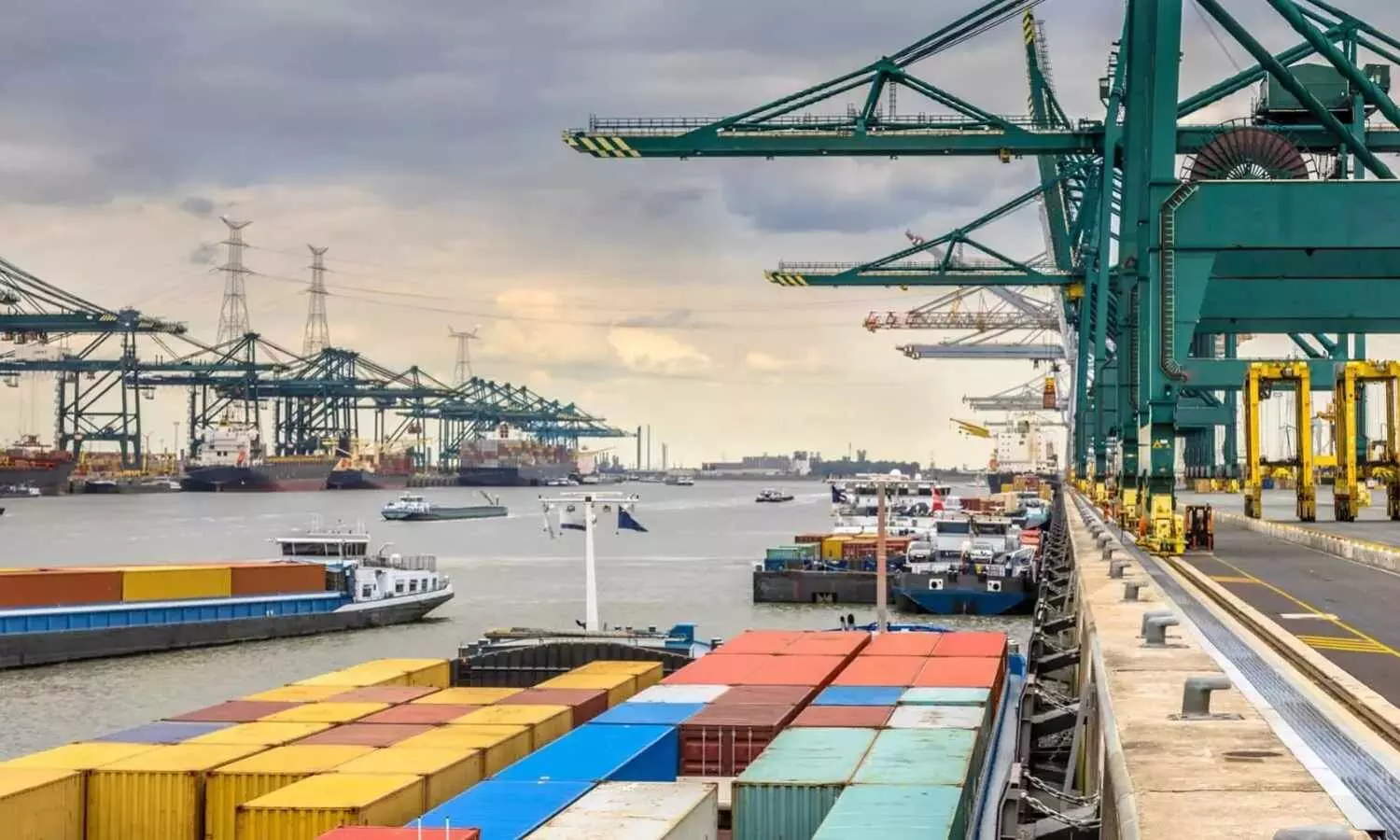
The mission to develop mega port-led industrial clusters across eight ports; shipyards, defence corridors and energy hubs taking advantage of nearly 1,000-km coastline will change the economic landscape of Andhra Pradesh.
The target is set to handle almost 20% of total cargo in the country through the greenfield and brownfield port infrastructure across coastal Andhra. Andhra Pradesh Maritime Development Board (APMB) is developing new ports at Mulapeta, Machilipatnam, Kakinada and Ramayapatnam with massive investment. Lands have been acquired to create dedicated industrial clusters around eight ports in a time-bound manner. The new ports with private players are being developed with an initial investment of Rs.16,000 crore.
Officials say the government is keen on ensuring 75% capacity utilisation by 2030 and meet the requirement for skilled manpower in the maritime industry by training 5,000 professionals by 2028 and establishing skill and maritime universities.
APMB has already drawn up proposals to mobilise over Rs.10,000 crore to create the required infrastructure around the ports so as to develop new industrial clusters around the ports. The amount required for infrastructure creation is likely to be obtained under the second phase of Sagarmala Mission.
In an exclusive chat with Bizz Buzz, Muralidhran Krishnamoorthy, a port evangelist who earlier served as CEO of APMB, said this is a bold step towards transforming India’s eastern seaboard, Andhra Pradesh is rolling out eight world-class port-based industrial clusters, anchored around both existing and upcoming deep-water ports including Mulapeta, Kakinada Gateway Port, Machilipatnam, Ramayapatnam, Visakhapatnam, Gangavaram, Krishnapatnam, and Kakinada Deep Water Port. Each cluster will have 5,000 acres or more, with additional land banks now being identified to meet long-term expansion needs. The State’s plan is to create sector-specialised, self-sufficient industrial cities, each integrated seamlessly with port logistics.
Muralidharan, a passionate champion of the blue water economy, said the sector-specific industrial hubs will create a lot of job avenues and will have a multiplier effect on the economy.
Every port will focus on one or more priority sectors such as steel and aluminium, automobiles and EV ecosystems, refinery and petrochemicals, power equipment and renewable energy, green ammonia and hydrogen, pharmaceuticals and chemicals.
Discussions are already underway with a large steel plant, a major refinery operator, and leading pharma groups, alongside investors in green ammonia, LNG terminals and advanced marine energy systems, shipbuilding, ship repair and ship-breaking zones
Muralidharan said a major addition to the programme is the development of shipyards and dry-dock complexes, ship repair and refit facilities, environmentally compliant ship-breaking yards, a dedicated defence manufacturing and maintenance corridor. He said "these will position Andhra Pradesh as a new hub for ship construction, defence maritime systems, offshore engineering, and blue economy innovation."
According to him, as part of massive cargo handling capacity, the combined port capacity under this programme will exceed 400 million tonnes per annum, with Gangavaram and Krishnapatnam expanding to 100 MMTA each. All other ports are planned for 50 MMTA capacity. "This will make Andhra Pradesh one of India’s highest-capacity maritime States," he remarked.
As part of Integrated Multi-Modal Logistics Backbone, each port ecosystem will include dedicated road and rail connectivity, container, bulk and liquid terminals, coastal shipping and inland waterways, E-commerce logistics hubs and fulfilment centres. To create Industrial township infrastructure, the multi-modal integration ensures end-to-end supply chain efficiency for domestic and export-oriented industries.
He said all this will have a massive economic impact. Once fully developed, the port-based clusters will add billions of dollars to Andhra Pradesh’s GSDP, generate lakhs of new jobs, attract large-scale domestic and global investments, create one of India’s most advanced maritime-industrial growth corridors
Muralidharan felt that the port-led industrialisation programme marks a historic shift in India’s coastal economic development model and positions Andhra Pradesh as a future maritime, manufacturing, defence, and energy powerhouse on the East Coast.





