

Experts stress on fortifying risk management under new safety code
Event focused on building strong safety culture through leadership commitment, employee empowerment, integration of safety as core operational function
Officials of CII Andhra Pradesh at a Conference on Industrial Safety and Environmental Protection in High-Risk Factories, in Visakhapatnam
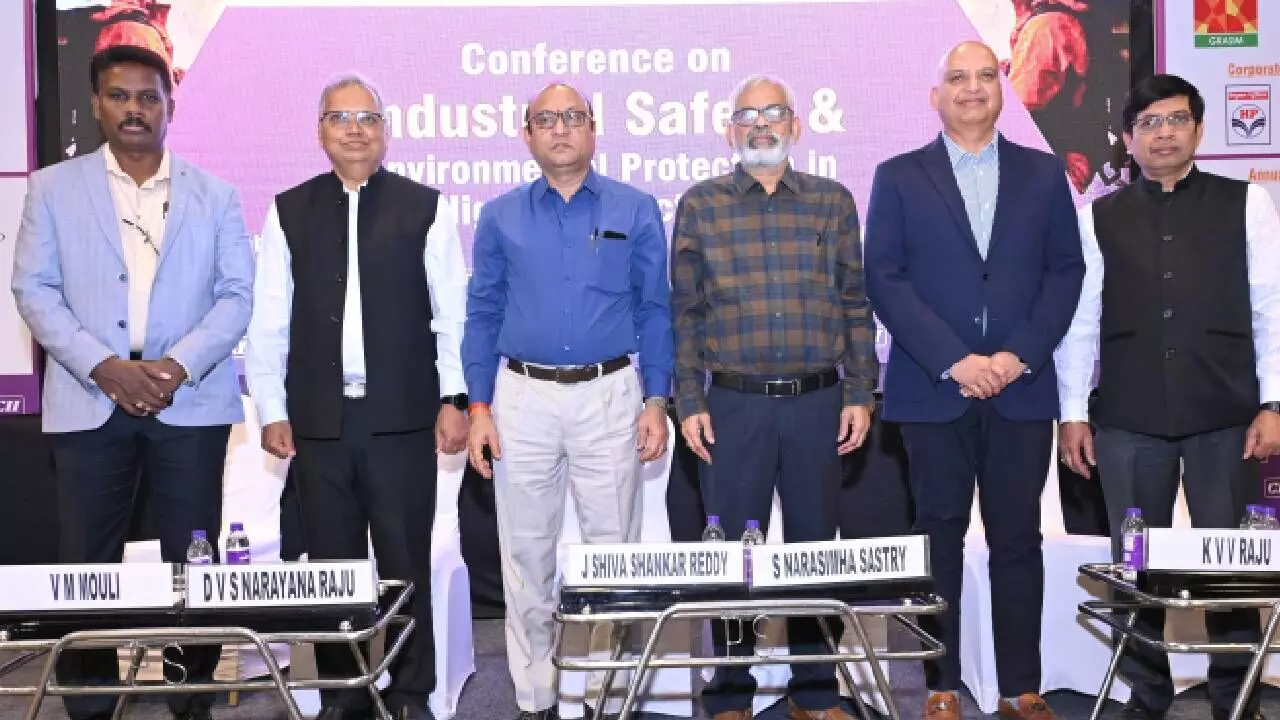
Visakhapatnam: CII Andhra Pradesh Conference on Industrial Safety and Environmental Protection in High-Risk Factories here discussed on how to strengthen safety and sustainability across chemical, pharmaceutical, and other high-risk industries.
The event focused on building a strong safety culture through leadership commitment, employee empowerment and integration of safety as a core operational function. It emphasised process safety, risk management, regulatory compliance, and environmental protection, while promoting proactive emergency preparedness and crisis management.
By bringing together industry leaders, regulators, and safety experts, the conference seeks to share best practices, encourage collaboration, and drive initiatives that prevent accidents, protect lives, safeguard the environment, and ensure long-term industrial growth. Speaking at the event held here recently, Joint Chief Inspector of Factories J Shiva Shankar Reddy stated that the factory sector is at a critical transition point with the imminent implementation of the Occupational Safety, Health and Working Conditions (OSHWC) Code, replacing the Factories Act that has been in force for many decades. He noted that the new Code mandates the appointment of Safety Officers across a wider range of factories and significantly enhances accountability for safety lapses.
Reddy emphasised that many major industrial accidents are caused by seemingly minor deviations from standard operating procedures, such as unsafe material handling, inadequate earthing, improper equipment use, and failure to follow permit and emergency systems. Citing past incidents, including chemical fires and gas exposures, he stressed that poor adherence to safety practices, rather than lack of regulations, remains a key contributor to accidents.
CII Visakhapatnam chairman DVS Narayana Raju stated that industrial safety is a strategic imperative for the chemical and pharmaceutical sectors, as it directly impacts human health, environmental protection, and business continuity.
“The safe handling, storage, and disposal of hazardous chemicals are critical to preventing accidents and protecting employees and surrounding communities. As operations scale up, process complexity and risk exposure increase, making safety a core business responsibility, not just a regulatory requirement,” he said.
Highlighting key industry challenges, Raju noted that hazardous processes, evolving regulatory requirements, human error despite automation, ageing equipment, and gaps in standard operating procedures continue to pose risks. He stressed that addressing these challenges demands proactive risk-based management systems, continuous monitoring, and strong leadership commitment to foster a culture of safety.
Visakha Pharmacity Ltd Managing Director PP Lal Krishna added, “Building a sustainable safety culture in high-risk industries requires visible leadership, robust process safety systems, and continuous capability development. Organizations must move beyond reactive approaches, adopting preventive, risk-based safety practices supported by structured hazard analysis, rigorous training, and continuous monitoring. Investing in people and systems is essential to safeguarding lives, protecting the environment, and ensuring long-term industrial growth.”





