

IndiGo Share Price: Buy, Sell or Hold Amid Widespread Flight Disruptions?
IndiGo shares rebound slightly after a steep crash triggered by mass flight cancellations, Moody’s warnings, rising costs and concerns over future earnings.
IndiGo shares recover marginally after a sharp fall amid widespread flight disruptions and operational challenges.
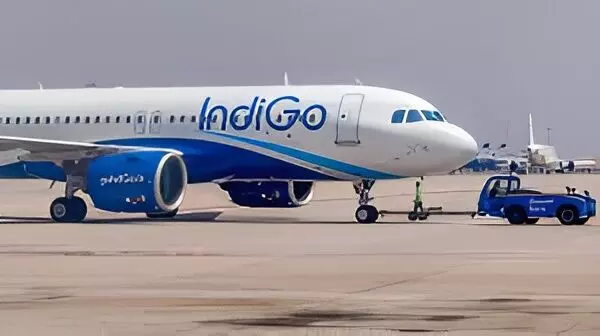
InterGlobe Aviation, the parent company of IndiGo, has entered a turbulent phase as ongoing flight disruptions trigger a sharp correction in its stock price. After a week-long sell-off, shares finally moved into positive territory on Tuesday, December 9, rising marginally by 0.23% in early trade.
The recovery comes after a severe fall on Monday, when IndiGo shares plunged nearly 9% — the airline’s worst single-day drop since February 2022. The stock has slipped over 13% in the last five sessions. The crisis has wiped out ₹53,258.84 crore in market capitalisation, shrinking IndiGo’s valuation from ₹2,40,637.92 crore to ₹1,87,379.08 crore.
Flight Cancellations Hit Performance and Reputation
The sharp decline was largely triggered by widespread flight cancellations across the country. These disruptions have rattled both investors and passengers, raising concerns over IndiGo’s operational preparedness.
Credit rating agency Moody’s Ratings warned that InterGlobe Aviation may face negative credit impacts owing to “insufficient planning and poor readiness for regulatory changes.” The agency added that IndiGo’s recent challenges highlight weaknesses in planning, supervision, and resource management.
According to Moody’s, revenue losses may arise from cancellations, passenger refunds, compensation liabilities, and possible regulatory penalties. As a result, the agency downgraded IndiGo’s human capital issuer category score from 3 to 4, citing slower hiring and increasing bargaining power of pilot associations.
Brokerage Estimates: Earnings Likely to Take a Hit
JM Financial expects IndiGo’s earnings for FY26 to be impacted by 8–9% if the disruptions last for 15 days. With around five days of operational challenges already completed, the brokerage has trimmed its available seat kilometres (ASK) estimates by 4% for Q3FY26.
While some near-term recovery may occur, analysts believe the airline still faces structural challenges, including rising costs and the risk of further regulatory actions.
What Should Investors Do?
JM Financial has reiterated its ‘reduce’ rating on IndiGo, saying that while the immediate earnings impact is mostly priced in, the market has not yet factored in long-term cost pressures or potential management changes.
Technical analysts also paint a cautious picture.
Anshul Jain, Head of Research at Lakshmishree, noted that IndiGo recently broke below its crucial support at 5,505 and tested levels around 4,842.5. Although the stock is currently in oversold territory and may see a short-term bounce toward 5,200, the broader trend remains weak.
Jain warns that unless IndiGo reclaims its earlier support zone with strong momentum, the stock may drift toward the ₹4,000 level, which now appears to be a high-probability scenario.
Disclaimer: This article is for informational purposes only. Market views belong to analysts cited in the story. Investors should consult certified advisors before making investment decisions.





