

Silver surges nearly 5% in futures trade
Silver surges nearly 5% in futures trade
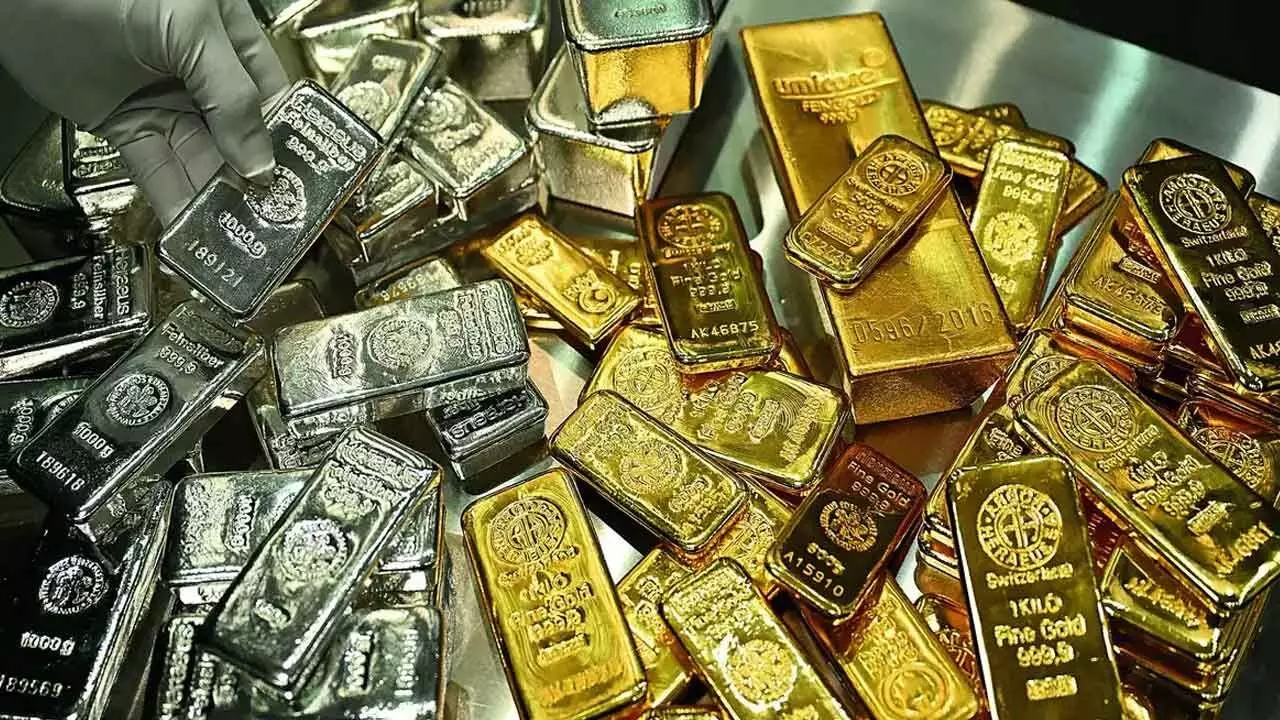
New Delhi: Gold surged by Rs 2,946 to Rs 1,59,822 per 10 gram in the futures trade, tracking strong trends in the international market amid renewed global tariff worries. Gold futures for April delivery rallied by Rs 2,946 or 1.88 per cent, to Rs 1,59,822 per 10 grams in a business turnover of 7,515 lots. In the international market, gold futures on the Comex advanced $96.61, or 1.9 per cent, to $5,177.51 per ounce.
Silver prices rose nearly 5 per cent to Rs 2,65,282 per kg in the futures market as renewed global tariff tensions boosted demand for safe-haven assets.
On the Multi Commodity Exchange (MCX), silver futures for March delivery zoomed Rs 12,338, or 4.88 per cent, to Rs 2,65,282 per kg in 6,024 lots. In the international market, comex silver futures for March contract rose 5.58 per cent, or $4.5, to $86.93 per ounce.
According to Jigar Trivedi, Senior Research Analyst at Indusind Securities, gold climbed in the international market, as renewed tariff worries prompted a rush to safe-haven assets.
On Saturday, US President Donald Trump announced plans to raise global tariffs from 10 per cent to 15 per cent, following the US Supreme Court’s rejection of his “reciprocal tariffs”. Trump confirmed the new duties would take effect immediately, although it remained unclear whether he had signed any official document.
Amid this, India postponed negotiations aimed at finalising an interim trade deal with Washington. “Investors also faced growing fears of a potential US military strike on Iran, with nuclear talks at an impasse. However, negotiators are scheduled to meet again in Geneva on Thursday,” he said.
Silver climbed to trade above 5 per cent, extending gains to a fourth session as renewed tariff tensions boosted demand for safe-haven assets, Jigar Trivedi, Senior Research Analyst at Indusind Securities, said.
Meanwhile, US President Donald Trump raised a global levy from 10 per cent to 15 per cent following the US Supreme Court’s rejection of his “reciprocal” tariffs.





