

With govt encouraging startups in spacetech domain, we are keen to align with such initiatives
Demand for spacetech services is on the rise across various sectors in India & world, says Ramakrishnan Rajagopalan, Senior Technical Advisor, SkyServe
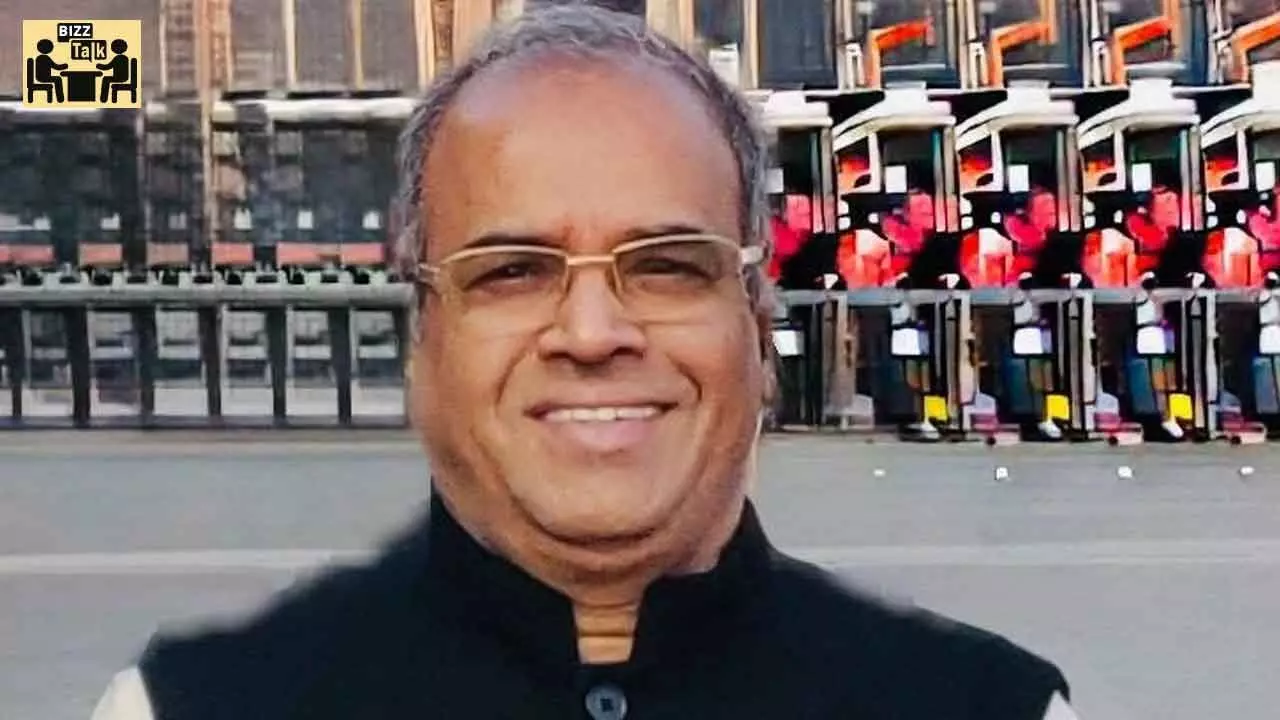
Ramakrishnan Rajagopalan, Senior Technical Advisor, SkyServe
India’s space technology sector has made a name for itself in the world with advanced technological services, serving the needs of various sectors. Indian Space Research Organisation (ISRO) is one the world’s reputed space agencies that has delivered several mission critical space projects for the country.
Indian government, ISRO and various government agencies are encouraging startups in the country to innovate and commercially successful in their bids to make India a space power in the world. Hearteningly, several startups are complementing India’s spacetech journey with their unique innovations.
SkyServe is one such startup that has been doing pioneering work in this domain. Its edge computing-powered technological applications are enabling enterprises and government agencies to get real time satellite data without any latency. Its algorithm empowers customers to get relevant and customised data at scale for their critical uses.
In a conversation with the Bizz Buzz, SkyServe’s Senior Technical Advisor, Ramakrishnan Rajagopalan said that the company is collaborating with various prestigious space agencies of the world including ISRO, NASA and SpaceX. Rajagopalan is a veteran ISRO scientist, who had led several projects of the Indian space agency during his tenure.
On the demand for SkyServe’s services, he said that company is witnessing much demand from sectors like space, agriculture, urban planning, and many more. With a 30-member strong engineering team, SkyServe is helping multiple space agencies in different technology domains.
Given its service offering of real time data provider with actionable intelligence, the company plans to launch multiple offerings across domains
Can you brief overview about the operations of SkyServe? What problem statement are you solving in the spacetech domain?
SkyServe was founded in 2020. Adithya Kothandhapani, Vinay Simha, Vishesh Vatsal are the founders of this company. I am the technical advisor of the company. Our mission is to empower satellite operators to process onboard. The special feature of our operation is that we leverage edge computing. That helps in reducing latency. As a result, bandwidth cost is reduced. When the satellite is on orbit, it is global coverage.
It means more customers can be served by us. We have a strong record of accomplishing successful projects. We have been collaborating with NASA’s Jet Propulsion Laboratory (JPL) and D-Orbit, a space logistics company, to advance Earth observation systems.
There are a lot of applications, which help multiple sectors including agriculture, vegetation classification, flood mapping, urban planning and many more. So, we operate in specetech domain, leveraging on-edge AI computing for processing satellite data. We collaborate with many space agencies, satellite operators, and OEMs.
Are you able to process satellite data in real time? Is that the right understanding?
Yes, we are able to reduce latency to a significant extent. It is literally on a real time basis. We process data in minutes. A huge amount of data is collected from satellite mapping. We are able to process relevant data points from such data collected in matter of minutes.
For instance, if a flood like situation has happened, then we can provide data on real time basis. We are leveraging advanced machine learning, deep learning, and other technology areas. Earlier, we used to leverage traditional processers. But now, we are leveraging AI-powered processers. That is making the technology offering very efficient.
Can you provide some views about the company’s client profile?
We serve multiple customers across domains. We are engaged with NASA, D-Orbit, and other foreign agencies. In India, we are working with several agriculture communities.
We are working with government agencies in the space of flood data detection. In India, we work with ISRO. We are complementing ISRO in some areas. We have completed several projects and many projects are on the pipeline.
Are you witnessing increasing demand for your service offerings? How is the project pipeline?
Yes, we are seeing increasing interest among customers for our services. We are working with several reputed space agencies across the world. Recently, we have collaborated with SpaceX (Elon Musk-owned space agency). The key advantage of ours is onboard computing and edge computing, which we use.
We have a strong human resource team with more than 30 employees. We participate on tenders floated by multiple agencies. Thus, we win projects. Our technology is our key differentiator.
Spacetech’s use cases in defence sector are rising. What is your level of engagement with the defence sector players? Can you throw some light about your engagement in other sectors like urban planning and agriculture?
We are engaged with the defence sector in target identification segment. That is the level of engagement. As far as other sectors are concerned, we are engaged with various sectors. Data availability is the key in the spacetech domain. As we get more data, our service offerings will be more.
There is a high demand for spacetech services in infrastructure sector. Also, insurance sector is witnessing sound use of satellite data points. Maritime, fishery, environmental monitoring, and related domains are on our radar. These are part of our research.
We will complement the government agencies, which are doing this. One of the major advantages of using of service offering is that our cost is one third of the cost charged by other service providers. We have got very efficient algorithm and our services are witnessing good demand.
As far as data availability is concerned, we collaborate with various space agencies on multiple subjects. As part of this collaboration, we are able to access vast amount of data from the agency. It is a collaborative process.
Can you throw some light about SkyServe’s engagement level with Indian Space Research Organisation (ISRO)?
I was a ISRO scientist. I was a Project Director for some of ISRO’s mission. We help ISRO in improving some of its projects. We participate in some of the projects of ISRO.
What is the team size now? Are you planning to increase the team size?
We have around 30 people in our team now. Aero engineers, computer engineers, electronics engineers and other people are part of the team. Apart of our team people, we get very good interns.
These interns, who are highly skilled technology grads, come from India and abroad. We encourage young students to join us. They contribute less initially but over a period of time, that becomes very substantial.
What are new areas, you will explore in coming time? What is the biggest strength area of SkyServe? Can you throw some light on this aspect?
AI-driven intelligence has various applications on earth observation. We may enter into planetary domain of spacetech, if there is an opportunity.
Actionable intelligence on real time is the area, we are focussing on because when anything happens, such intelligence has real value. The government is encouraging participation of startups in various sectors in the spacetech space. We will be keen to strategically align ourselves with such initiatives.





