

U.S. States Challenge Trump’s $100,000 H-1B Visa Fee in Court
California and 19 U.S. states sue to block Donald Trump’s proposed $100,000 H-1B visa fee, calling it illegal and harmful to businesses and workers.
U.S. states challenge President Donald Trump’s $100,000 H-1B visa fee in federal court.
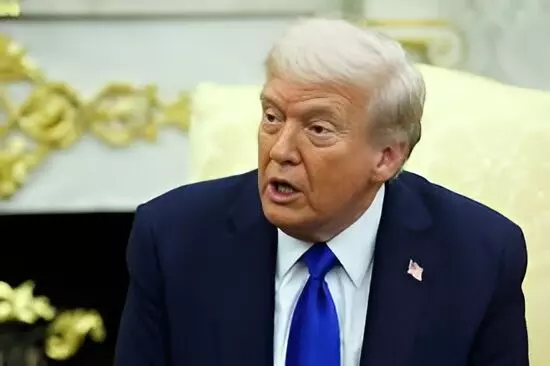
California, in conjunction with 19 other U.S. states, has initiated legal action to prevent President Donald Trump from imposing a $100,000 fee on new H-1B visas for highly skilled foreign workers. The legal action was taken to court on Friday, December 12, 2025, in a federal court in Boston.
The lawsuit is at least the third attempt to challenge the fee, which was first revealed by President Trump in September and is a big hike up from H-1B application costs, which now vary from $2,000 to $5,000, depending on the employer.
The California Attorney General Rob Bonta's office argued that the President does not have the power to charge such a fee and that it is illegal under federal law. The lawsuit claims that the immigration authorities can only levy fees that are necessary to cover the administrative costs of visa programs, not to make a profit.
The H-1B visa program allows U.S. employers to hire foreign workers in specialized fields, where the technology industry, especially in California, is the largest consumer. Bonta cautioned that the high fee might cause the institutions that provide the necessary services, such as education and health care, to suffer financial losses, thus exacerbating the problem of having fewer workers and even leading to the shutting down of some services.
States joining California in the lawsuit include New York, Massachusetts, Illinois, New Jersey and Washington.
In response to similar lawsuits, the White House has defended the fee, stating that it is a lawful use of presidential authority and is intended to curb alleged misuse of the H-1B programme by employers.
Critics of the H-1B system argue that it is often used to replace American workers with lower-paid foreign labour. However, business groups and major corporations maintain that the programme is vital for addressing shortages of skilled workers in the U.S. economy.
The U.S. Chamber of Commerce, along with a coalition of unions, employers and religious organisations, has also filed separate lawsuits challenging the fee. A federal judge in Washington, D.C., is scheduled to hear arguments in the Chamber’s case next week.
As per the decree, fresh H-1B visa holders would not be allowed to enter the United States unless their sponsoring employer pays the fee of $100,000. The administration has made it clear that the regulation would not be applicable to current H-1B holders or those who applied prior to September 21.
Trump has cited his authority under federal immigration law to restrict the entry of foreign nationals deemed detrimental to U.S. interests. However, Bonta’s office contends that the proposed fee far exceeds the actual cost of processing H-1B petitions and is therefore unlawful. The lawsuit further argues that the U.S. Constitution prohibits the President from unilaterally imposing revenue-generating fees, a power reserved exclusively for Congress.





