

Trump's Tariff Threat on Rice: Its Consequence for Indian Basmati Exports
US President Trump might ban Indian rice if he imposes new tariffs, but basmati will most probably be untouched. Find out the ways through which Indian rice exports, US consumers, and global trade will be affected.
image for illustrative purpose
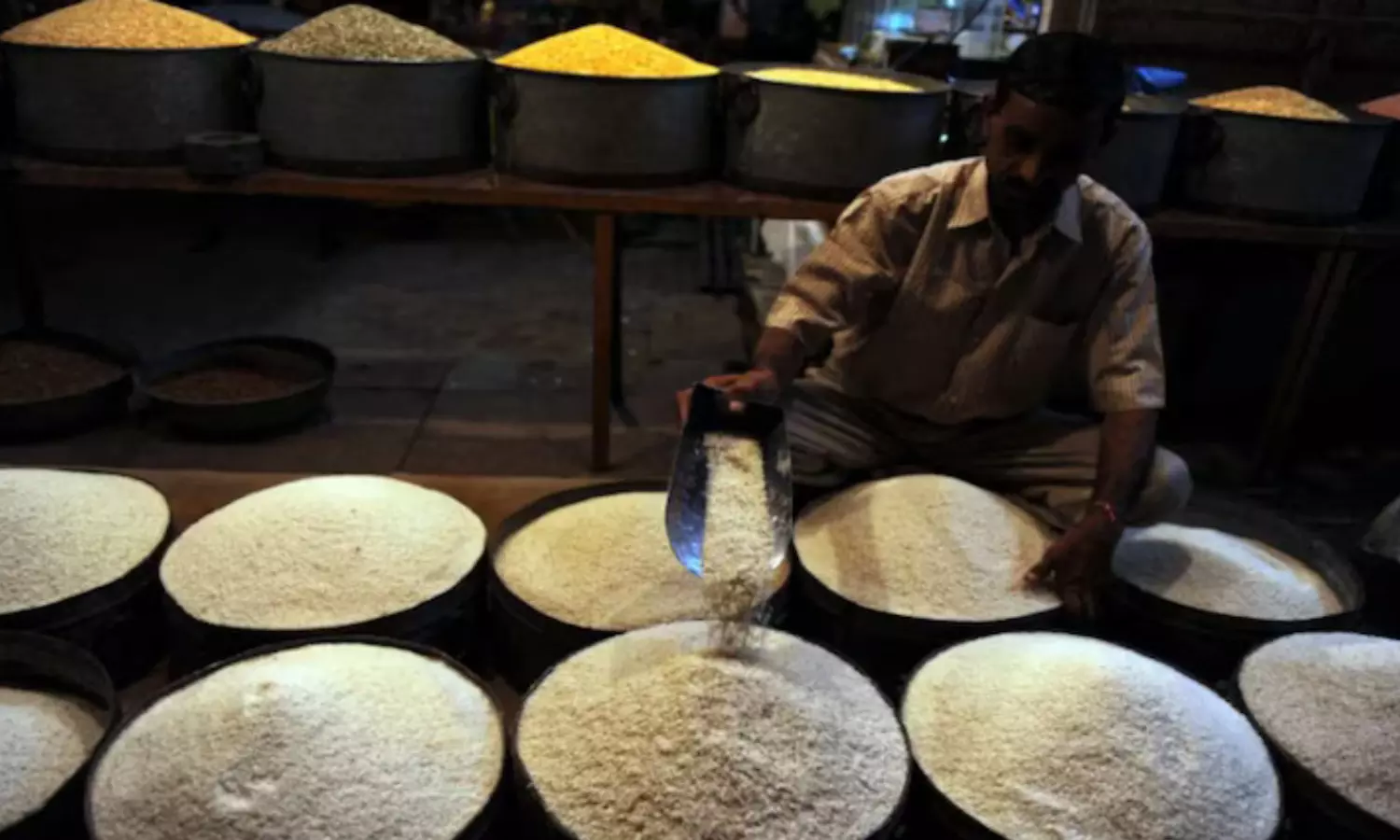
President of the United States Donald Trump’s latest alert regarding the unlikelihood of imposing new tariffs on rice imported from India has made exporters anxious. Nevertheless, analysts as well as industry insiders argue that Indian basmati rice exports won’t suffer much—if at all, American consumers would be the ones to bear the brunt of the prices if impositions of tariff were to take place.
What is at Stake: Basmati or Non-Basmati?
The Secretary General of General American Rice Exporters Association, Ajay Bhallotia, noted Trump’s mentioning of India together with Vietnam and Thailand. “This mainly targets the non-basmati rice,” he explained, stating the fact that basmati rice exports to the USA are nearly five times larger than the non-basmati rice exports so the Indian premium basmati could still be affected moderately only.
India’s Rice Export to the US
Basmati Rice (FY 2024-25): $337.10 million, 274,213 metric tonnes
Non-Basmati Rice: $54.64 million, 61,341 metric tonnes
As per the Indian Rice Exporters Federation (IREF), the USA is the 4th largest destination for Indian basmati rice and the 24th for non-basmati rice. The total volume of Indian rice exports into the US is approximately $390 million (around Rs 3,510 crore).
Current Tariffs and Their Influence
A 10% tariff has already been imposed on Indian rice, which then got further increased to 40% as a result of a previous 50% tax hike. Despite this, exports were still at the same level primarily due to the fact that consumer prices were raised to absorb the whole of the tariff increase, while Indian farmers and traders reaped the benefits of the price stabilization.
Who is the Victim?
The IREF perceives that any forthcoming duties will primarily impact the consumers in the US rather than the exporters in India. Indian basmati rice is characterized by its unique scent, texture, and flavor, and thus, it simply cannot be replaced in traditional recipes like biryani. It would be very difficult to use any other rice grown in the US as a substitute for the true Indian variety, and thus, the demand in the West Asian and South Asian communities will always be there.
Resilience in the Industry
It is the experts' view that the Indian rice export industry is still very much strong and very competitive on the global stage. The industry keeps flourishing notwithstanding the threat of tariffs as its markets have diversified and trade partnerships expanded.
Dev Garg, an IREF Vice President, said: “The USA is a significant market, but overall, the situation with India's rice exports is quite favorable since they are well-diversified all over the world. We are also working hard to keep our current trade links and are already on the lookout for new markets.”
Trump’s Remark
During a White House function where billions of dollars in new support for U. S. farmers was announced, Trump referenced the so-called “dumping” of rice from India, Vietnam, and Thailand as one of the key issues. “They should not be dumping... you can’t do that,” he said, thus pointing towards potential tariffs on agricultural imports.





