

Trump rejects international law amid aggressive global moves
image for illustrative purpose
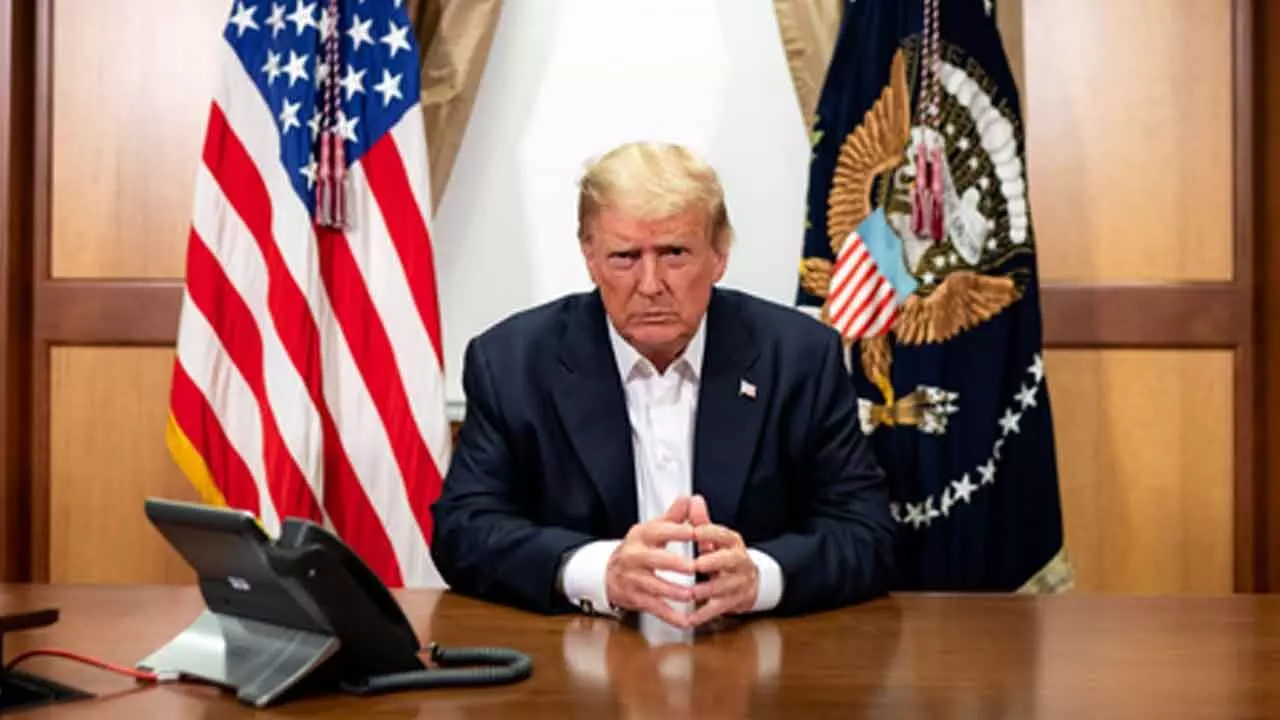
United States President Donald Trump has dismissed the need for international law, insisting that only his “own morality” guides the aggressive actions his administration is taking worldwide, including the recent abduction of Venezuelan President Nicolas Maduro.
“I don’t need international law. I’m not looking to hurt people,” Trump told The New York Times on Thursday. When asked whether he feels bound by international law, he added, “It depends what your definition of international law is.”
Trump has increasingly shown a readiness to use military force to achieve US foreign policy objectives. On Saturday, US forces launched early-morning attacks across Caracas and at Venezuelan military bases, ultimately abducting Maduro. Critics say the operation violated the United Nations Charter, which prohibits the use of force against a state’s sovereignty or political independence.
Following the operation, Trump stated that the US would “run” Venezuela and exploit its oil reserves, while claiming his administration would coordinate with interim President Delcy Rodriguez. However, officials made clear that the US intends to “dictate” policy to the interim government and warned of a potential “second wave” of military action if demands are not met.
“If she doesn’t do what’s right, she is going to pay a very big price, probably bigger than Maduro,” Trump told The Atlantic on Sunday.
Trump has also suggested possible strikes against Colombia’s left-wing President Gustavo Petro and intensified his push to acquire Greenland. In June, he directed Israel in bombing Iran’s nuclear facilities, escalating tensions in the region.
Stephen Miller, a senior aide, criticized the post-World War II international order, stating that the US would “unapologetically” use its military might to safeguard its interests. “We’re a superpower, and under President Trump, we are going to conduct ourselves as a superpower,” Miller said on CNN.
Experts, however, warn that ignoring international law could have far-reaching consequences. International law, which encompasses UN conventions and multilateral treaties, exists to regulate relations between states and prevent unchecked aggression.
Margaret Satterthwaite, UN special rapporteur on the independence of judges and lawyers, described the US position as “extremely dangerous.” She warned that undermining international law could encourage other powers to pursue aggressive actions. “International law cannot stop states from doing terrible things if they’re committed to doing them,” she told Al Jazeera. “But failing to insist on the laws we have now risks a much worse slippery slope.”
Yusra Suedi, assistant professor of international law at the University of Manchester, echoed these concerns, cautioning against a “might is right” approach. “It signals something very dangerous. Other states, such as China eyeing Taiwan or Russia with respect to Ukraine, may feel justified in acting similarly,” she said.
Ian Hurd, professor of political science at Northwestern University, highlighted the historical dangers of US interventions in Latin America. “The region has seen over a century of US invasions and coups, often resulting in instability, repression, and human rights abuses,” Hurd said. “Trump’s policies in Venezuela follow a pattern where the US attempts to decide how other nations in the Americas are governed, but history shows these interventions rarely succeed.”
As tensions rise in Caracas and across the region, the world is closely watching how the US’s bold approach to international law may reshape global norms and set precedents for the use of force.





