

The Edges of Authority: Examining Recruitment in U.S. and EU Border Enforcement
A detailed comparison of U.S. Border Patrol and EU Frontex recruitment, training, accountability, and political context — revealing how borders are governed differently.
image for illustrative purpose
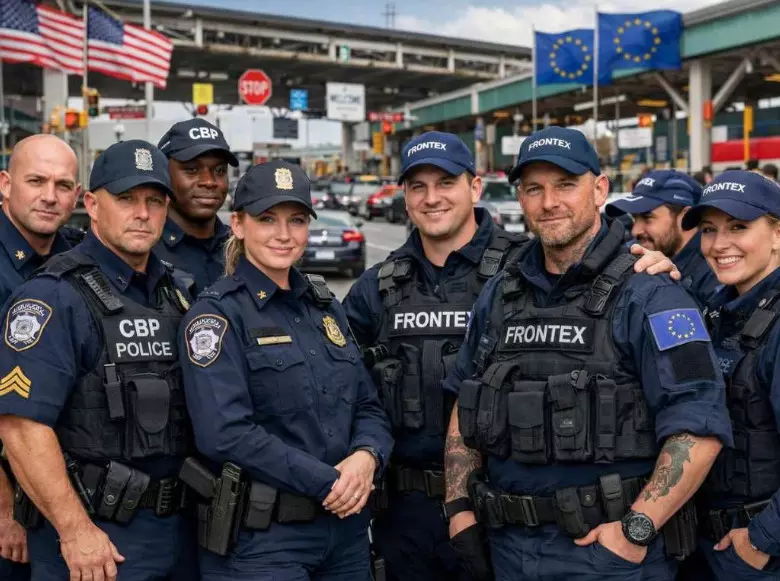
Border protection stands as a stark indicator of a country's control over its domain—and the bodies tasked with this duty are influenced equally by political ethos, legal structures, and practical demands. Within the United States, Customs and Border Protection (CBP), along with its Border Patrol personnel, plays a pivotal role in ongoing discussions surrounding immigration policies, regulatory actions, and collective self-definition. Across the European Union, the more recent European Border and Coast Guard Agency — known widely as Frontex — seeks to craft a unified approach to safeguarding outer perimeters among 27 nations facing varied immigration strains, distinct legal heritages, and differing policy emphases. The methods these organizations employ to attract, prepare, and assess individuals charged with handling some of today's most disputed policy domains offer insights into wider matters of administration, public responsibility, and operational effectiveness at a national level.
Within the European framework, aspirants to the Frontex Standing Corps undergo a demanding, phased vetting procedure that starts with qualification verifications, advances via assessments of linguistic abilities and general expertise, and peaks with evaluations of bodily capability and psychological fitness prior to a concluding health review. This Frontex exam sequence encompasses digital evaluations of core knowledge and proficiency in English, tests of physical endurance, analyses of mental attributes, structured dialogues centered on skills, and preliminary medical inspections—all of which participants must complete in order, with limited options for adjustments in timing.
On the other hand, the American Border Patrol enlistment mechanism draws from a long-standing heritage in federal policing, set within one unified nation boasting a highly concentrated preparation system. Those applying to serve as Border Patrol Agents are required to file comprehensive submissions via government employment sites, succeed in an entry-level examination that gauges analytical thinking, decision-making in scenarios, and occasionally linguistic competencies, participate in a formal dialogue, clear investigations into their past and substance use, and pass a test of physical readiness. Following these steps, qualifiers proceed to the Border Patrol Academy located in Artesia, New Mexico, for an extended period of thorough, consistent instruction.
While each framework strives to arm personnel with the competencies essential for managing frontiers—a seemingly straightforward goal that conceals profound practical intricacies—the variances in their enlistment strategies underscore fundamental organizational distinctions: the U.S. functions under a consolidated legal system and shared national ethos, while the EU endeavors to align 27 separate judicial systems, various tongues, and frequently conflicting political dynamics into an integrated defense mechanism.
Origins in History and Structure
To grasp the functioning of border enforcement enlistment in these areas, one must consider their historical roots. The U.S. Border Patrol originated in 1924 amid a surge of national policing entities in the initial decades of the 20th century. Its purpose was to curb contraband and unauthorized crossings outside designated entry points, and it has since developed into an extensive entity employing over 20,000 agents along almost 7,000 miles of terrestrial and maritime boundaries. Over the years, its criteria for hiring, instructional programs, and field guidelines have been honed through repeated applications in law enforcement.
In opposition, the EU's Frontex represents a contemporary creation, stemming from the Schengen Accord's commitment to unrestricted movement within member territories and the acknowledgment that outer boundary stresses—particularly following the 2015–16 influx of migrants—demanded a joint effort. Although individual countries retain primary authority over their borders, Frontex aims to supply a backup contingent of border and maritime guardians deployable as required, bolster domestic resources, and ultimately establish a "Standing Corps" of uniformed staff operating under a joint directive. This interplay between local and overarching elements profoundly influences how enlistment is conducted.
Enlistment Frameworks: Unity Versus Division
In America, the process of attracting new members is overseen centrally by the Department of Homeland Security (DHS) and its CBP division. Prospects for Border Patrol Agent positions begin by setting up an account on USAJobs, the central hub for federal openings, satisfy basic prerequisites like age and nationality, and provide extensive details on their backgrounds. The initial assessment—generally mandatory for positions at GL-5 and GL-7 grades—examines deductive skills and other capabilities, and passing it is crucial for progression.
Subsequent to the written elements, candidates face an exhaustive review of their history, checks for prohibited substances, health appraisals, and fitness trials, all crafted to confirm that only those equipped to handle the role's physical and moral requirements move forward. Successful individuals are then directed to the U.S. Border Patrol Academy in Artesia, where they dedicate about six months to in-depth education covering migration statutes, surveillance methods, weaponry handling, evasive maneuvering, acquisition of Spanish or other languages, and additional topics. Such uniformity establishes a consistent professional foundation amid the broad geographical and functional variations in U.S. border zones.
Conversely, in the European Union, enlisting for Frontex necessitates integrating applicants from assorted national origins while upholding a common performance benchmark. The recruitment for the Standing Corps—as seen in its 2025-2026 initiative—involves successive evaluations. Initially, participants complete virtual checks on foundational information and English competency. Those who advance then participate in direct assessments of physical prowess including aquatic skills, psychological reviews, further discussions, and eventual pre-enrollment health verifications.
Prior to these official phases, however, entrants must satisfy entry conditions that typically encompass EU nationality, fundamental linguistic proficiencies (notably English at CEFR B2 or above), and proof of pertinent experience in security or policing. Given that Frontex spans regions with disparate legal and procedural conventions, it must equilibrate a steady vetting structure with deference to national norms. This naturally more deliberate and intricate approach mirrors Europe's extensive structural hurdles.
Preparation and Expertise Development
The instructional approaches in both entities highlight the gravity of their objectives, yet they vary in focus and organization.
In the U.S., the Border Patrol Academy acts as a cornerstone establishment. Situated in New Mexico, participants immerse themselves in border management for approximately 26 weeks—refining understanding of laws, tactical expertise, endurance, and intercultural dialogue. Upon completion, they engage in practical guidance in their designated areas. This prolonged, enveloping curriculum embodies the conviction that a cohesive identity and doctrinal uniformity are critical for proficient border oversight across America's expansive and diverse frontier regions.
Frontex lacks a comparable independent academy but partners with the European Border and Coast Guard Academy alongside domestic training centers in member countries. Chosen recruits receive compulsory education on EU regulations, functional benchmarks, border management techniques, and protocols for human rights—a multifaceted blend intended to foster a continent-wide perspective without diminishing local variances.
Since preparation for candidates frequently spans multiple sites and legal settings, achieving consistency poses difficulties. The aim is not to supplant national border units but to augment them with a group capable of collaborative action—a dynamic that sets it apart from the U.S. model's centralized instructional oversight.
Linguistic, Societal, and Self-Definition Aspects
Requirements for languages further delineate the differences. In America, although Spanish knowledge proves advantageous—particularly along the southern frontier—it does not constitute a mandatory precondition for hiring. Recruits deficient in Spanish often acquire it through academy sessions and on-site experiences.
In Europe, mastery of English—the agency's operational tongue—is vital owing to the international character of Frontex activities. Entrants might need to exhibit CEFR B2 proficiency or greater, posing both a standard for interaction and a barrier to inclusion for those from varied linguistic origins.
These language obstacles echo larger societal disparities: the U.S. Border Patrol functions inside one national culture (despite intense political disputes over objectives and approaches), while Frontex staff must maneuver through a tapestry of legal systems, dialects, and cultural standards—a manifestation of the EU's delicate equilibrium between unification and individual state independence.
Policy Influences and Growth in Enlistment
Enlistment efforts are inextricably linked to political contexts. In America, suggestions to increase Border Patrol numbers frequently emerge from arguments over immigration control strategies. Contemporary political drives—advocating for additional thousands of officers—have ignited debates regarding accelerated hiring and the possibility that haste might compromise thoroughness and supervision. Detractors contend that earlier growth phases involved lax scrutiny, permitting those with questionable records to enter policing positions.
In Europe, the initiative to expand the Standing Corps to exceed 10,000 members by the mid-2020s forms part of a strategic commitment to develop a strong, shared resource deployable to national borders when necessary. This progression signifies a notable evolution in EU border policy execution—from solely domestic oversight toward mutual accountability. Nonetheless, the EU's political discourse tends to be more subdued publicly than the fervent American arena, though in-depth examinations of personal freedoms and adherence to human rights persist privately.
Responsibility, Monitoring, and Societal Views
Standards for enlistment extend beyond mere ability to encompass liability. In the U.S., Border Patrol agents adhere to federal policing norms, supported by internal probes and supervisory systems. However, societal conversations often revolve around matters of force application, migrant handling, and openness—elements that mold enlistment stories and organizational credibility.
In Europe, Frontex has encountered examination concerning its activities and internal ethos. Its enlistment methods, education on basic rights, and moral guidelines undergo continuous assessment by EU bodies and advocacy groups. The cross-national setting introduces additional tiers of supervision—from the European Parliament to domestic courts—that both enrich critique and complicate responsibility.
Distinct Paths Toward Identical Objectives
Fundamentally, both enlistment systems pursue the same core goal: to secure boundaries, enforce regulations, and oversee migration in an efficient and compassionate manner. Nevertheless, the routes selected by the United States and the European Union disclose contrasting perspectives on governmental capability, structural harmony, and the interplay between independence and collaborative administration. The U.S. Border Patrol's approach stresses unified criteria, consolidated preparation, and a singular entity ethos. The EU's Frontex setup embodies a bargained stability among independent nations pursuing joint benchmarks without relinquishing their self-rule.
Amid an era of worldwide movement and cross-border safety issues, each framework provides insights and cautions. The American method illustrates the advantages and weaknesses of centralized policing. The European version underscores the intricacies—and possibilities—of constructing a mutual security body across varied independences. If border enforcement personnel serve as the guardians of governmental authority, then their enlistment reveals considerable details about how that authority is conceptualized, organized, and debated.





