

Shaksgam Valley dispute rekindles India-China friction: Explained
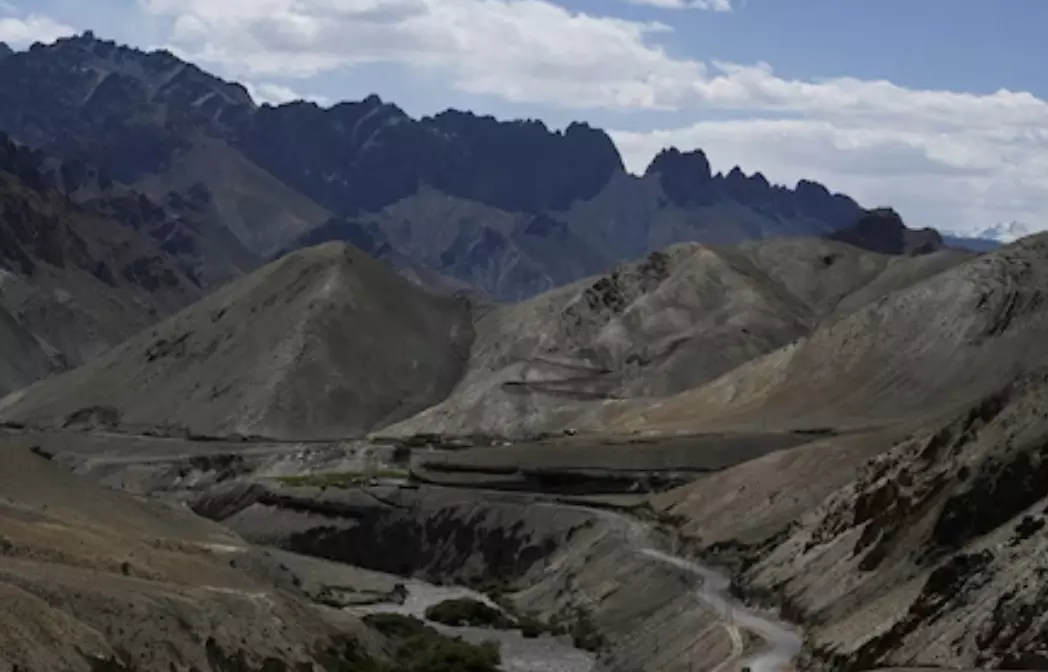
image for illustrative purpose
Tensions between India and China have resurfaced over the Shaksgam Valley after Beijing reiterated its claim over the strategically located region and defended ongoing infrastructure projects there. The dispute gained fresh momentum following India’s objections to the second phase of the China–Pakistan Economic Corridor (CPEC).
Earlier this week, China asserted that Shaksgam Valley “belongs to China” and said its infrastructure construction in the area was “beyond reproach.” Beijing cited a boundary agreement signed with Pakistan in the 1960s to justify its activities. India, however, firmly rejected this claim, reiterating that the valley is part of its territory.
What is the Shaksgam Valley?
Shaksgam Valley is a remote, high-altitude region north of the Karakoram range, bordering Pakistan-occupied Gilgit-Baltistan and located close to the Siachen Glacier and Aksai Chin. While it is currently administered by China as part of Xinjiang, India maintains that it historically belongs to the former princely state of Jammu and Kashmir, which legally acceded to India in 1947.
Pakistan occupied the area during the 1947–48 conflict and later ceded it to China under the 1963 Sino-Pakistan Boundary Agreement.
Why is it disputed?
India does not recognise the 1963 agreement, arguing that Pakistan had no legal right to transfer territory that India considers its own. The Ministry of External Affairs has repeatedly termed the pact “illegal and invalid.” Notably, the agreement itself includes a clause stating that the boundary could be renegotiated after a final settlement of the Kashmir dispute—something India cites to underline the provisional nature of the arrangement.
India’s security concerns
New Delhi’s latest objections are driven by China’s plans to build a long all-weather road through the Shaksgam Valley. Reports suggest China has already constructed nearly 75 km of the road, about 10 metres wide, branching off from Highway G219 in Xinjiang and extending to within roughly 50 km of India’s northernmost point at Indira Col in the Siachen Glacier.
Defence experts warn that such infrastructure could alter the status quo in a highly sensitive region and complicate India’s security calculus around Siachen. There are also concerns that the road could facilitate joint military movements by Chinese and Pakistani forces in the future.
With strategic interests, unresolved territorial claims, and regional security at stake, the Shaksgam Valley remains a flashpoint in the already strained India–China relationship.





