

Russia and Ukraine: The war that neither side can end easily
Failed Geneva and Abu Dhabi talks expose a diplomatic vacuum as fighting grinds on
Russia and Ukraine: The war that neither side can end easily
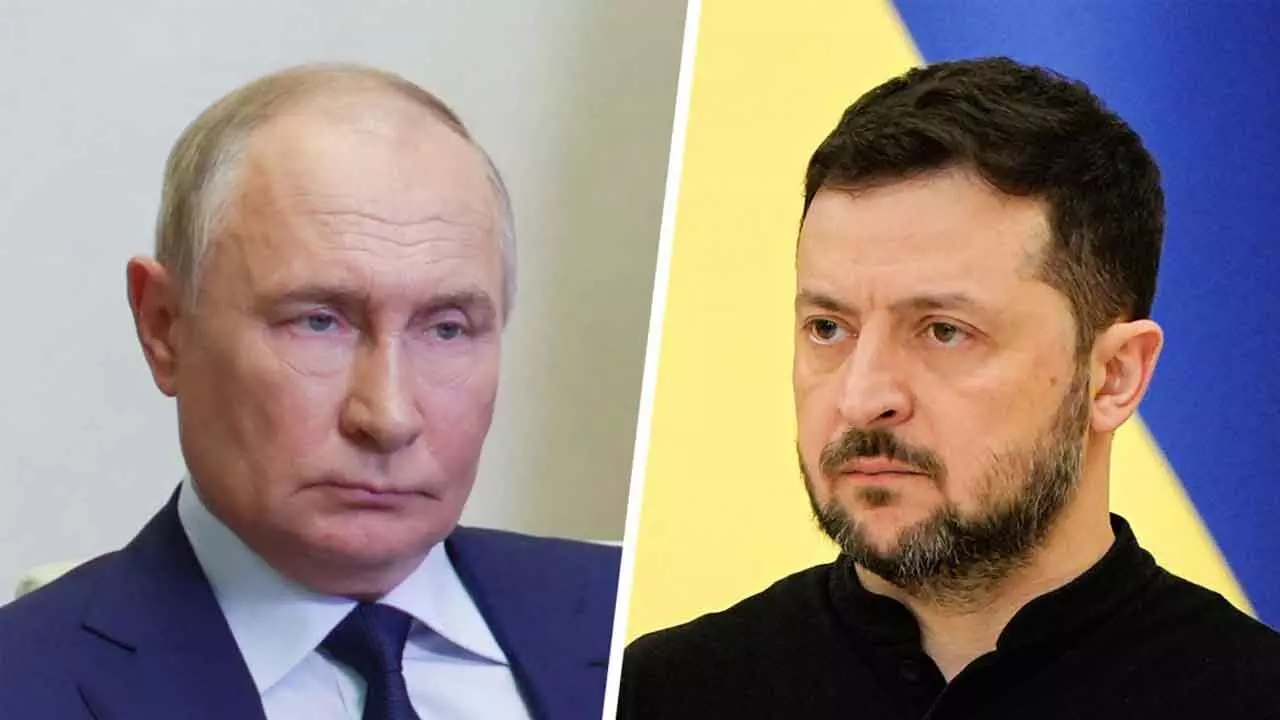
As of April 2026, the war between Russia and Ukraine continues into its fifth year with no immediate end in sight, as both sides retain sufficient resources to sustain prolonged conflict. While international mediation efforts continue, deep disagreements over territorial concessions and security guarantees continue to block a durable peace agreement. The war remains active, with Russia occupying roughly 20% of Ukrainian territory, while both Russia and Ukraine struggle to achieve decisive breakthroughs on the battlefield.
Recent high-profile peace talks in Geneva and Abu Dhabi failed to produce any meaningful progress. Russia has shown little willingness to alter its strategic position, while President Vladimir Putin appears to have limited incentives to end the war, as doing so could trigger domestic political instability. Ukraine has signaled willingness to consider a halt on strikes against energy infrastructure but continues to insist on the restoration of its territorial integrity.
Despite claims of battlefield momentum, available data suggests that Russia is paying an extraordinary price for minimal territorial gains. Since February 2022, Russian forces are estimated to have suffered very heavy casualties, among the highest sustained losses by any major military power since World War II. At current rates, combined Russian and Ukrainian casualties could approach two million by spring 2026. Following gains made in 2024, Russian advances in key sectors have slowed dramatically, in some areas averaging 15 and 70 meters per day during major offensives, among the slowest rates of advance in modern warfare.
Russia’s war economy is also facing increasing pressure. Manufacturing output has weakened, growth slowed to around 0.6 percent in 2025, and the country lacks globally competitive technology sectors to drive long-term productivity. Sanctions continue to weigh on the economy, while the state increasingly relies on financial incentives to maintain military recruitment, adding further fiscal stress.
The duration of the war now depends heavily on continued international support for Ukraine and sustained pressure on Russia. A central challenge remains finding a “credible commitment” framework that can guarantee Ukraine’s long-term security, as noted by analysts at the Carnegie Endowment for International Peace. Real progress toward peace may look entirely possible, but circumstances mean that instead of sustainable peace, each side risks finding itself caught in a trap.
For Ukraine, the primary objective remains forcing Russia to end hostilities. The key question is what price Kyiv may ultimately have to accept in terms of territorial control and security guarantees. Kyiv’s position is that final territorial outcomes should reflect the front line at the moment fighting ends. However, Russia’s demand that Ukrainian forces withdraw from Donbas before entering full negotiations remains politically and strategically unrealistic under current conditions. Russia continues to believe that time is on its side and that continued military pressure will eventually deliver control over Donbas, reducing incentives to compromise.
Ukraine risks being trapped in prolonged ceasefire negotiations while continued strikes damage its infrastructure. Temporary truces may be used periodically to project goodwill, but a lasting ceasefire appears unlikely without a broader settlement. Russia also faces its own trap, however. If Moscow succeeds in forcing Kyiv into substantive negotiations over what would essentially amount to a capitulation—a rerun of the Istanbul talks in the early days of the war—the Kremlin will be forced to choose which peace terms it is truly prepared to accept.
In other words, Russia wants to force Ukraine to commit to becoming a “friendly” state. As guarantees of this friendliness, the Kremlin is seeking a drastic reduction in the size of the Ukrainian army, an end to its partnership with NATO countries, and a ban on the deployment of long-range weapons and any Western military infrastructure on Ukrainian territory.
The bitter truth is that Europe is neither prepared to fight Russia nor engage in what the Kremlin considers a meaningful discussion about the future European security architecture. Accordingly, Europe will remain on the periphery of the negotiating process—as an indirect target for Russia standing behind an embattled Ukraine.
As long as Putin is in power, Russia isn’t paralyzed by widespread protests, and there is at least some money left in the budget for weapons, the war will continue. The Kremlin will not make significant concessions even if faced with a protracted financial and economic crisis. Rather, such a crisis, should it arise, would first lead to political change and only then to a revision of the war’s goals by the country’s new leadership. Putin is ultimately trapped in a war he cannot easily win, but also cannot afford to end.





