

Israel strikes deep into Tehran as Iran vows retaliation after supreme leader’s death
Israel strikes Tehran as Iran retaliates after Supreme Leader Ali Khamenei’s death, killing civilians, disrupting oil routes, and raising fears of regional war.
Israel strikes deep into Tehran as Iran vows retaliation after supreme leader’s death
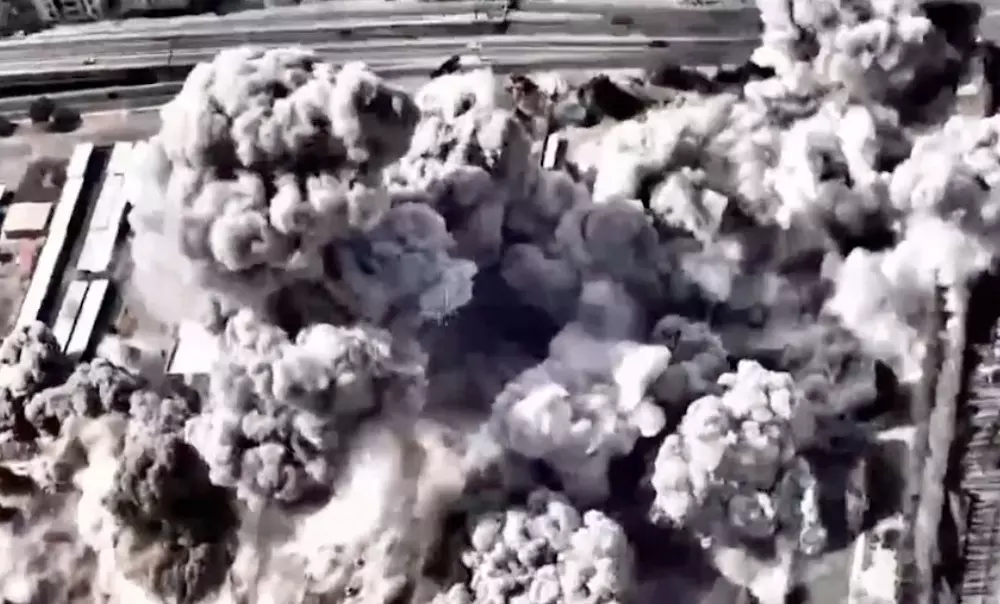
Israel launched a fresh wave of airstrikes in the heart of Tehran on Sunday as Iran escalated retaliatory attacks across the region, following the killing of Supreme Leader Ali Khamenei in joint US-Israeli strikes. The rapidly widening conflict has killed civilians, disrupted global shipping routes, and raised fears of a prolonged regional war, even as diplomatic voices warn the crisis could have been avoided.
Israel said it carried out new strikes “in the heart of Tehran” early Sunday, marking a significant escalation in hostilities with Iran after the death of Iran’s Supreme Leader Ali Khamenei. Iranian officials announced the formation of a transitional council to govern the country, while warning that the United States had crossed a “very dangerous red line.”
Iran responded with a barrage of missile attacks targeting Israel, US military bases, and sites across the Middle East. At least nine people were killed when an Iranian missile directly hit a residential building in Beit Shemesh near Jerusalem, according to Israeli emergency services. Nearly 30 others were injured, including two critically. Israeli authorities said the building partially collapsed following the strike.
The Israel Defense Forces (IDF) acknowledged that while most incoming missiles have been intercepted, the country’s air defense systems cannot guarantee full protection. Search and rescue operations continued through Sunday, with helicopters deployed to evacuate the wounded.
The conflict has also triggered major disruptions to global trade and energy supply chains. Shipping giant Maersk suspended all vessel crossings through the Strait of Hormuz, citing deteriorating security conditions. Maritime analysts estimate traffic through the critical oil corridor has dropped by approximately 75%, with many vessels rerouting or idling offshore.
Across Iran, reactions to Khamenei’s death have been sharply divided, with scenes of both mourning and quiet celebration underscoring deep internal fractures. Similar divisions were visible in the United States, where protests and celebrations erupted in multiple cities following the strikes.
US President Donald Trump defended the military action, citing Iran’s alleged role in global attacks and what he described as stalled diplomatic efforts over Tehran’s nuclear program. However, intelligence sources told CNN there is no evidence Iran is currently developing missiles capable of reaching the US mainland, and international inspectors have not confirmed a renewed nuclear weapons program.
Democratic Senator Chris Coons criticized the decision, arguing diplomacy should have been given more time. Legal experts have also raised concerns about the lack of congressional authorization for what could evolve into a prolonged conflict.
As exchanges of fire continue, regional and global leaders are urging restraint amid fears that the confrontation could spiral into a wider Middle East war.





