

Iran war sparks oil market turmoil as US and Western exporters eye energy supply opportunity
Iran war disrupts Strait of Hormuz shipping, sending oil and gas prices higher as the US and Western exporters eye opportunities to replace disrupted Middle East energy supplies.
Iran war sparks oil market turmoil
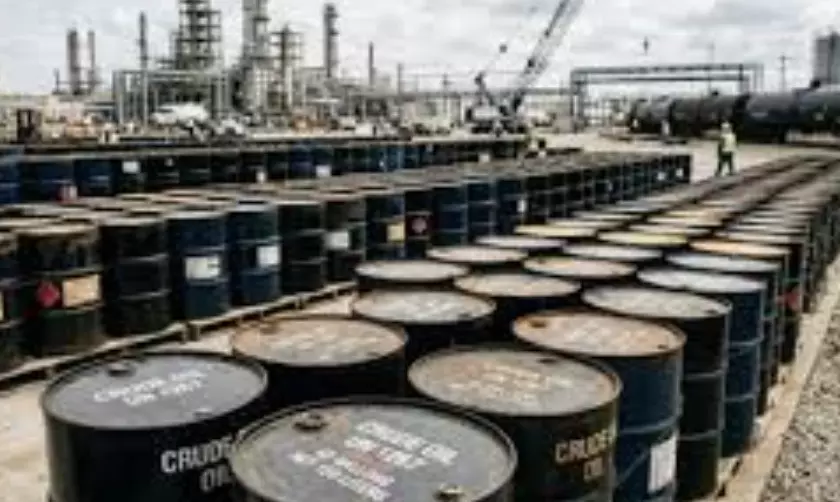
The ongoing conflict involving Iran has triggered sharp increases in global oil and gas prices as shipping disruptions in the Strait of Hormuz and attacks on Gulf energy infrastructure threaten supplies. Analysts say the crisis could create opportunities for the United States and other Western exporters to fill the gap in global energy markets.
Full News Story
The escalating war involving Iran has begun to reshape global energy markets, with oil and gas prices surging amid disruptions to shipping routes and attacks on energy infrastructure across the Gulf region. As the conflict intensifies, analysts believe the crisis could provide new opportunities for the United States and other Western energy exporters to increase their market share.
The instability has largely centered on the strategically vital Strait of Hormuz, a narrow waterway between Iran and Oman that serves as one of the world’s most critical energy shipping routes.
Strait of Hormuz Disruption
The Strait of Hormuz carries around one-fifth of the world’s oil supply and roughly 20% of global liquefied natural gas (LNG). Following recent US and Israeli strikes on Iranian targets, shipping activity through the route has been severely disrupted.
Iran’s elite military force, the Islamic Revolutionary Guard Corps (IRGC), declared earlier this week that the strait was effectively “closed” and warned that any vessel attempting to pass through the channel could face attack.
Several commercial vessels have already been hit. A US-linked tanker, the Stena Imperative, was damaged by aerial strikes while docked in the Gulf region, killing a shipyard worker. Iranian media also reported that drones struck the Honduran-flagged tanker Nova, leaving it burning in the shipping corridor.
In total, at least five tankers have been damaged, two people have been killed, and about 150 vessels are currently stranded near the strait, according to shipping reports.
Energy Prices Surge
The disruption has sent shockwaves through global energy markets. Brent crude oil prices surged by as much as 13%, while European natural gas prices also climbed sharply as fears grow over potential supply shortages.
The Middle East accounts for a significant share of global oil and gas exports, and the current instability has forced some energy facilities to halt production temporarily.
Meanwhile, global shipping networks are also under strain. Roughly 10% of the world’s container ships are currently affected by delays linked to the Hormuz disruptions. Shipping companies warn that cargo backlogs could soon build up across major ports in Europe and Asia.
Jeremy Nixon, CEO of container shipping firm Ocean Network Express, said that vessels are now gathering in open waters near major Gulf producers including Saudi Arabia, Iraq, and Qatar as operators wait for safer passage.
Opportunity for Western Energy Exporters
While the crisis has created global economic uncertainty, it may simultaneously benefit oil and gas exporters outside the region.
Energy producers in the United States and other Western countries could increase shipments to Europe and Asia if Middle Eastern supplies remain constrained. The US has already emerged as one of the world’s largest LNG exporters in recent years and may expand exports further if Gulf shipments remain disrupted.
Industry analysts say the situation could reshape global energy trade flows, at least temporarily, as importing nations seek more reliable suppliers outside the conflict zone.
Global Market Implications
The longer the conflict continues, the greater the potential impact on global energy markets and supply chains. Prolonged disruptions in the Strait of Hormuz could push oil prices significantly higher and trigger wider economic consequences.
For now, global markets remain on edge as governments and energy companies closely monitor developments in the region and assess how long the critical maritime corridor may remain unsafe.





