

Interstellar Comet 3I/ATLAS: New ‘Ice Volcano’ Claims, Hubble’s Anti-Tail Mystery & Avi Loeb’s Interpretation
Interstellar comet 3I/ATLAS stuns astronomers with new Hubble images showing a 60,000 km anti-tail and possible cryovolcanic eruptions. Here’s what scientists and Avi Loeb say about the mysterious ‘ice volcano’ claims and the comet’s current location.
Hubble’s latest image of interstellar comet 3I/ATLAS reveals a dramatic anti-tail and complex coma structures, sparking new theories about possible ice volcano activity.
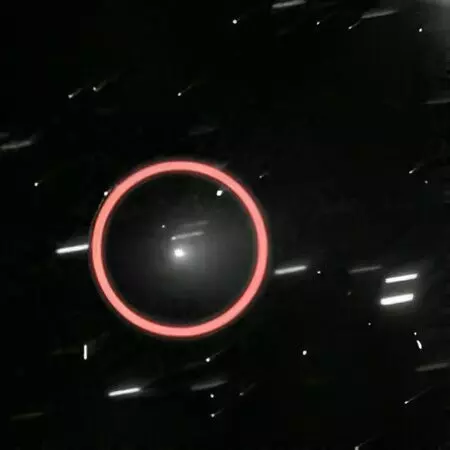
Interstellar comet 3I/ATLAS has once again captured global scientific attention after a fresh wave of observations sparked debates over its strange features and possible cryovolcanic activity. New images from NASA’s Hubble Space Telescope, ESA’s JUICE spacecraft, and interpretations by leading astrophysicists have fueled speculation about what exactly is happening on this rare interstellar visitor—only the third ever detected.
Hubble’s New Post-Perihelion View
NASA’s Hubble Telescope observed 3I/ATLAS on November 30, 2025, revealing a striking teardrop-shaped inner coma and a prominent 60,000 km-long anti-tail extending toward the Sun. The inner glow spans nearly 40,000 km, showing unique dust behavior rarely seen in standard solar system comets.
Avi Loeb’s Analysis: A Swarm of Detached Objects?
Harvard astrophysicist Avi Loeb published a new analysis claiming the Hubble image aligns with his earlier predictions. He suggests that non-gravitational acceleration may have caused “a large number of macroscopic, non-volatile objects” to detach from the comet—now appearing roughly 60,000 km closer to the Sun, matching the observed anti-tail.
Cryovolcano Claims: Is 3I/ATLAS Erupting Ice?
A preprint research paper led by Josep M. Trigo-Rodríguez proposes that spiral-like jets captured as the comet neared perihelion may indicate cryovolcanism. According to the team, the heating of CO₂ ice might trigger chemical reactions strong enough to power “ice volcano” eruptions.
The theory is still not reviewed by the scientific community, and astronomers point out that further checking with Hubble, JWST, and JUICE will be very important in telling if these structures indeed indicate cryovolcanoes or are just normal cometary outgassing phenomena.
Current Location of 3I/ATLAS
On December 5, the comet had already traveled 286 million km to Earth and was shining at a brightness of around magnitude 12. Now, it is leaving Virgo and going to Leo and larger telescopes can possibly spot it close to Regulus in the middle of December. The comet will continue to fade as it goes back to the space between the stars.
What Exactly Is 3I/ATLAS?
Discovered in July 2025 by the ATLAS survey in Chile, 3I/ATLAS—officially designated C/2025 N1—is only the third confirmed interstellar object, following ʻOumuamua and Borisov. Key facts include:
- It arrived from interstellar space at an incoming speed of ~58 km/s.
- Hubble data suggests the nucleus is less than 1 km in size.
- Spectroscopy from JWST and ground observatories has detected CO₂, water ice, CO, OCS, CN, and nickel vapor.
- It passed perihelion in late October at 1.36 AU and poses no threat to Earth.
- As of early December, it remains a faint spectacle at magnitude 12.





