

India, EU seal landmark FTA; Ursula von der leyen hails ‘Mother of all deals’
India and the EU conclude a historic free trade deal, dubbed the “mother of all deals,” expected to boost exports, cut tariffs and deepen strategic ties.
India, EU seal landmark FTA
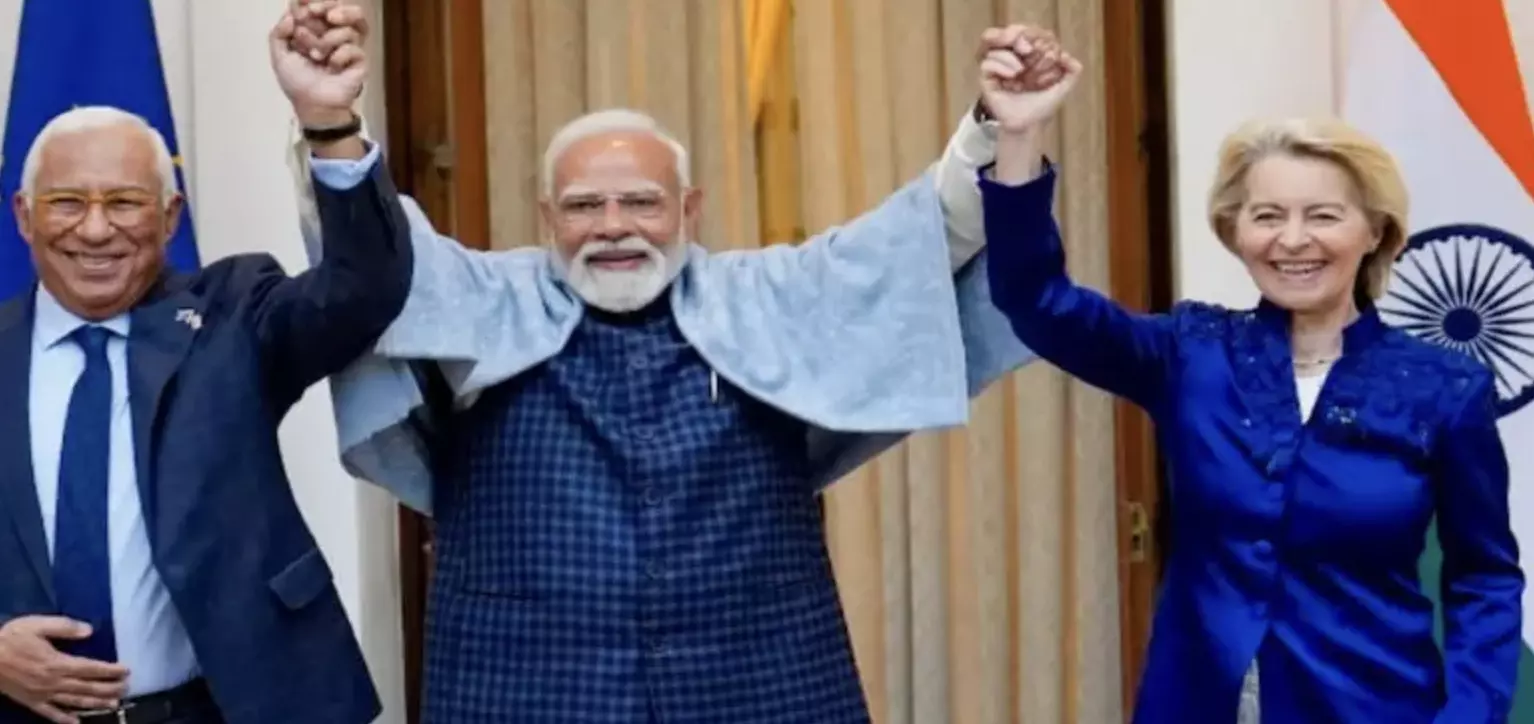
India and the European Union concluded a historic free trade agreement after nearly 18 years of negotiations, creating one of the world’s largest free trade zones. Leaders say the deal will deepen strategic ties, boost exports, and unlock major opportunities across sectors.
India and the European Union have concluded a landmark free trade agreement (FTA), ending nearly 18 years of negotiations and marking a major milestone in global trade diplomacy. European Commission President Ursula von der Leyen described the pact as the “mother of all deals,” while Prime Minister Narendra Modi said it would create vast opportunities for businesses and citizens on both sides.
“Europe and India are making history today. We have concluded the mother of all deals. We have created a free trade zone of two billion people,” von der Leyen said, highlighting the scale and strategic significance of the agreement. PM Modi echoed the sentiment, calling the pact a strong example of coordination between two of the world’s largest economies.
The deal politically concludes one of India’s longest-running trade negotiations. It now moves into legal vetting, formal signing, ratification by the European Parliament, and approval by India’s Cabinet before implementation, a process expected to take at least a year.
Trade Ties in Numbers
The EU is India’s largest trading partner in goods. Bilateral trade crossed $190 billion in 2024–25, with India exporting $75.9 billion in goods and $30 billion in services to the bloc. EU exports to India stood at $60.7 billion in goods and $23 billion in services. Analysts believe the FTA could significantly expand this base.
Research estimates suggest the pact could lift India’s exports by $3–5 billion in the near term, with longer-term projections indicating a possible $50 billion increase in India’s trade surplus with the EU by FY31. The EU’s share in India’s exports could rise to over 22 percent from current levels.
Tariffs, Sectors and Market Access
One of the most closely watched aspects of the agreement is the phased reduction of import duties on select European cars. India is expected to lower peak import duties from around 110 percent to 40 percent initially, with further reductions over time. However, benefits may be limited to high-value, fully imported vehicles, and electric vehicles are likely to remain outside the framework in the initial years to protect domestic investments.
Export-oriented sectors such as textiles, electronics, seafood and jewellery are expected to benefit from improved market access. Refined petroleum exports may see limited gains, as tariffs are already low.
Strategic Dimension
Beyond trade, the pact underscores growing geopolitical alignment between India and Europe. Leaders from both sides met in New Delhi, with discussions also touching on defence cooperation and supply chain resilience.
Commerce Minister Piyush Goyal called the agreement a reflection of a “formidable partnership,” while EU officials described the negotiations as among the most complex they have undertaken. Despite the scale of tariff changes, experts say the complementary nature of both economies should help minimise disruption to domestic industries.
The India–EU FTA is being seen not just as a trade accord but as a strategic framework that could shape economic cooperation, technology partnerships, and global supply chains in the coming decades.





