

Greenland's Inuit have spent decades fighting for self-determination
There are three Inuit tribes which together represent nearly 90 per cent of the population of Greenland
Greenland's Inuit have spent decades fighting for self-determination
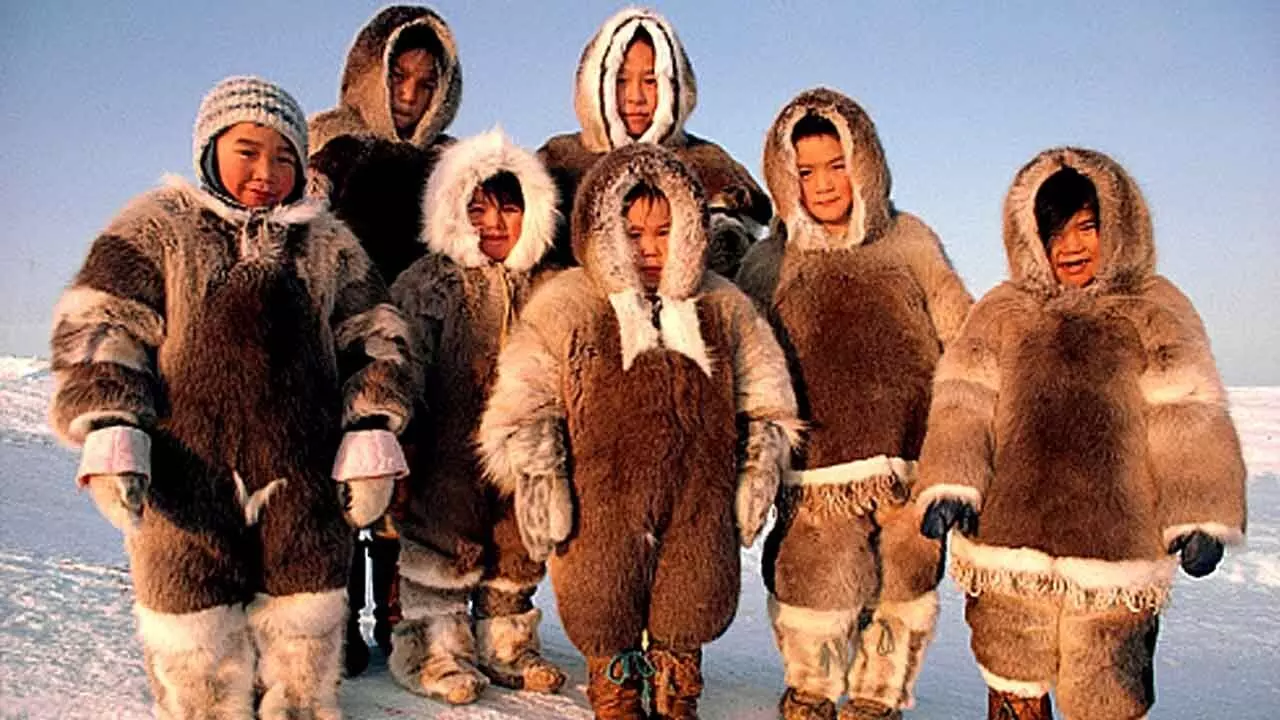
Amid the discussion between US President Donald Trump and Danish and European leaders about who should own Greenland, the Inuit who live there and call it home aren't getting much attention. The Kalaallit (Inuit of West Greenland), the Tunumi (Inuit of East Greenland) and the Inughuit (Inuit of North Greenland) together represent nearly 90% of the population of Greenland, which totals about 57,000 people across 830,000 square miles (2.1 million square kilometers).
We are Arctic anthropologists who work in a museum focused on the Arctic and its people. One of the areas we study is a land whose inhabitants call it Kalaallit Nunaat, or land of the Kalaallit. Known in English as Greenland, it is an Indigenous nation whose relatively few people have been working for decades to reclaim their right to self-determination.
Arrivals from the west
For nearly 5,000 years, northwestern Greenland including the area that is now the U.S. Space Force's Pituffik Space Base, formerly known as Thule Air Force Base was the island's main entry point. A succession of Indigenous groups moved eastward from the Bering Strait region and settled in Siberia, Alaska, Canada and Greenland.
Approximately 1,000 years ago, the ancestors of the Inuit living in Greenland today arrived in that area with sophisticated technologies that allowed them to thrive in a dynamic Arctic environment where minor mishaps can have serious consequences.
They hunted animals using specialized technologies and tools, including kayaks, dog-drawn sleds, complex harpoons, and snow goggles made from wood or bone with slits cut into them. They dressed in highly engineered garments made from animal fur that kept them warm and dry in all conditions.
Their tools and clothing were imbued with symbolic meanings that reflected their worldview, in which humans and animals are interdependent. Inughuit families who live in the region today continue to hunt and fish, while navigating a warming climate.
Arrivals from the east
At Qassiarsuk in south Greenland, around the time Inuit arrived in the north, Erik the Red established the first Norse farm, Brattahli, in 986, and sent word back to Iceland to encourage others to join him, as described in an online exhibit at the Greenland National Museum. Numerous Norse families followed and established pastoral farms in the region.
As Inuit expanded southward, they encountered the Norse farmers. Inuit and Norse traded, but relations were sometimes tense: Inuit oral histories and Norse sagas describe some violent interactions. The two groups maintained distinctly different approaches to living on the land that rims Greenland's massive ice sheet.
The Norse were very place-based, while the Inuit moved seasonally, hunting around islands, bays and fjords. As the Little Ice Age set in early in the 14th century, and temperatures dropped in the Northern Hemisphere, the Norse were not equipped to adjust to the changing conditions.
Their colonies faltered and by 1500 had disappeared. By contrast, the mobile Inuit took a more flexible approach and hunted both land and marine mammals according to their availability. They continued living in the region without much change to their lifestyle.
A center of activity
In Nuuk, the modern capital of Greenland, an imposing and controversial statue of missionary Hans Egede commemorates his arrival in 1721 to establish a Lutheran mission in a place he called Godthab.
In 1776, as trade became more important, the Danish government established the Royal Greenland Trading Department, a trading monopoly that administered the communities on the west coast of Greenland as a closed colony for the next 150 years.
By the 19th century some Kalaallit families who lived in Nuuk/Godthab had formed an educated, urban class of ministers, educators, artists and writers, although Danish colonists continued to rule.
Meanwhile, Kalaallit families in small coastal communities continued to engage in traditional economic and social activities, based on respect of animals and sharing of resources.





