

Four decades of conflict: Why peace eludes Iran and the US
Civilian tragedies, proxy wars and mutual mistrust have locked both nations in an undeclared war since the 1980s
Four decades of conflict: Why peace eludes Iran and the US
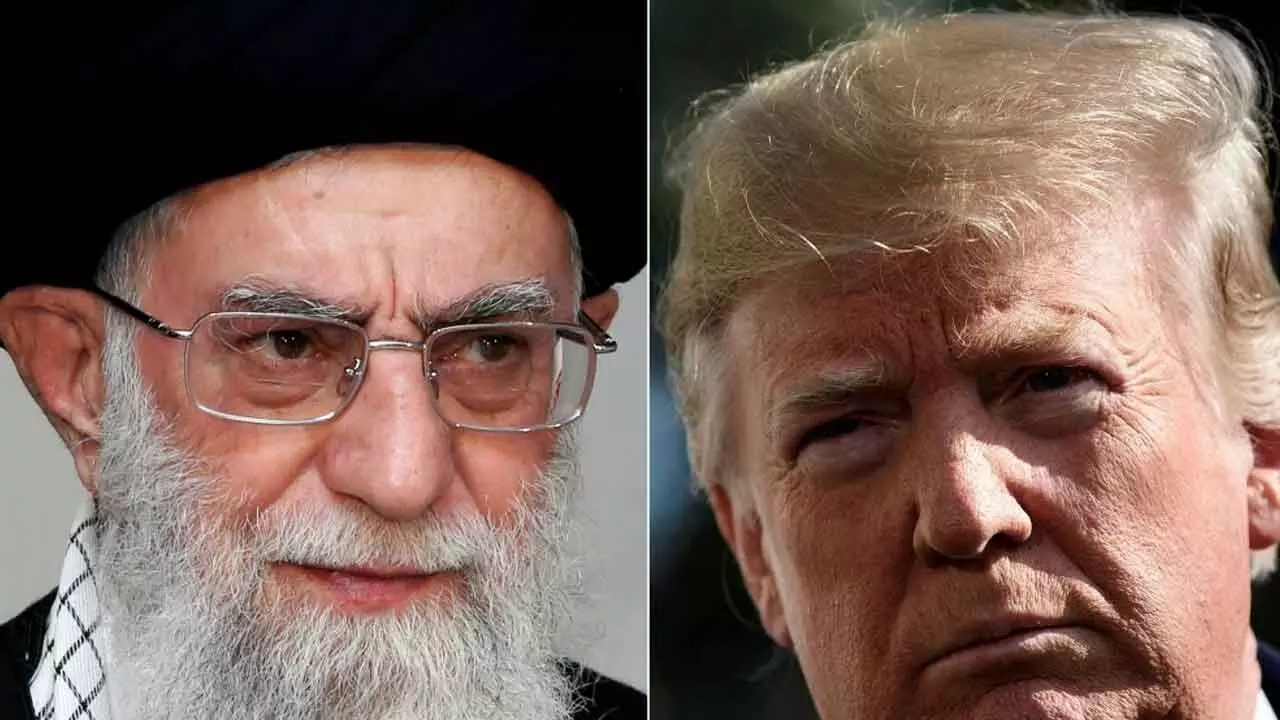
It may seem that the US and the Middle East are currently embarking on yet another forever war. But the truth is that this is just the latest instalment of an undeclared military conflict between the two nations that has been ongoing since the 1980s.
For Americans, the war began in 1979, when Iranian students seized the US embassy in Tehran and held 52 diplomats hostage for 444 days. For Iranians, it began with US support for the Shah and its subsequent backing of Iraq throughout the 1980-1988 Iran-Iraq war.
The conflict has claimed many civilian lives. On July 3 1988, the US warship Vincennes downed Iran Air Flight 655, a civilian flight bound for Dubai.
The USS Vincennes misidentified the Airbus as a military aircraft and shot it down, killing all 290 people on board. More recently, on 28 February 2026, a US-Israeli missile hit a girls' school in southern Iran, killing over 150 civilians, most of them children.
Iran also shot down Ukraine International Airlines Flight 752 on January 8, 2020. The Islamic Revolutionary Guard Corps mistook the civilian plane for a US military flight, and fired two surface-to-air missiles that killed all 176 passengers, mostly Iranian civilians.
The 1980s: tanker war
In 1984, Iraq initiated the "tanker war" with Iran when its air force attacked oil tankers bound for Iranian ports. The tanker war continued for years, and eventually involved the US Navy when, on May 17 1987, an Iraqi plane accidentally struck the American frigate The Stark, killing 37 crew members.
The US chose to refocus attention away from Iraq and on Iran, arguing that the Islamic Republic was responsible as it had failed to agree to negotiate an end to the war. The US then provided naval protection for Kuwaiti oil tankers moving through the Persian Gulf and Strait of Hormuz by requiring them to hoist an American flag.
But violence only escalated. Iran targeted the American-reflagged ships, and the US retaliated by striking Iranian offshore platforms and speedboats used by the Revolutionary Guards. It also sank two Iranian frigates, eliminating half of Iran's navy. It was amid these hostilities that Iran Air Flight 655 was shot down. How this incident occurred during the fog of war is still the subject of intense debate.
The 2000s: proxies and ground war
The 1980s episode of this war was fought by naval vessels in the Gulf, but the second phase was a proxy conflict fought on the ground. After 2001, George W. Bush included the Islamic Republic in an "axis of evil", alongside Iraq and North Korea. In March 2003, after the invasion of Iraq under Bush, Iran suddenly found US troops on two borders (Iraq and Afghanistan). Tehran feared that the Bush administration would seek regime change, and that the US or Israel would bomb its nuclear facilities.
One tool at Iran's disposal was its support of a variety of Iraqi insurgents to target American forces. One of its Iraqi proxies, Asa'ib Ahl al-Haq, formed in 2006, targeted US military vehicles with improvised explosive devices, challenging American control of the motorways. This low-intensity conflict only wound down when American forces left Iraq in 2011.
The 2010s and 2020s: air war over Iraq
During the 2010s, the Obama administration entered a de facto alliance with the Islamic Republic to combat ISIS. The US provided air cover while Iran fought alongside Iraqi Shi'a militias on the ground. In October 2017, two months before ISIS officially lost the vast majority of its territories in Iraq and Syria, Donald Trump announced the US's withdrawal from the Iran nuclear deal and re-imposed sanctions on the Islamic Republic. Relations quickly soured, as Tehran retaliated by targeting US forces in Iraq, ushering in an air war. Rockets were fired at American targets in Iraq by Kataib Hizballah, an Iran-allied militia, and the US retaliated with air strikes.
Violence spiralled further on December 27 2019, when the same militia attacked the al-Taji base, an Iraqi military facility housing US forces, killing an American contractor. Two days later, the US responded with an air raid on several targets related to the Iraqi militia, killing at least 25 of its members.
On December 31 2019, the US embassy in Baghdad's Green Zone was stormed by Iraqi demonstrators affiliated with the militia. Trump, faced with optics reminiscent of the 1979 hostage crisis, ordered a drone strike on January 3 2020 that killed General Qassem Soleimani, the commander of Iran's Revolutionary Guards' Quds Force, as well as Abu Mahdi al-Muhandis, leader of the militia.
Iran retaliated by launching 22 Fateh ballistic missiles at two Iraqi bases housing American forces on January 8. Soleimani's death was the first time the US had directly killed a senior Iranian state official. It crossed the threshold from proxy war to direct state-on-state targeting. In the aftermath, Iran's military accidentally shot down Ukraine International Airlines Flight 752 outside of Tehran, mistaking it for US retaliation. It was a tragic echo of the Vincennes incident.
(The writer is an associate professor at California State University, United States)





