

EU to take up China's cheap goods dumping at WTO meet
EU to take up China's cheap goods dumping at WTO meet
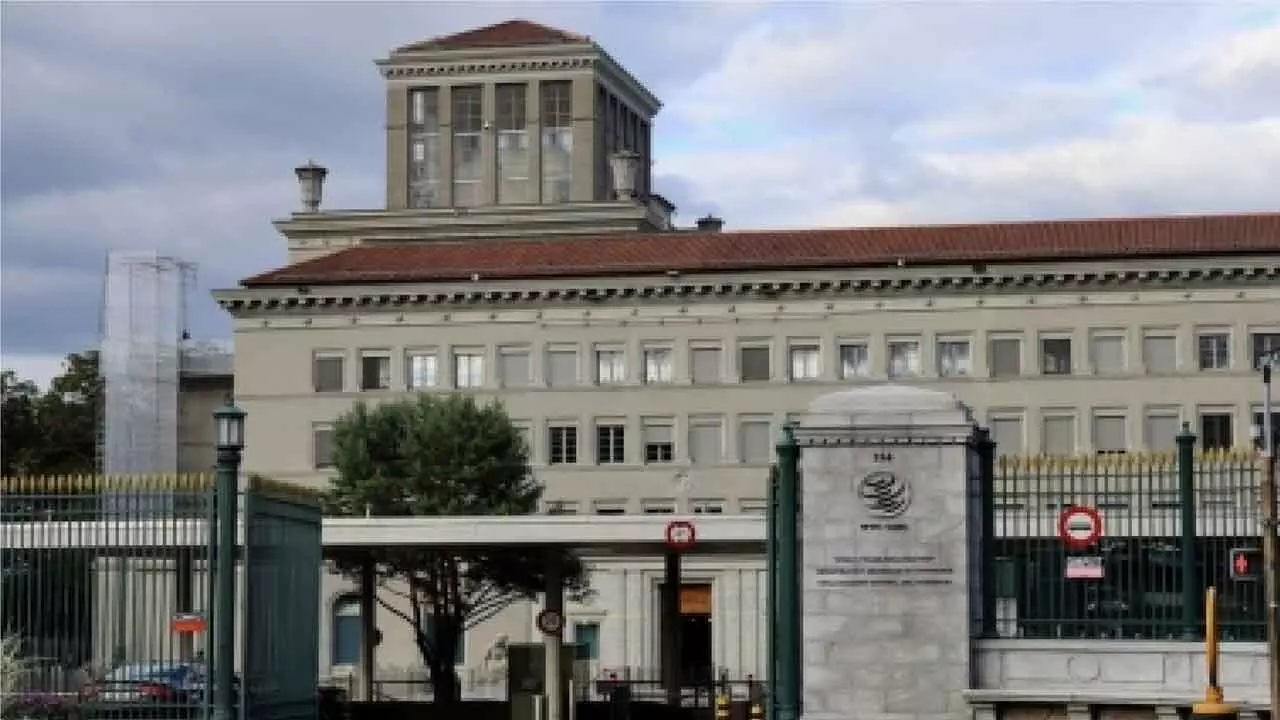
The European Union will take up the issue of China dumping cheap goods in Europe, which is harming local industry, at a meeting of the World Trade Organisation (WTO) this week, EU Commissioner for Trade and Economic Security Maros Sefcovic told journalists.
Sefcovic said he will demand serious reform of the WTO during a meeting in Cameroon this Thursday and make it crystal clear that China’s economic rise has meant the global trade environment has dramatically changed in recent decades, according to a report in the Euractiv news portal.
He said that “a new balance” is now required with the rise of China to adjust the rights and obligations of WTO members, which he said is necessary to combat the overcapacities that are creating a lot of problems in the European economy, the report stated.
He said he would seek a level playing field, as overcapacity and non-market policies must be better tackled than in the past.
The Slovak commissioner’s remarks come amid a surge of Chinese exports to the EU, at a time when US President Donald Trump’s sweeping tariffs are already hurting the bloc’s exporters and causing vast quantities of cheap Chinese-manufactured goods to be redirected towards Europe, the report states.
Brussels’ trade deficit with Beijing surged from $335 billion in 2024 to $375 billion in 2025, according to data collected by Bruegel, an EU policy think tank. Beijing’s global trade surplus also hit a record $1.2 trillion last year -- a figure it is set to far surpass in 2026.
In addition to confronting China, Sefcovic also called for “new governance models” to facilitate trade disputes between member states. The US has long hobbled the WTO court system by blocking the appointment of judges to its appellate body, thus allowing WTO members to effectively obviate court rulings by ‘appealing into the void’.
China, the world’s second-largest economy and the EU’s third-largest trading partner, joined the WTO in 2001, six years after the Geneva-based international trade organisation was created.
Domestic demand in China has weakened as consumers have cut back on spending since the pandemic, that had led to large-scale job and income loss. The slump in the property market has also hit family wealth hard. Common people in China are now wary of spending large amounts. Comprehensive policies are needed to encourage the Chinese people to spend more, the IMF has said.
The large trade surplus that China is enjoying is also an indication of the weakening of the Chinese economy. The Chinese people are not spending enough on imported goods because of financial constraints, leading to a fall in imports to China and a rise in trade surplus. The slowing down of the rate of GDP growth to five per cent has also reduced the need for imported inputs of production, the article further stated.
In November 2025, Chinese exports increased by 5.9 per cent while imports increased by only 1.9 per cent.
The impression that this $1 trillion trade surplus portrays China as a manufacturing superpower is based on wrong premises. The additional tariff imposed by the US has reduced Chinese exports to a high-value market. Beijing has tried to offset this decline in exports to the US by increasing exports to economically weaker markets of Africa, Latin America, and Southeast Asia.
China has recorded a 26 per cent increase in exports to Africa, 14 per cent to Southeast Asia and 7.1 per cent to Latin America in November. Chinese exports to the European Union, too, have surged by 15 per cent from a year earlier, but the flip side of China’s exports is that the dumping of cheap products in Africa is having a devastating effect on the industries in the African countries, which are being slowly forced out of trade.
Evidently, to meet the requirements of these less affluent markets, manufacturers in China are cutting back on cost, and consequently also on quality. China is thus emerging as the hub of low-cost products of questionable standards. A vast repository of cheap labour has helped China achieve this rather dubious distinction, the article stated.





