

Double Asteroid Flyby Tomorrow: NASA Confirms 2025 WD5 & 2025 WF10 Near-Earth Passes
Double asteroid flyby alert! NASA confirms 2025 WD5 and 2025 WF10 near-Earth passes tomorrow. Learn times, sizes, and what you need to know.
Double Asteroid Flyby Tomorrow: NASA Confirms 2025 WD5 & 2025 WF10 Near-Earth Passes
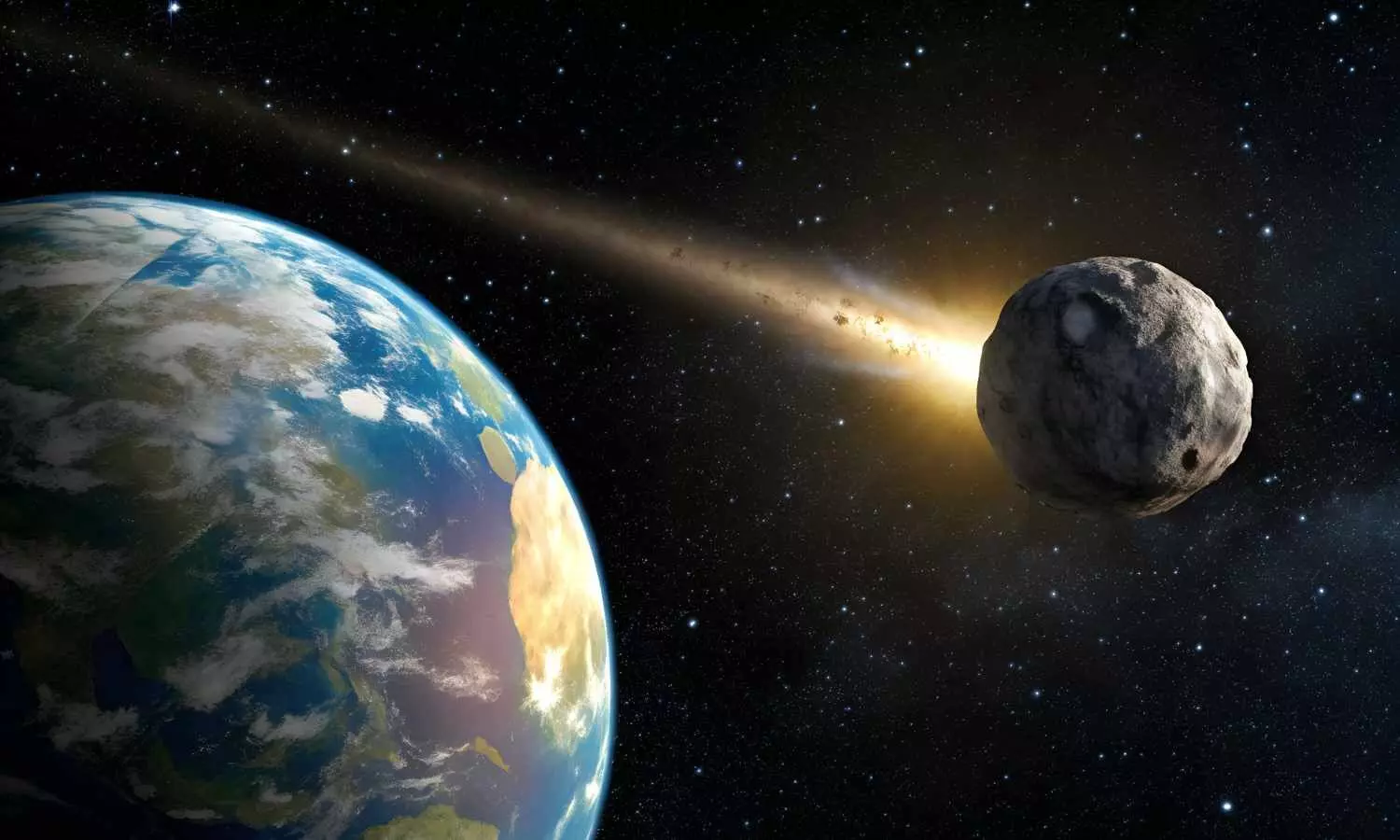
Calling all space fans! Tomorrow, Earth will have the great fortune of two significant asteroid flybys at the same time, thus giving both the astronomers and the stargazers an exclusive chance to monitor our vibrant cosmic neighborhood. NASA has already announced the imminent arrival of Asteroid 2025 WD5 and Asteroid 2025 WF10, making very close approaches to the Earth. Furthermore, although the asteroids won't collide with the planet, their sheer size and speed make this window of observation to be an interesting one.
Asteroid 2025 WD5: the Fastest Visitor
The asteroid dubbed 2025 WD5 is certainly no dwarf. With a diameter of approximately 150 feet—equivalent to a small airplane—the asteroid travels through space with the incredible speed of 80,955 km/h. NASA believes that the object will come closest to Earth at 5:18 AM IST on December 6, moving three million kilometers away from the Earth.
What may look safe in terms of kilometers, is in fact a close encounter in cosmic terms, resulting in a great deal of monitoring by astronomers.
Asteroid 2025 WF10: The Afternoon Encounter
Asteroid 2025 WF10 will be on its way shortly after, just a few hours later. Though slightly smaller in size, about 120 feet, it is slower and moves at a speed of 15,522 km/h. Its closest point to Earth is set for 3:10 PM IST, when it will be 7.01 million kilometers away from Earth. While its being slower makes it easier for scientist to track and study in detail, it's still significant enough.
Should We Be Worried?
The good news is that both asteroids have been categorized as “not dangerous” by NASA. Potentially hazardous means that the object has a size of more than 140 meters and gets within 7.5 million kilometers. Thus, these space rocks are quite impressive, but there is no need to panic.
NASA's Near-Earth Object Studies team has extensive experience and uses a mixture of instruments including ground telescopes, radar, and huge data models to be one step ahead of these cosmic adventurers.
So, plan your event, be part of the show, whether you are an amateur astronomer or a mere star-gazer, tomorrow's sky will be a reminder of our solar system's liveliness and dynamism.





