

December’s Cold Moon to Shine as the Final Supermoon of 2025 — Key Details You Should Know
Discover all about December 2025’s Cold Moon, the last supermoon of the year. Find out its peak timing, visibility, king tides, and why it appears bigger and brighter in the night sky.
The Cold Moon, December 4, 2025, shines bright as the final supermoon of the year, creating a spectacular winter sky display.
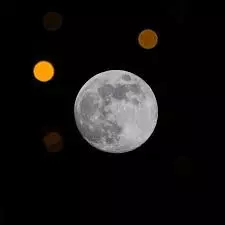
The final full moon of 2025 will light up the sky on December 4, marking the last supermoon of the year and ushering in a second round of king tides along the Oregon Coast.
Traditionally named the Cold Moon, the full moon in December gets its supermoon title because it achieves maximum light at the same time it comes to its nearest point to the Earth, called perigee.
As per NASA’s report, the Moon’s path is not a perfect circle, so there are occasions when it gets a bit closer to the Earth making the Moon look and feel bigger and brighter. If this situation of proximity coincides with a full moon, the outcome is a supermoon.
How close will the Moon get?
On December 4, the Moon reaches perigee at 221,808 miles from Earth. Jim Todd, Director of Space Science Education at OMSI, notes that full moons on the perigee side of the orbit appear up to 8% larger and 16% brighter.
This Cold Moon is third of four supermoons in the 2025–26 cycle — following the Harvest Moon and Beaver Moon, and preceding January’s Wolf Moon.
When to Watch the Cold Moon
The December full moon reaches peak illumination at 3:14 p.m. PST on December 4. While this peak occurs during daylight, the moon will rise brighter and higher in winter skies as night falls.
Todd explains that winter full moons appear higher overhead because the Moon sits directly opposite the Sun. When the Sun is low in the sky during winter days, the Moon reaches its highest nighttime position, creating a luminous, overhead glow.
Why Is It Called the Cold Moon?
The name Cold Moon is rooted in Indigenous traditions. The Mohawk tribe referred to December’s full moon as the Cold Moon, while the Mohicans called it the Long Night Moon — a nod to plunging winter temperatures and lengthening nights.
Will the Supermoon Cause King Tides?
Yes. Supermoons frequently coincide with king tides — extremely high tides caused when the Earth, Moon, and Sun align, producing stronger gravitational pull.
November’s supermoon triggered a round of king tides from November 5–7. The December Cold Moon will bring the next surge of king tides from December 4–6 on the Oregon Coast.
Oregon Weather Outlook for December 4
Sky-watchers may face limited visibility this year. The National Weather Service forecasts mostly cloudy skies across Oregon with 73–95% cloud cover, potentially obscuring views of the supermoon.





