

Comet 3I/ATLAS Found Carrying Key Life-Linked Molecule in Rare Interstellar Discovery
Interstellar comet 3I/ATLAS has astonished scientists with unusually high levels of methanol — a key life-linked molecule never before detected in an object from beyond the Solar System. ALMA observations reveal rare chemical activity, offering new clues about the comet’s alien origins.
Interstellar comet 3I/ATLAS shows unusually high methanol levels, offering rare insights into chemical processes beyond our Solar System.
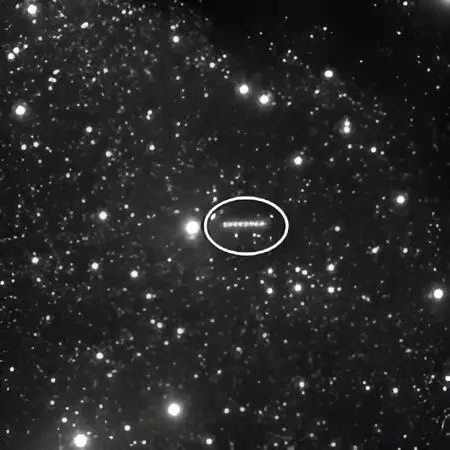
A team of scientists has managed to uncover one of the most remarkable secrets in the interstellar comet 3I/ATLAS, with the discovery of extremely high levels of methanol — a chemical that has been closely linked to the origin of life and the first-ever observation in an extraterrestrial object coming from outside the Solar System.
3I/ATLAS, the third confirmed interstellar visitor, is showing to be remarkably different from the comets that belong to our Solar System. When it got near the Sun, there was a large cloud of water vapour and gas around it, which was made up of much more carbon dioxide than the other comets in the Solar System. The light coming from the comet was signifying a different and unusual surface composition of the comet. This is because the comet was losing gas even when far from the Sun, so it might not have come near any star for hundreds of millions of years.
A research team led by Martin Cordiner of NASA’s Goddard Space Flight Center used the Atacama Large Millimeter/submillimeter Array (ALMA) in Chile to study the comet’s composition. Their analysis revealed high emissions of hydrogen cyanide alongside even larger quantities of methanol. “Hydrogen cyanide and methanol typically exist only in small traces in Solar System comets,” Cordiner explained. “But in this interstellar object, they appear unusually abundant.”
According to the findings, hydrogen cyanide is emerging from the rocky nucleus at a rate of 250–500 grams per second. Methanol, meanwhile, is being produced at a remarkable 40 kilograms per second — nearly 8% of the comet’s total vapour output, compared to the 2% typically seen in Solar System comets. The production patterns suggest that the nucleus of 3I/ATLAS is compositionally diverse, offering rare insight into conditions in distant star systems.
Methanol, though simple, is a crucial precursor molecule in pathways that lead to more complex, life-related chemistry. Cordiner noted that high methanol levels often signal deeper chemical activity. “It’s very unlikely you can reach significant molecular complexity without forming methanol along the way,” he said.
Past research by Josep Trigo-Rodríguez of the Institute of Space Sciences in Spain predicted that metal-rich comets — especially those containing iron — would produce large amounts of methanol. If sunlight melts ice within such comets, the resulting water can react with iron-rich minerals to form methanol. The new findings suggest 3I/ATLAS may indeed be rich in metals, offering yet another clue to its mysterious, ancient, interstellar origin.





