

China subsidy cuts in solar sector may have mixed impact on India
China subsidy cuts in solar sector may have mixed impact on India
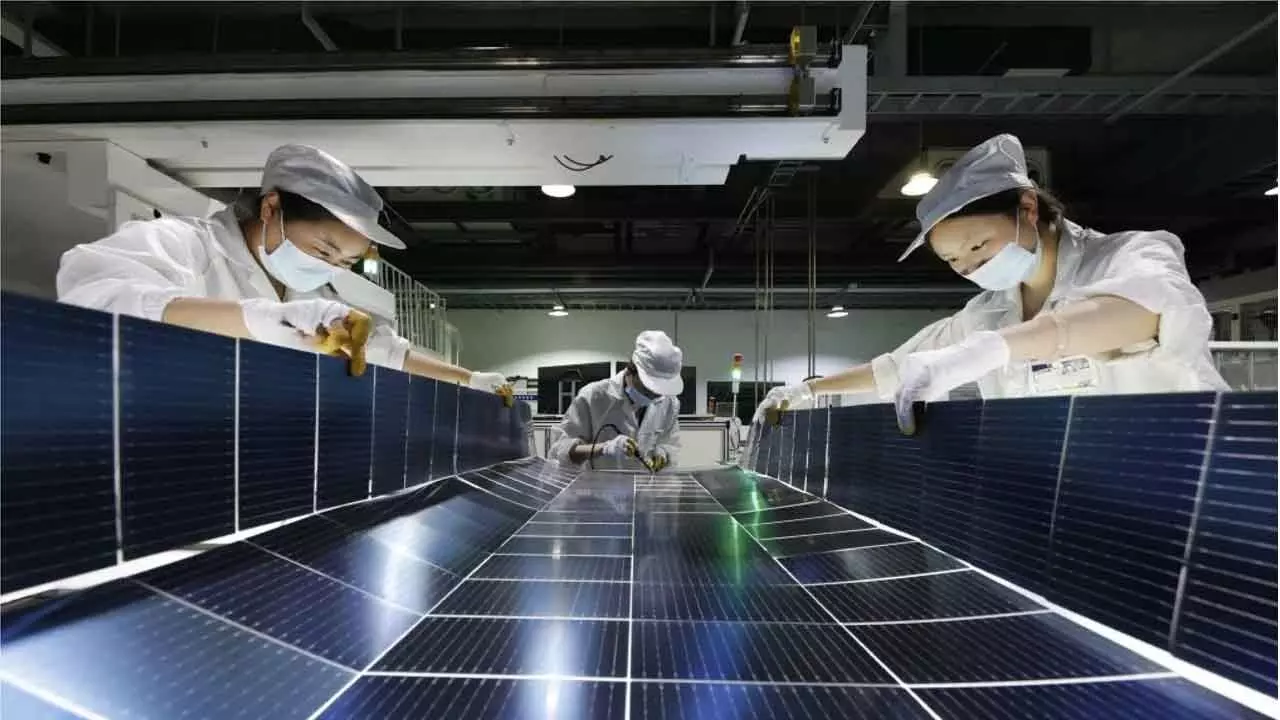
China’s decision to phase out export incentives on solar panels and battery storage equipment is expected to have a mixed impact on India, with short-term challenges but potential long-term gains.
The changes, expected to take effect April 1 for solar panels and beginning next year for batteries, may complicate efforts to expand renewable energy to close vast electricity gaps, though experts say the impact likely will be manageable.
In the immediate term, the move is likely to increase the cost of solar modules and battery storage systems in India. The country relies heavily on imports from China for solar cells, wafers, and key components. With the removal of export rebates that previously lowered prices by several percentage points, Indian developers may face higher procurement costs. This could lead to a rise in overall project costs, potentially slowing down solar capacity additions and putting pressure on tariffs as well as distribution companies.
Battery energy storage systems (BESS), which are critical for renewable energy integration, may also become more expensive. This could impact the viability of storage-linked projects and delay investments in grid stability solutions, which are essential as India scales up renewable energy capacity.
However, the policy shift also creates a significant opportunity for India in the medium to long term. As Chinese products become relatively more expensive, the price gap between imported and domestically manufactured equipment is likely to narrow. This could improve the competitiveness of Indian manufacturers and support the government’s push for self-reliance under initiatives such as the Production Linked Incentive (PLI) scheme.
Domestic companies may benefit from increased demand, encouraging investments in local manufacturing of solar modules, cells, and battery storage systems. Over time, this could help India reduce its dependence on Chinese imports and strengthen its position in the global clean energy supply chain.
Overall, while China’s move may lead to higher costs and some near-term disruptions, it could accelerate India’s transition towards a more resilient and self-sufficient renewable energy ecosystem.
“We are likely to see solar panel prices increase in Africa because most of the inputs come from China,” said Wangari Muchiri, an energy analyst focused on Africa's clean energy sector. “Removing the rebate will add to existing costs, especially when you consider shipping, logistics, and other import fees.”
Africa already pays significantly more for solar equipment than other regions because of transport costs, smaller import volumes and tariffs.
China's policy change reflects broader shifts after fierce competition among Chinese manufacturers pushed solar module prices to as little as $0.07 per watt in 2025, from $0.25 in 2022. That helped drive global adoption of solar energy, but left many companies with heavy losses.
Some Chinese companies built VAT rebates into their export pricing, effectively transferring those subsidies to their overseas buyers. But Beijing has cut back on those payments as it reins in overcapacity and shifts toward more advanced technologies.
Rather than a sharp price shock, the loss of such rebates will likely gradually raise prices, setting a firmer global price floor. “The changes are significant, but not catastrophic,” said John van Zuylen, CEO of the Africa Solar Industry Association.
“The entire recent solar boom was built on artificially cheap Chinese pricing,” van Zuylen said. “That era is now ending.”
“When a structural rebate is removed, exporters typically either absorb the cost, raise prices, or reduce discounting,” van Zuylen said. “African countries will likely feel this as a gradual upward shift in pricing rather than a single dramatic spike.”





