

Ancient South African rocks trapped helium for 3 billion years, say experts
image for illustrative purpose
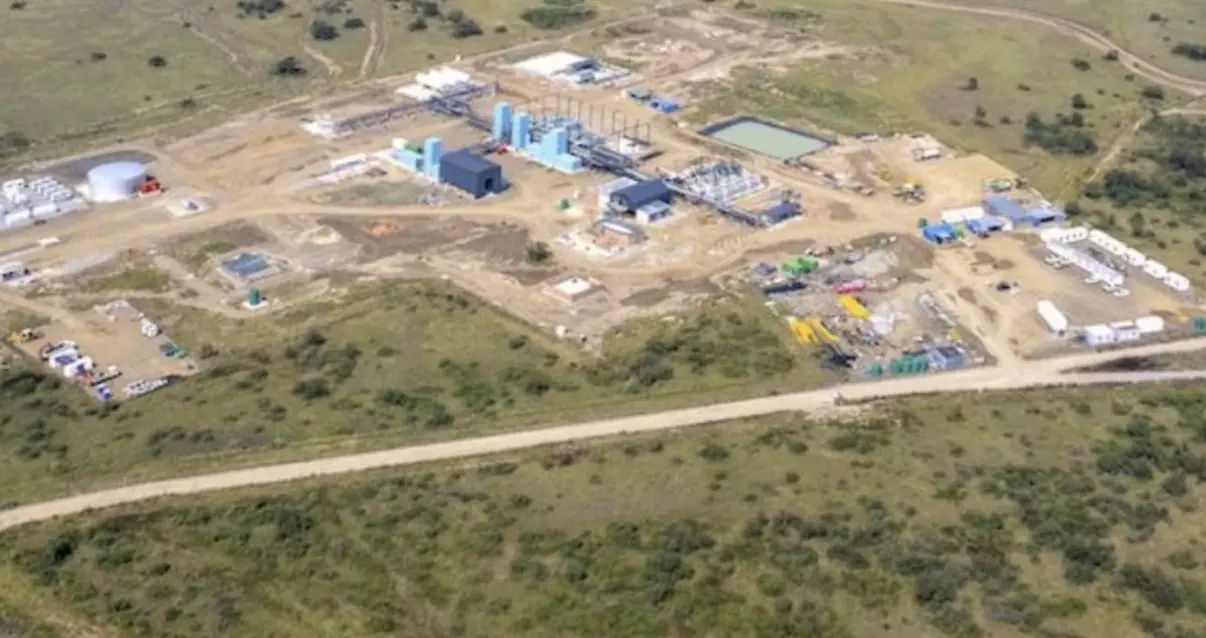
Deep beneath South Africa’s famed gold fields, scientists have uncovered evidence of a rare and valuable resource preserved for billions of years. Helium – a critical element used in MRI scanners, semiconductor manufacturing, and advanced scientific research – has been locked inside ancient rocks of the Witwatersrand Basin at unusually high concentrations, according to a new study.
The discovery centers on the Virginia gas project in the southern Witwatersrand Basin, where natural gas containing up to 12 percent helium is being extracted. Estimates suggest the reservoir may hold more than 400 billion cubic feet of helium, making it one of the most significant known accumulations of the gas anywhere in the world.
The research is led by Fin Stuart of the University of Glasgow’s Centre for Isotope Sciences (SUERC), whose team is using helium as a tracer to understand how gases form, migrate, and remain trapped within some of Earth’s oldest crust. By tracking helium from radioactive minerals deep underground to modern gas wells, the scientists aim to refine global strategies for locating and managing helium resources.
A reservoir sealed for hundreds of millions of years
Geological evidence suggests the Virginia reservoir has held helium since it was sealed by Karoo sediments around 270 million years ago. The gas itself is far older. Most of it is radiogenic helium, produced slowly as uranium and thorium decay over millions to billions of years.
The Witwatersrand Supergroup, which contains gold-bearing reefs dating back 2.8 to 3 billion years, is rich in uranium and thorium and is believed to be the primary source of the helium. Additional contributions may come from a fractured granite basement beneath the basin, where helium produced in crystalline rocks migrates upward through deep fault systems.
A resource hospitals depend on
Helium is essential for cooling superconducting magnets in MRI scanners, allowing them to operate without electrical resistance. Unlike fossil fuels, helium is effectively nonrenewable on human timescales, forming far more slowly than it is consumed.
Supply shortages in recent years have already affected hospitals, laboratories, and technology manufacturers worldwide. A field capable of sustaining helium production for decades could therefore play a critical role in stabilizing global supply chains.
Microbes, water, and gas movement
The study also sheds light on how helium becomes concentrated in gas reservoirs. Methane in the Virginia field is largely biogenic, produced by microbes living deep underground. Previous studies have identified microbial communities in water-filled fractures nearly three kilometers below the surface.
As groundwater circulates through faults, it collects methane and helium released from surrounding rocks. When this gas-rich water rises, methane bubbles form and sweep up helium, eventually accumulating in geological traps like the Virginia structure.
From research to production
South African energy company Renergen, which operates the Virginia project, has begun producing liquid helium on site after resolving extreme cooling challenges. The Phase 1 plant is designed to deliver liquefied natural gas alongside about 770 pounds of liquid helium per day.
Matching production rates with the geological model will be crucial for assessing how long the resource can last and for planning future expansion.
Guiding future helium exploration
The project is also recruiting a fully funded doctoral researcher at the University of Glasgow to carry out hands-on field sampling, laboratory analysis, and industry collaboration. Using noble gas measurements, petrography, and thermochronology, the research aims to identify the signatures of long-lived, well-sealed helium reservoirs.
Scientists say the findings could guide helium exploration in other ancient cratons around the world and even help monitor underground carbon dioxide storage, where helium can act as a sensitive tracer for leaks.
By linking radioactive decay in Earth’s oldest rocks, deep microbial ecosystems, and modern industrial demand, the Witwatersrand study offers rare insight into how a vital element can survive underground for three billion years – and how humanity might use it more wisely.





