

Why govt must stay in constant dialogue with India’s wealth creators
Why govt must stay in constant dialogue with India’s wealth creators
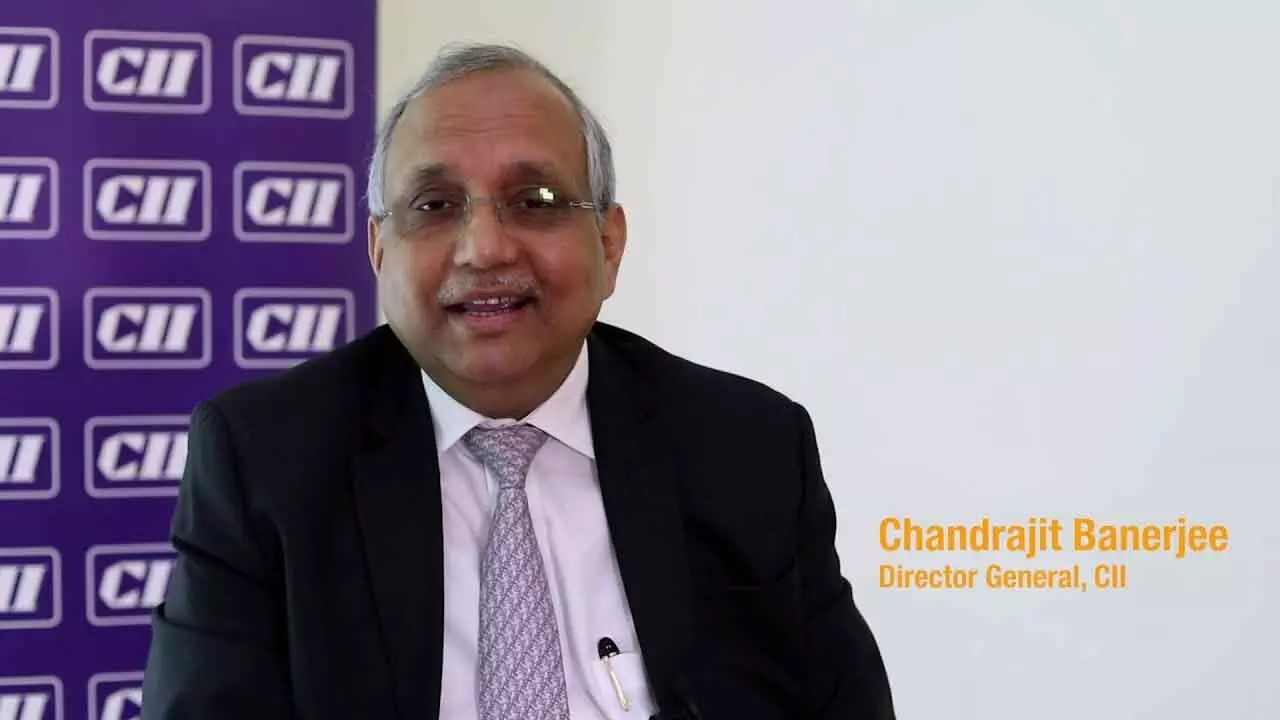
The Confederation of Indian Industry (CII) has recommended a four-point fiscal strategy to the government for sustaining macroeconomic stability. In its pre-Budget representation to the government, the premier business chamber favours strict adherence to the government’s debt glide path, more fiscal transparency, higher revenue mobilisation, and sharper expenditure efficiency. In a way, it has said only what economic advisers to the government and other experts have been saying for decades.
“India has achieved a rare convergence of high growth, low inflation, and improving fiscal indicators. The next Union Budget must continue this momentum through disciplined fiscal management and deeper institutional reforms,” said CII Director General Chandrajit Banerjee. There is no reason why this “rare convergence” couldn’t continue.
The prominent industry body FICCI has also called for reformist measures like reduction in tax litigation, streamlining of compliances, and easing operational bottlenecks for businesses. It favours reduction in pendency of tax appeals, simplification of TDS, and facilitation of customs procedures.
Another business chamber, Assocham, has proposed tax simplification and rationalisation, loan waiver as a part of the resolution plan under the Insolvency and Bankruptcy Code (IBC), and the introduction of a comprehensive tax amnesty scheme under the customs regime.
Other organisations representing various sections of business and industry have also presented their wish-lists to the government. This is a routine exercise before every Budget. Typically, the government accepts or rejects recommendations according to the economic requirements (as perceived by policymakers), as well as the political interests and ideological predilections of those running the government.
This year, however, things are different. More than three decades after the World Trade Organization (WTO) became operational, it is for the first time that its regime has been challenged—and how! The challenge has not come from a major economy but the world’s biggest one—the United States. Ever since Donald Trump assumed office for the second term, he has worked zealously to destroy the WTO.
The tectonic shift in the global trade structure shook the entire world; India was no different. Thankfully, the Narendra Modi government took a few reformist and innovative decisions, which stopped a big meltdown. The goods and services tax was revamped. Trade diversification was given a policy push, which was surely more than the lip service given earlier by our decision makers. The measures have stood us in good stead, something which is reflected in the impressive export numbers of November.
The moral of the story is: the government should not wait for crises to wake up; it should keep in touch with wealth creators on a regular basis. Regular, structured, and meaningful interaction with businesspersons is essential for anticipating challenges and responding proactively.
Fiscal discipline, as advocated by CII, must be seen in this light. Adhering to the debt glide path is not merely about pleasing rating agencies or meeting abstract targets. It is about preserving policy space in an uncertain world. Higher revenue mobilisation should not rely excessively on squeezing compliant taxpayers but on widening the base, leveraging technology, and fostering trust. Expenditure efficiency is not synonymous with austerity; it is about prioritising spending that crowds in private investment and enhances productivity.
The collective message from CII, FICCI, Assocham, and other industry bodies is thus not a demand for special treatment but a call for consistency, predictability, and reform.





