

From Chandrayaan to combat: India’s space leap
From Chandrayaan to combat: India’s space leap
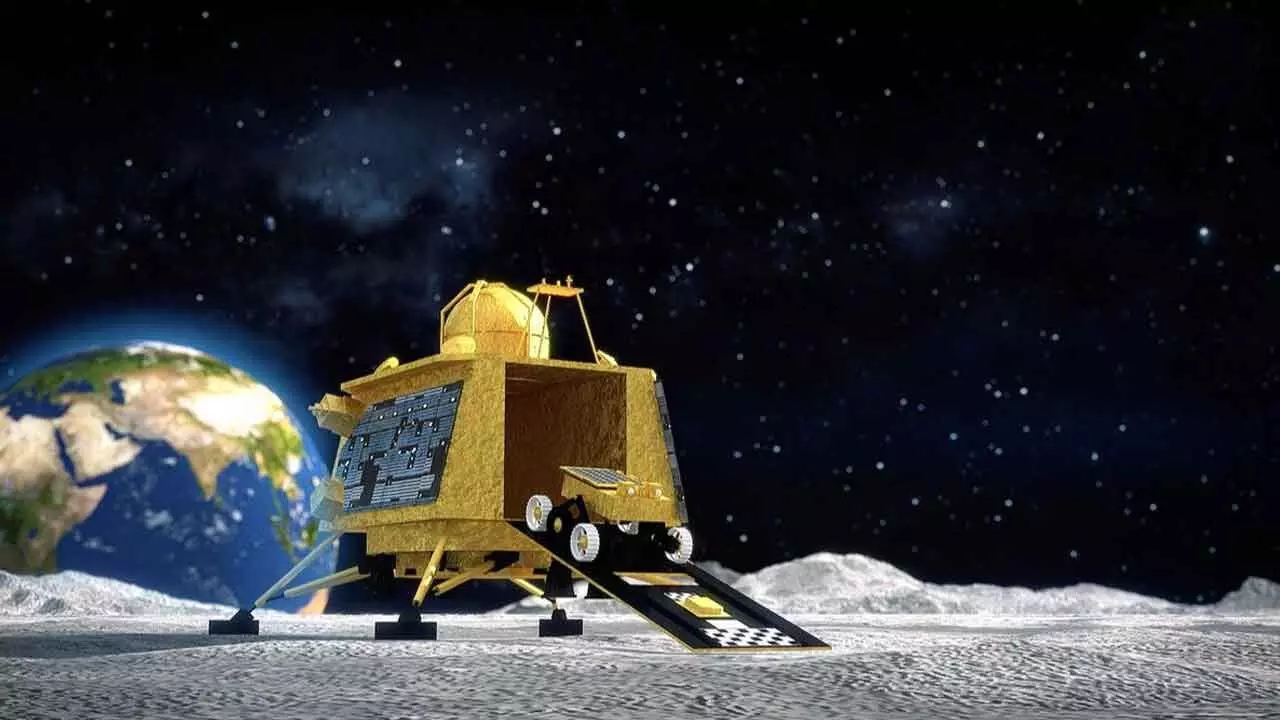
India's space power in 2026 is marked by remarkable momentum. It blends ISRO's strategic missions such as the launch of the military-focused EOS-N1 satellite and tests of advanced technologies like in-orbit refueling, with a fast-growing private sector.
Startups like Skyroot Aerospace (Vikram-1) and HAL’s SSLV are preparing for their launches, while the country gears up for crewed Gaganyaan flights. Together, these developments are cementing India’s position as a key global space player, with enhanced capabilities in Earth observation, secure communications, and cost-effective launches.
The year 2025 will be remembered in the history of the Republic of India as the moment it fought its first high-technology, precision-strike conflict of an escalatory kind—Operation Sindoor—against the global terror hub of Pakistan.
In a notable departure from its traditionally cautious posture, ISRO publicly acknowledged that the pinpoint strikes on terrorist-cum-military installations deep inside enemy territory were, to a significant degree, enabled by India’s space-based capabilities.
This understated admission made it amply clear: India is now operating a civil-militaryfusion space programme.
The Gaganyaan mission is India's ambitious human spaceflight program by ISRO, aimed at sending three astronauts to Low Earth Orbit (LEO) for three days and returning them safely to Earth.
It seeks to establish India's independent human spaceflight capability, with uncrewed test flights preceding the crewed mission, now targeted for 2027. The mission involves indigenous technologies such as the Human-Rated Launch Vehicle (HLVM3) and the Crew Escape System (CES), and will also incorporate scientific research involving living organisms, including fruit flies.
Looking ahead, India’s space future is a rapidly expanding, entering commercially driven phase focused on building indigenous capabilities, expanding global market share, and pursuing ambitious milestones such as its own space station by 2035 and a crewed Moon landing by 2040.
This transformation is powered by ISRO, private startups, government investment through IN-SPACe, and the 'Make in India' push. India is no longer just a cost-effective player; it is positioning itself as an innovation leader.
Through ISRO's commercial arm, NewSpace India Limited (NSIL), India has made a decisive shift from a 'scientific approach' to a 'commerce-first' strategy.
India currently accounts for approximately 2% of the global space market, a figure the government aims to increase to 10% by 2033. By launching heavy satellites at the lowest cost, ISRO has established itself as a globally attractive option.
Companies like Skyroot Aerospace and Agnikul Cosmos are taking on the responsibility of regular small satellites launches, allowing ISRO to focus on high-end research and development.
India's space achievements are not merely technological; they also strengthen strategic soft power and autonomy. It’s ability to launch heavy payloads and prepare for human missions has placed India in an elite club alongside the United States, Russia, and China.
Indigenous technologies such as the C32 cryogenic stage and upcoming electric propulsion systems reduce dependence on global supply chains. Global connectivity provides strategic advantages in control, internal security, and disaster management.
The success of in-space docking through the SPADEX mission and the high reliability of the LVM3 rocket are decisive steps toward India's long-term vision of a national space station. Proposed by 2035, this station will serve as a permanent orbital laboratory for scientific experiments, advanced research, and long-term human presence in microgravity.
India’s space journey has been impressive, marked by significant milestones like Chandrayaan-3 mission and Aditya L1 launch. These milestones demonstrate how far India has come in space technology.
Yet, to truly emerge as a global leader, India must strengthen its private space ecosystem, deepen international collaboration, and invest heavily in frontier technologies. By doing so, it can expand its footprint in the global space economy while contributing meaningfully to humanity’s exploration of the cosmos.





