

Jute industry hit by raw material shortage, price surge
High prices and a growing dependence on plastic bags for food grain packaging unsettling the sector, say experts
image for illustrative purpose
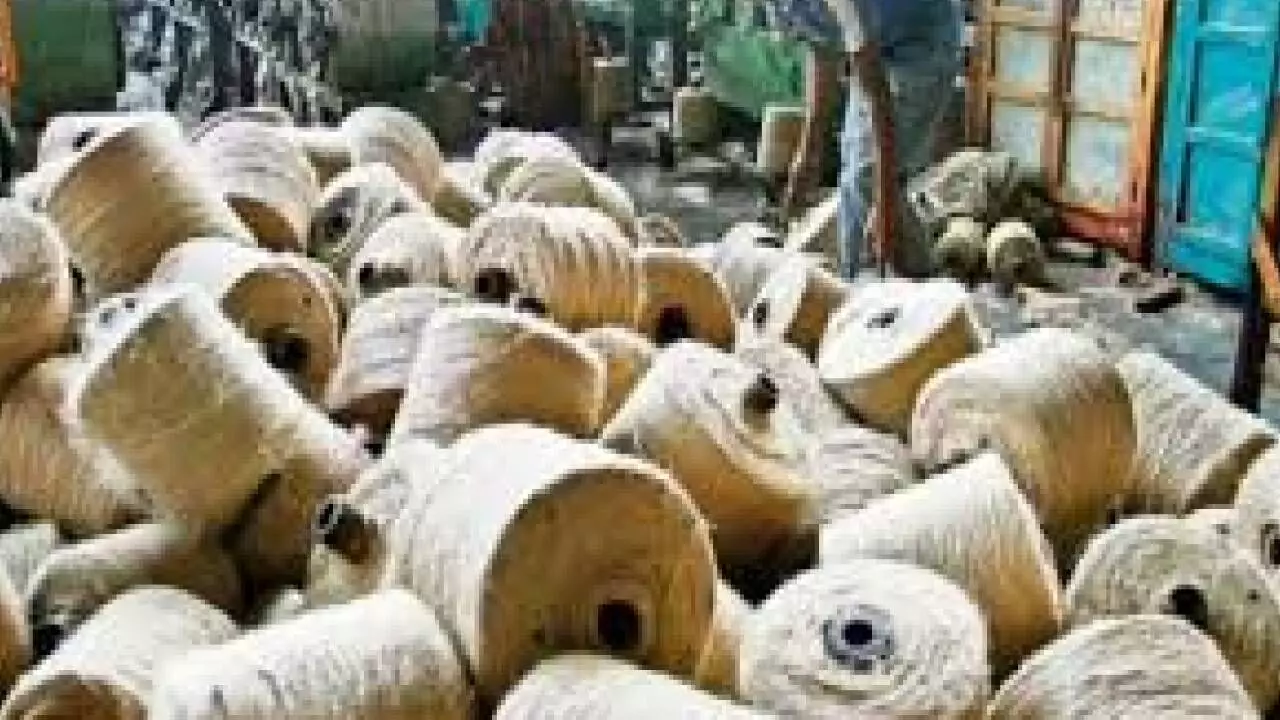
Kolkata: The jute industry went through another year of crisis with a sharp raw material shortage, record-high prices and a growing dependence on plastic bags for food grain packaging, unsettling the sector.
What began as a mismatch between raw jute availability and statutory packaging demand earlier in the year gradually intensified into a deep-rooted crisis by December, with farmers shifting towards alternative crops such as maize, a key factor behind the decline in jute cultivation.
According to government data, jute acreage during the Kharif season stood at around 5.56 lakh hectares as of late September 2025, marking a decrease from the normal area of about 6.60 lakh hectares and also lower than the previous year’s sown area.
This fall in acreage came despite the government fixing the minimum support price (MSP) of raw jute (TD-3 grade) at Rs 5,650 per quintal for the 2025-26 season.
The tightening of supply forced the government to increasingly dilute jute bag usage in foodgrain procurement by allowing plastic substitutes, even as the labour-intensive industry grappled with production cuts, mill shutdowns and mounting financial stress, officials at a millers’ association said.
The Rs 10,000 crore sector in West Bengal supports over 2.4 lakh direct mill workers and nearly five lakh farmers.
At the centre of the turmoil was an unprecedented surge in raw jute prices. After bottoming out at around Rs 4,700 per quintal during the 2024-25 crop year (July-June), prices crossed Rs 11,000 per quintal in several markets this month, reflecting acute physical scarcity rather than speculative volatility, industry players said.
Stakeholders noted that the current crisis was shaped by extreme price swings over the past 15 months.
Om Prakash Soni, an official with the Jute Balers Association, said the sector moved rapidly from surplus to shortage.
“Initially, lower government orders in the 2024-25 crop year caused prices to crash to Rs 4,700 per quintal. This was followed by a drastic reduction in acreage and production in the current 2025-26 season, driving prices to a record high of Rs 11,000 per quintal,” Soni said.
Farmers, who had been facing years of unremunerative jute prices that often ruled below the MSP, gradually shifted to crops such as maize, which offered better realisation and more assured offtake from the poultry feed and ethanol sectors.
Industry experts said maize emerged as a strong competing option at a time when farmer confidence in jute had already weakened.
Delayed and limited procurement by the Jute Corporation of India (JCI) during periods of low prices further eroded incentives to continue jute cultivation, they added.
Government data and satellite-based assessments during 2025 indicated visible changes in cropping patterns in parts of West Bengal and Bihar.





