

Telangana’s ‘Future City’ and why it matters
Telangana’s ‘Future City’ and why it matters
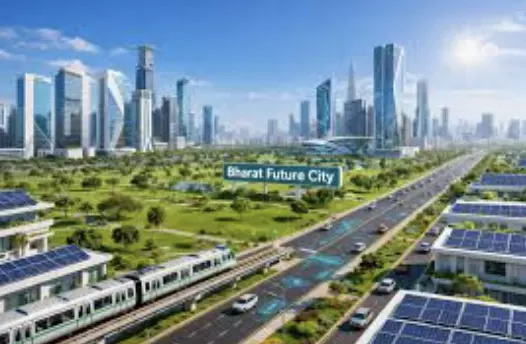
Telangana’s proposed Future City, also called Bharat Future City, is being hailed as one of India’s most ambitious urban development initiatives. Planned along the Hyderabad–Bengaluru corridor on 765 sq km on the southern outskirts of Hyderabad, the project aims to create a next-generation economic, technology, and innovation hub.
The project gained fresh momentum after reports that Donald Trump’s business group, Trump Media, plans to invest up to ₹1 lakh crore over the next decade in the city, particularly in commercial real estate, digital infrastructure, and mixed-use developments.
A Self-Sustaining Urban Cluster
Future City is envisioned as a fully integrated urban ecosystem combining residential, industrial, commercial, and social infrastructure. Key plans include high-speed road connectivity to Hyderabad and its international airport, followed by metro and rail links, along with dedicated power, water, waste management, and digital infrastructure for data-intensive industries.
The city is expected to anchor sectors such as semiconductors, electronics manufacturing, electric vehicles, green energy, AI, data centres, and life sciences. Officials compare it to the earlier HITEC City project in Gachibowli, but on a much larger scale, with the aim of expanding Hyderabad without the city’s current traffic bottlenecks.
Investment and Timeline
Industry estimates suggest that Future City could attract $20–30 billion (₹1.6–2.5 lakh crore) in investments over 20–25 years. The first phase, spanning five to seven years, will focus on core infrastructure, industrial and technology zones, logistics parks, and initial residential clusters near airport-linked corridors. Later phases are expected to see large Grade-A office districts, integrated townships, retail centres, hospitality, and social infrastructure.
A significant portion of the required land is still under acquisition, with some resistance from farmers and landowners. Around ₹40,000 crore has been earmarked for foundational infrastructure by 2030.
Implications for Real Estate
Experts say Future City is poised to unlock demand across multiple real estate segments, including residential, office, industrial, logistics, retail, and IT parks. Madhusudhan G, CMD of Sumadhura Group, highlighted that such large-scale projects enhance investment viability, create jobs, and attract both domestic and international capital. The Sumadhura Group itself has committed ₹600 crore for a 100-acre industrial and warehousing park in the region, expected to generate over 8,000 jobs.
Land prices in nearby micro-markets are already drawing developer and institutional interest. Analysts note that, much like Gachibowli reshaped Hyderabad two decades ago, Future City could become the city’s next long-term real estate anchor—provided infrastructure delivery matches the scale of announcements.





