

India’s real estate momentum set to strengthen through 2026
Strong economic growth, rising consumption and investor confidence continue to power India’s real estate upswing
India’s real estate momentum set to strengthen through 2026
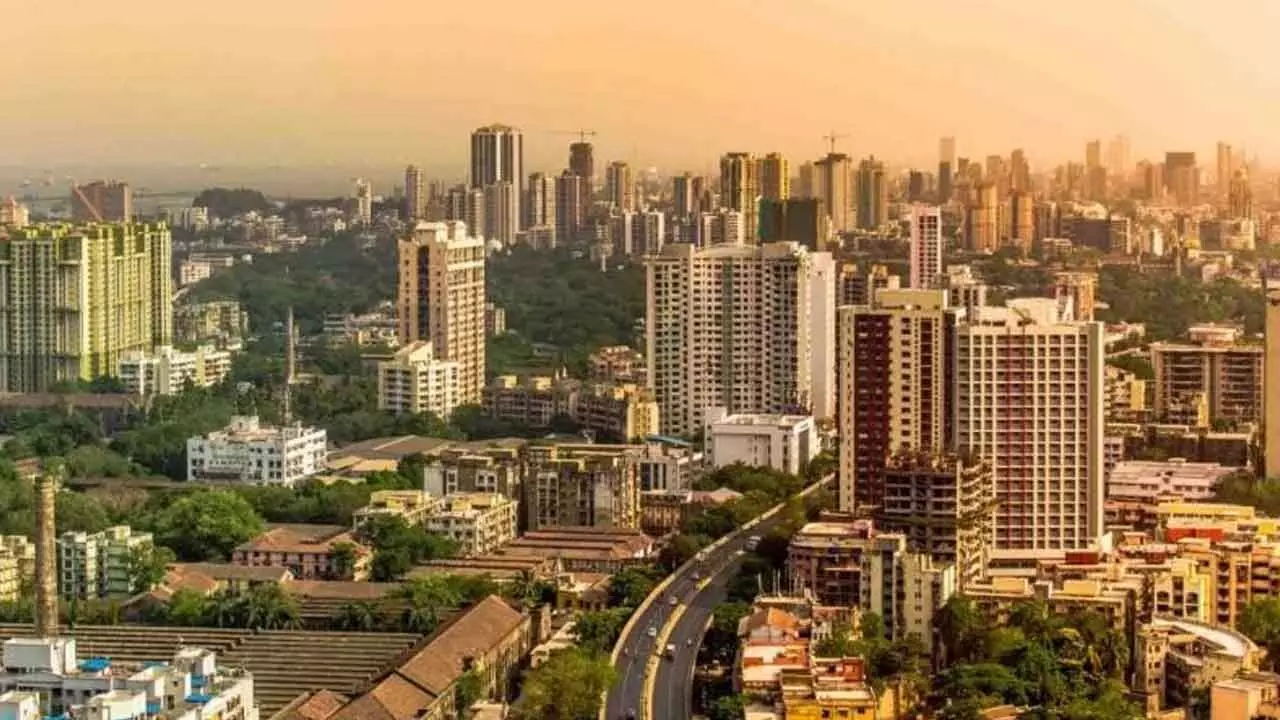
India’s real estate sector remains firmly on an upward trajectory through 2025 and is poised for sustained growth in 2026, supported by robust economic fundamentals, progressive policy support and rising investor confidence. Office leasing has crossed 50 million sq ft in the first nine months of 2025, led by Global Capability Centers and flexible workspaces, reinforcing India’s position as a key APAC office market.
At the same time, institutional interest is expanding into mixed-use developments and alternative asset classes such as data centres, senior living and co-living. Residential demand continues to strengthen across segments and geographies, driven by urbanisation, infrastructure-led connectivity and evolving lifestyle preferences
India’s real estate sector continues to be on the upswing throughout 2025, supported by strong economic growth, heightened consumption levels, progressive government policies, and sustained investor confidence.
At the same time, mixed use and alternative asset classes such as data centers, senior living, and co-living have witnessed rising participation from institutional investors, driven by robust demand, rapid digital adoption, demographic shifts, and evolving lifestyle needs.
Looking ahead in 2026, India’s real estate sector is set to continue its steadfast growth journey marked by institutionalization and diversification, supported by heightened consumption, steady occupier interest, and an uptick in investor confidence. Demand across both commercial and residential segments is expected to remain healthy, driven by evolving workplace models, rising homeownership, steady improvements in affordability and infrastructure-led connectivity enhancements.
India’s office market demonstrated notable performance, crossing the 50 million sq ft leasing mark in the first nine months of 2025, an 8% YoY growth. Global Capability Centers (GCCs) drove nearly 40% of this uptake, underscoring their expanding role in Indian commercial real estate. New supply is expected to close around 55-60 million sq ft, reinforcing India’s position as a major office market within the APAC region.
Going ahead, we expect leasing activity to remain robust in 2026, supported by demand scale-up across major cities, increasing adoption of flexible & managed workspace solutions, and high traction in sustainable buildings,” said Arpit Mehrotra, Managing Director, Office Services, India, Colliers. Overall, we anticipate annual office space demand to stabilize at around 70-75 million sq ft in 2026 and beyond.
In 2026 and beyond, GCCs in India will firmly establish themselves as strategic centers for research, product development, advanced analytics, artificial intelligence, and cloud technologies, supported by the country’s strong IT ecosystem and business-conducive government policies. GCC leasing is expected to reach 30-35 million sq ft in 2026, and account for 40-50% of the Grade A office space demand.
In 2026, flexible workspaces are expected to account for nearly 20% of Grade A leasing, driven by hybrid work models, cost optimization, and the need for speed-to-market solutions. With flex stock projected to reach 85-90 million sq ft in 2026, leading operators will continue to offer enterprise-grade and fully managed solutions that integrate technology, sustainability, and portfolio agility.
“Technology firms continued to drive commercial real estate in India, accounting for over 40% of the demand in both conventional as well as flex spaces during the last quarter. With leading operators likely to expand aggressively and ramp up their offerings in Tier II cities, we expect almost one-fifth of the office space demand to come from flex space operators in 2026 and beyond,” said Vimal Nadar, National Director and Head of Research, Colliers India.
India’s office market is entering a new era of democratization driven by increasing number of equity market listings in the form of REITs, SM REITs and Initial Public Offerings (IPOs), especially by flex space operators. Interestingly, of the ~850 million sq ft of Grade A office stock in the country, around 135 million sq ft of assets are already listed under REITs, translating into a penetration of nearly 16%.
In fact, older buildings (>10 years), totaling over 350 million sq ft, present retrofitting potential of more than INR 425 billion, which can ultimately ensure higher occupancy levels and rentals for developers and investors alike in the long-term.
Residential sales have improved in the post-pandemic era, reaching 0.3-0.4 million units annually, and the momentum is likely to continue in 2026 as well. Driven by rapid urbanization and impetus on infrastructure enhancement, leading residential developers are likely to expand their offerings across Tier II/III cities of the country. Moreover, the demographic advantage of India, with a median age of around 30 years, will continue to support housing demand, with developers catering to first-time homebuyers and High-Net worth Individuals (HNIs) alike. Lifestyle-focused preferences will further drive the demand for plotted developments, gated villas, upscale apartments, and vacation homes, while investors are likely to prioritize emerging micro-markets guided by long-term returns.
Lifestyle and sustainability led home buying preference are set to pick up pace: Homebuyers in 2026 are likely to increasingly prioritize lifestyle and sustainability driven housing projects. At the same time, the preference for green homes using smart technologies and energy-efficient materials is also likely to increase.
India’s urban housing market is set to transform steadily as redevelopment initiatives gather speed across major cities such as Mumbai, Delhi NCR, Bengaluru, Chennai, and Kolkata. Redevelopment of older and dilapidated buildings will be increasingly supported by favorable Floor Space Index (FSI) policies, Transferable Development Rights (TDR) frameworks, and revised urban planning guidelines. Close coordination between government bodies and private developers will be crucial in addressing redevelopment challenges and creating contemporary, resilient urban neighborhoods.





