

Hyderabad homebuyers decode next investment cycle at Credai show
Hyderabad homebuyers decode next investment cycle at Credai show
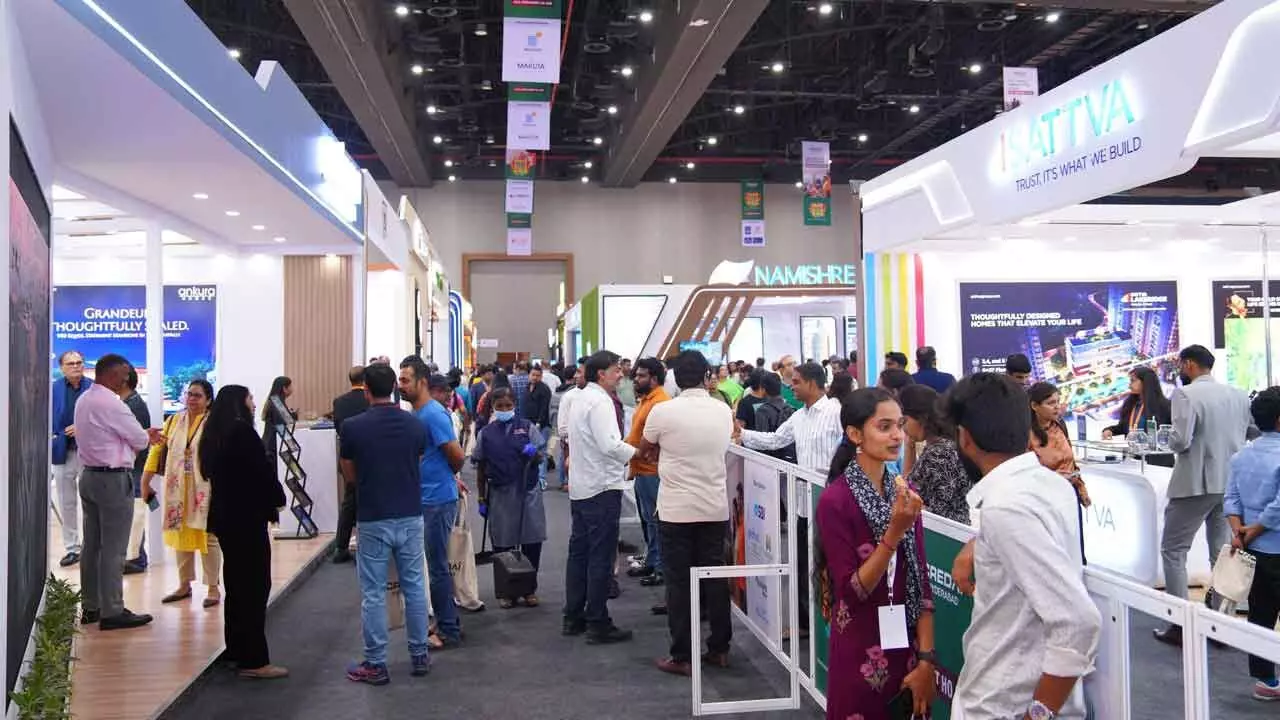
At a time when Hyderabad’s residential real estate is transitioning from rapid price discovery to a more discerning investment phase, the Credai Property Show emerged as a live barometer of buyer sentiment. Held from February 6 to 8, 2026 at HITEX, the exhibition was not merely a sales-driven showcase—it functioned as a decision-making laboratory where end-users, investors, developers and lenders intersected to decode the city’s next growth corridors.
A defining theme across buyer conversations was investment-led ownership. Lohith, a Hyderabad-based business analyst with Amazon, typified this mindset. Already a homeowner in Miyapur, he is now evaluating a second purchase primarily as an asset play, targeting returns over the next two to four years.
His preference for apartments in West Hyderabad—particularly zones around Exit 2—reflects a broader shift in investor logic: moving beyond established micro-markets to future-ready locations where infrastructure-led appreciation is still unfolding.
This inclination towards emerging zones underscores a subtle but important recalibration. While premium localities command higher ticket sizes, buyers are increasingly weighing future development visibility over current address value. The expectation is clear—capital appreciation driven by connectivity, planned commercial ecosystems and phased urban expansion rather than speculative spikes.
Equally telling was the emphasis on execution fundamentals. Quality of construction, credible developers and timely handovers emerged as non-negotiables. In a market that has matured significantly, buyer confidence is no longer driven by marketing gloss but by delivery track records.
The Credai platform, by bringing multiple developers under one roof, allowed buyers to benchmark projects, pricing and credibility in real time—reducing information asymmetry that typically slows decision-making.
Affordability, however, remains a tension point. G B Subhash, a software professional from Hitec City, articulated a pragmatic view: while prices in micro-markets like Kokapet-Neopolis and Kollur appear stretched, housing—much like automobiles—operates across segments.
The real challenge, he argued, lies in aligning expectations with budgets rather than broadly dismissing price levels. Importantly, there is also a growing belief that pricing discipline may return if demand moderates, hinting at a more balanced market ahead.
Yet, the exhibition also revealed gaps. Former Army Major Ghanashyam Pandey’s disappointment at the absence of Secunderabad-centric offerings highlights a structural imbalance in supply concentration. As developers chase high-growth western corridors, legacy residential zones with strong emotional and lifestyle appeal remain underserved—particularly for villa formats and retirement-oriented living. This signals an untapped opportunity for niche development strategies.
Financial readiness was another standout feature. Public sector banks—including SBI, Bank of Baroda, Union Bank of India and Punjab National Bank—reported strong on-ground engagement, with nearly 100 serious loan enquiries per day. On-the-spot consultations and preliminary documentation suggest that buyer intent is translating into actionable pipelines rather than passive interest.
By the final day, the exhibition floor was abuzz—not just with visitors, but with informed conversations around technology adoption, construction innovation and market outlooks through panel discussions. The Credai Property Show reaffirmed its role as more than a marketplace; it is a strategic convergence point where Hyderabad’s real estate narrative is actively shaped.
As the city enters its next growth chapter, one message is clear: today’s homebuyer is analytical, investment-aware and execution-focused—and the market is being compelled to evolve accordingly.





