

India’s AI model strategy delivering results: Ashwini Vaishnaw
Union Minister Ashwini Vaishnaw says India’s sovereign AI model strategy under the IndiaAI Mission is delivering results, highlighted by advanced indigenous models from Sarvam AI.
India’s AI model strategy delivering results: Ashwini Vaishnaw
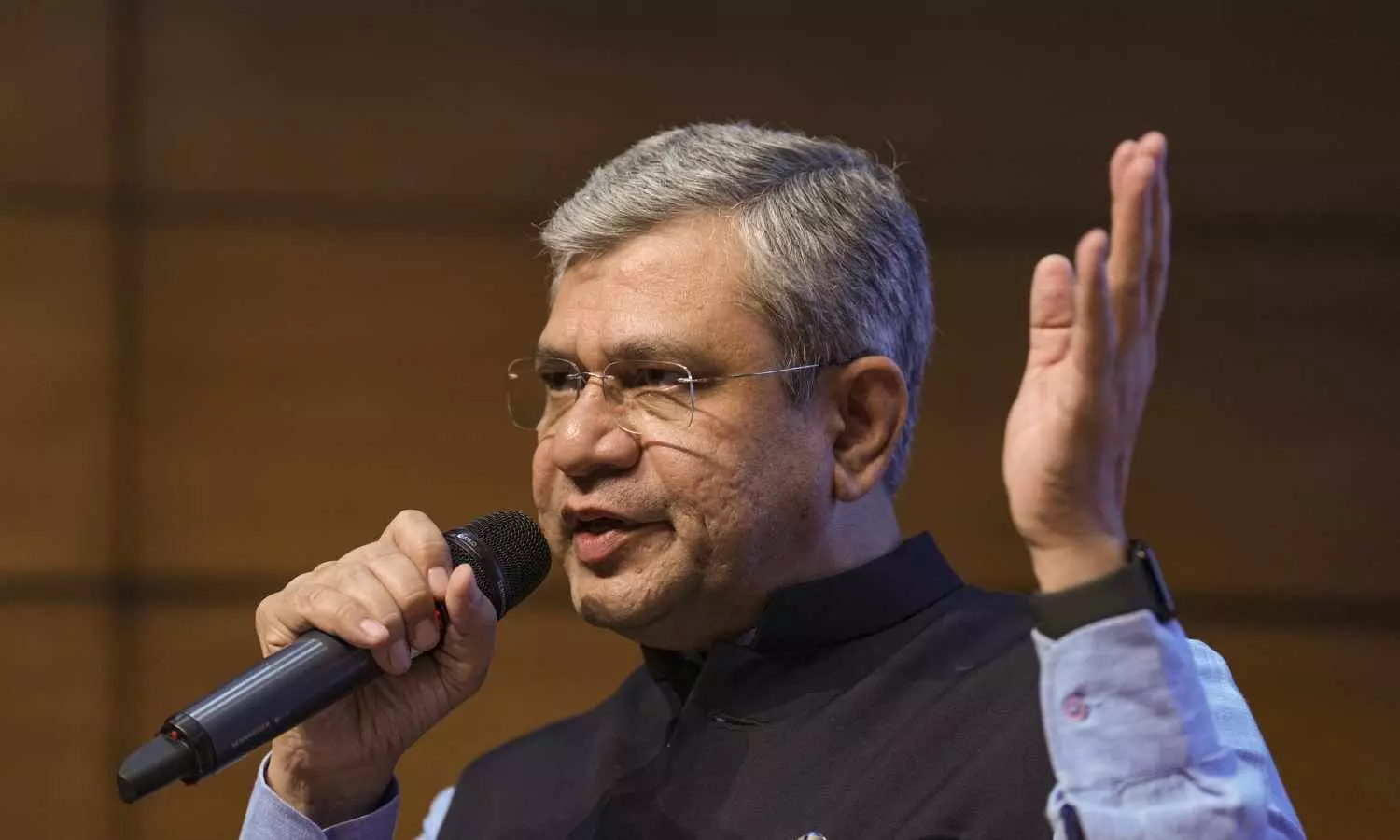
Union Minister Ashwini Vaishnaw says India’s sovereign AI strategy is yielding concrete results, highlighted by the advanced models developed under the IndiaAI Mission, including those by homegrown Sarvam AI, demonstrating India’s progressing indigenous AI ecosystem.
India’s sovereign artificial intelligence (AI) model strategy is beginning to show tangible and impactful results, said Union Minister for Electronics and Information Technology Ashwini Vaishnaw on Sunday, underlining India’s growing maturity in developing cutting-edge indigenous AI technologies. The remarks come as part of ongoing emphasis on building a robust AI ecosystem driven by the government’s IndiaAI Mission and homegrown startups delivering globally competitive AI models.
In a post shared on social platform X, Vaishnaw highlighted the positive reception of advanced AI models released by Sarvam AI, a Bengaluru-based startup selected under the IndiaAI Mission to develop foundational AI capabilities. He noted that even critical reviewers have lauded the technological sophistication of these models — a testament to the strategic direction and progress of India’s sovereign AI initiative.
Sarvam AI was shortlisted from 67 proposals submitted for developing India’s first sovereign foundational large language model (LLM), and its accomplishments have helped validate the government’s vision for localized and purpose-built AI tools. The company’s work covers advanced text-to-speech, speech-to-text, and optical character recognition (OCR) AI systems tailored specifically for Indic languages, bridging key linguistic and technological gaps in the AI landscape.
Beyond linguistic capabilities, Sarvam AI has been building models designed to handle complex reasoning tasks and support multilingual interactions — critical capabilities to support broad adoption of AI solutions across India’s diverse linguistic communities. Reports indicate that the company’s roadmap includes launching large language models with significant scale in parameters, training them on datasets rich in Indian content, and tailoring them for use in governance, public services, and industry use cases.
Vaishnaw also pointed to the broader contributions of Indian engineers and innovators working on innovative AI applications in sectors such as materials science, healthcare, and cybersecurity. These applications are seen as poised to gain international recognition for their originality, utility, and societal impact, further boosting India’s position in the global AI ecosystem.
IndiaAI Mission: The Strategy and Its Progress
The IndiaAI Mission — approved by the government in 2024 with a budget outlay of around ₹10,300 crore over five years — aims to accelerate India’s AI capabilities through support for foundational models, research and innovation, compute infrastructure, and skilling programmes.
Under this mission, India has been expanding its AI compute capacity through the provisioning of thousands of GPUs at subsidised rates, enabling startups and research organisations to train and deploy large-scale models. Partnerships and frameworks for shared compute infrastructure are part of this strategy to democratize access to high–performance computing resources necessary for developing advanced AI models.
Also bolstering this push is the upcoming India AI Impact Summit 2026, scheduled from February 16 to 20, which aims to spotlight India’s AI advancements and position the country as a key contributor in the global AI dialogue. Leaders from industry and research institutions are expected to attend, further amplifying visibility on India’s sovereign AI progress.
Government Vision and Inclusivity
Prime Minister Narendra Modi has consistently urged Indian startups and innovators to leverage AI for societal good, emphasizing that AI should be affordable, inclusive, and transparent, and that models should promote indigenous content and support regional languages. This vision aligns with the objectives of the IndiaAI Mission and underscores the government’s commitment to fostering an AI ecosystem that serves diverse public and private use cases across the country.
Vaishnaw’s comments reflect a broader narrative that India’s AI ambitions are transitioning from conceptual frameworks to real technological outputs. The early success of sovereign AI models like those created by Sarvam AI serves as an early indicator that India’s strategy — focused on domestic innovation, language inclusion, and local data orientation — can compete and win in an increasingly competitive global AI arena.





