

AI in human resources: Delivering real operational impact
image for illustrative purpose
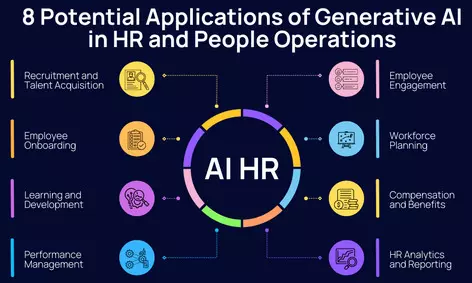
Artificial intelligence is moving beyond experimentation in Human Resources and becoming a core operational tool across global organisations. From answering employee queries to accelerating hiring and training, AI is now embedded in day-to-day HR workflows, delivering measurable gains in efficiency, cost reduction, and service quality.
The strongest results are emerging where outcomes can be clearly tracked—such as time saved, tickets resolved, and faster employee onboarding.
Fewer tickets, faster resolutions
IBM’s internal virtual assistant, AskHR, exemplifies AI’s impact at scale. Designed to handle employee questions and automate routine HR actions, AskHR now manages more than 80 HR tasks and engages in over two million employee conversations annually.
Using a two-tier model—where AI resolves standard queries and human advisers manage complex cases—IBM reports a 94% success rate in answering common questions and a 75% reduction in HR support tickets since 2016. Most notably, the company says HR operational costs have fallen by 40% over four years.
Unlike simple chatbot systems, AskHR completes transactions end-to-end rather than routing users to static documentation, significantly reducing hand-offs to human staff.
Recruitment and onboarding efficiencies
Vodafone’s 2024 annual report highlights similar gains through its internal platform, “Grow with Vodafone.” The system has reduced time-to-hire from 50 days to 48 days, simplified the application process, and introduced personalised, skills-based job recommendations.
These improvements have cut applicant and onboarding queries by 78%. Vodafone has also deployed an AI-powered global HR data lake and headcount planning tool, reducing manual reporting and allowing stakeholders to access insights directly.
Training and internal support at scale
Large employers continue to use AI to reduce “time-to-competence” for new hires. Bank of America’s onboarding and professional development unit, The Academy, uses AI-driven interactive coaching, with employees completing more than one million simulations annually.
Its internal assistant, Erica for Employees, supports staff on topics such as benefits, payroll, and tax forms. Used by over 90% of employees, Erica has helped cut IT service desk calls by more than 50%.
By reducing hidden work—such as searching for information, repeating questions, and waiting for responses—these tools lower costs while improving productivity, particularly in regulated and customer-facing roles.
Frontline productivity gains
Walmart’s June 2025 corporate update outlines the rollout of AI tools through its associates’ app. Early results show shift-planning times for team leads and store managers falling from 90 minutes to 30 minutes.
The app also provides real-time translation across 44 languages and is being upgraded to convert internal process guides into multilingual, AI-generated instructions. More than 900,000 employees use the platform weekly, processing over three million queries per day through its conversational AI system.
At Walmart’s scale, the workforce impact is substantial—but the benefits apply across organisations of all sizes, improving retention, safety, and service quality alongside cost savings.
Governance and human oversight
Governance remains critical as HR systems increasingly rely on AI. HSBC reports more than 600 AI use cases in operation and provides employees with LLM-based productivity tools for tasks such as translation and document analysis.
To manage risk, HSBC enforces strict governance through AI Review Councils and lifecycle management frameworks, ensuring data security, accountability, and compliance. This is particularly important in HR, where systems handle sensitive and personally identifiable employee data.
Balancing efficiency with trust
Operational impact depends as much on trust as speed. Incorrect or overconfident AI responses can create rework and erode confidence. Leading organisations mitigate this risk through hybrid models that keep humans involved in complex decisions.
IBM’s two-tier support structure, Vodafone’s guided job matching, and the governance frameworks at Walmart and HSBC demonstrate how oversight enables AI to scale without compromising fairness or reliability.
What comes next
Across these large enterprises, a consistent deployment pattern has emerged. AI adoption typically begins with high-volume, repetitive HR queries, expands into recruitment and training, and then moves closer to frontline operations.
The biggest gains occur when AI transforms HR from a reactive service queue into a faster, more consistent, and data-driven operational function—reshaping how organisations support their workforce at scale.





