

Unseen Scars: The Psychological Toll of Personal Injury and Your Legal Rights
Understanding How Emotional Trauma Impacts Injury Claims, Compensation, and Recovery in Canada
image for illustrative purpose
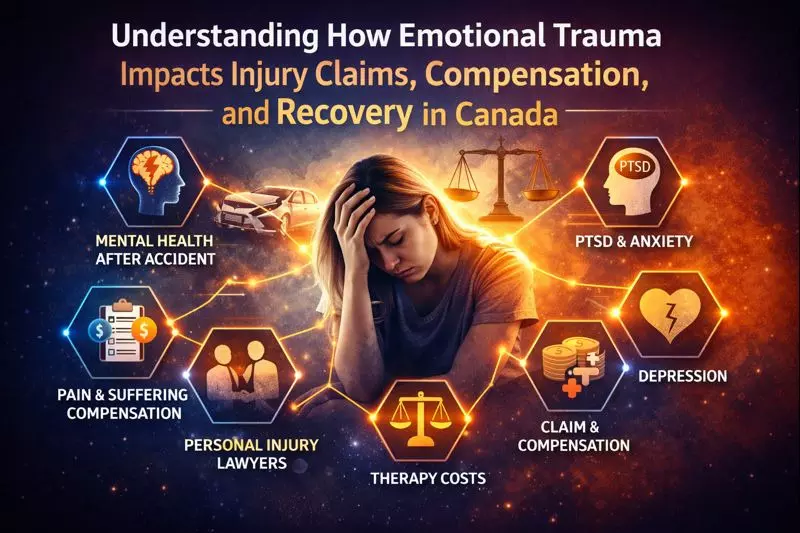
Imagine this: a routine drive home turns chaotic in an instant. Brakes screech, metal crunches, and suddenly, you are left shaken but seemingly unscathed. The paramedics clear you at the scene, friends reassure you it was just a close call, and life resumes its rhythm. Yet weeks later, the nightmares begin. Crowded intersections trigger panic attacks, and simple errands feel like insurmountable hurdles. What started as a physical jolt has unraveled into a profound emotional struggle, one that lingers far beyond the visible bruises.
This scenario captures the hidden reality for many personal injury victims in Canada. While the immediate focus often lands on broken bones or hospital bills, the psychological aftermath can prove equally debilitating. These unseen scars, from post-traumatic stress to chronic anxiety, demand recognition not just for healing, but for fair compensation under the law. In this post, we explore the often-overlooked psychological dimensions of personal injury claims, shedding light on how they intersect with legal rights and recovery strategies.
For those navigating this dual burden of physical and emotional recovery, guidance from Experienced Personal Injury Claims Lawyers in Canada can illuminate the path forward, ensuring both aspects of your well-being are addressed in any claim.
Recognizing Psychological Injuries After an Accident
Personal injury cases traditionally evoke images of tangible harm: whiplash from a rear-end collision, fractures from a workplace mishap, or lacerations from a defective product. However, the mind bears its own wounds, and these can manifest in ways that profoundly disrupt daily life. Psychological injuries encompass a spectrum of conditions triggered or exacerbated by trauma, including acute stress disorder, depression, and adjustment disorders.
Consider the brain's response to trauma. When faced with a life-altering event, the body's fight-or-flight mechanism floods the system with stress hormones like cortisol. For some, this subsides quickly; for others, it entrenches, rewiring neural pathways and leading to persistent symptoms. Sleep disturbances become the norm, relationships strain under unspoken tension, and professional productivity plummets. These effects are not mere "bumps in the road" but legitimate medical conditions warranting treatment and redress.
In Canadian law, psychological harm falls under the broader umbrella of non-pecuniary damages, which compensate for pain, suffering, and loss of enjoyment of life. Courts have long affirmed that emotional distress holds equal weight to physical impairment. A landmark principle stems from the recognition that the whole person, body and mind, constitutes the injury's full scope. This holistic view empowers claimants to pursue comprehensive relief, provided they can demonstrate the injury's origin in the incident.
The Startling Prevalence of Mental Health Challenges Post-Injury
The numbers paint a sobering picture of how widespread these issues truly are. According to the Canadian Institute for Health Information, in 2023-2024 alone, there were 283,000 acute inpatient hospitalizations due to injuries across Canada, a notable rise from the previous year. This surge underscores the sheer volume of individuals thrust into recovery trajectories, many of whom grapple with accompanying mental health repercussions.
Compounding this, mental health vulnerabilities amplify in the wake of such events. The Canadian Institute for Health Information reports that about one in five Canadians faces mental health or substance use issues annually, with roughly one in three encountering mental illness over their lifetime. For injury survivors, these risks intensify; studies link traumatic events to heightened incidences of disorders like PTSD, where symptoms such as hypervigilance and emotional numbness can persist for months or years.
Why does this matter in a legal context? Insurers and defendants often minimize psychological claims, labeling them subjective or secondary. Yet data reveals their tangible costs: extended therapy sessions, lost wages from therapy-mandated leaves, and diminished quality of life. By quantifying these through medical evidence, claimants strengthen their positions, transforming abstract suffering into concrete entitlements.
Legal Frameworks: Treating Mind and Body as Equals
Canada's tort system provides robust protections for psychological injuries, rooted in negligence principles that hold wrongdoers accountable for foreseeable harms. To succeed in a claim, plaintiffs must establish duty of care, breach, causation, and damages, with emotional impacts fitting seamlessly into the damages phase.
A key evolution in jurisprudence has been the equalization of mental and physical harms. Courts now routinely award damages for recognized disorders without requiring a "visible" scar. For instance, in cases involving motor vehicle accidents, claimants have secured awards for therapy costs and future care tied to diagnosed anxiety. This parity extends to product liability suits, where a faulty gadget's trauma might yield compensation for ensuing phobias.
Thresholds vary by province, but federal common law influences uniformity. In no-fault regimes like those in some auto insurance schemes, psychological benefits often include dedicated mental health coverage, underscoring legislative acknowledgment. Claimants must act promptly, as limitation periods typically run from the date of discovery, including when emotional symptoms emerge.
Challenges persist, however. Proving causation demands distinguishing pre-existing conditions from incident-induced ones. Defendants may argue resilience or alternative stressors, necessitating skilled advocacy to weave a compelling narrative.
Building a Strong Case: Evidence and Expert Testimony
Securing compensation for psychological injuries hinges on robust documentation. From the outset, journal your experiences: note triggers, mood shifts, and interpersonal strains. This personal ledger serves as a foundational record, humanizing your claim beyond clinical reports.
Medical evidence forms the cornerstone. Consult a family physician promptly for referrals to psychologists or psychiatrists. Diagnostic tools like the DSM-5 help classify conditions, while functional assessments quantify impairments, such as reduced concentration affecting job performance. Neuropsychological testing can reveal cognitive deficits, like memory lapses post-concussion syndrome, bolstering causation arguments.
Expert witnesses play a pivotal role. Psychologists testify to diagnosis and prognosis, while vocational experts evaluate earning capacity losses from conditions like major depressive disorder. Their reports, grounded in peer-reviewed methodologies, counter defense skepticism. In court, cross-examinations test these opinions, so selecting credible, articulate professionals is crucial.
Litigation strategies adapt to these elements. Settlement negotiations often hinge on independent medical exams, where neutral evaluators appraise severity. If disputes arise, mediation or trial ensues, with judges weighing evidence against precedents. Successful cases highlight not just the injury's immediacy, but its ripple effects: a once-vibrant parent sidelined by agoraphobia, or a professional derailed by intrusive flashbacks.
Pathways to Compensation: What You Can Recover
Damages for psychological injuries span pecuniary and non-pecuniary categories. Pecuniary losses cover quantifiable outlays, such as counseling fees, prescription costs for antidepressants, or income gaps from sick days. Future projections, discounted to present value, account for lifelong therapy needs.
Non-pecuniary awards address intangible losses. Courts reference guidelines like Ontario's trilogy caps, adjusted annually, to ensure consistency. Factors influencing quantum include injury severity, treatment adherence, and pre-injury baselines. A mild adjustment disorder might yield modest sums, while chronic PTSD could command higher figures, reflecting enduring lifestyle encroachments.
Additional heads include family law claims, where spousal consortium losses compensate partners for emotional voids. Punitive damages, though rare, apply in egregious negligence, deterring reckless conduct.
Tax implications merit attention: structured settlements preserve funds tax-free, ideal for ongoing mental health support. Financial planners collaborate with legal teams to optimize these arrangements, safeguarding long-term stability.
Steps Toward Holistic Recovery and Justice
Embarking on recovery demands proactive steps. Prioritize mental health access through provincial plans or employee benefits; wait times vary, so explore private options if feasible. Support groups foster community, reducing isolation's grip.
Legally, timeline adherence is paramount. Notify insurers within policy windows, gather witness statements, and retain records. Early legal consultation clarifies entitlements without commitment, as many firms operate on contingency.
Ultimately, pursuing a claim transcends monetary gain; it validates suffering and promotes accountability. By addressing psychological facets, victims reclaim agency, fostering resilience amid adversity.
In the journey from trauma to triumph, remember: healing encompasses the whole self. Whether through therapy's gentle unraveling or law's steadfast shield, support exists to mend what was fractured. If echoes of this narrative resonate, reaching out could mark your turning point toward renewed wholeness.





