

At-home blood tests can accurately detect key biomarkers of Alzheimer's
Alzheimer's disease is usually confirmed through brain scans or spinal fluid tests, which are invasive and expensive
At-home blood tests can accurately detect key biomarkers of Alzheimer's
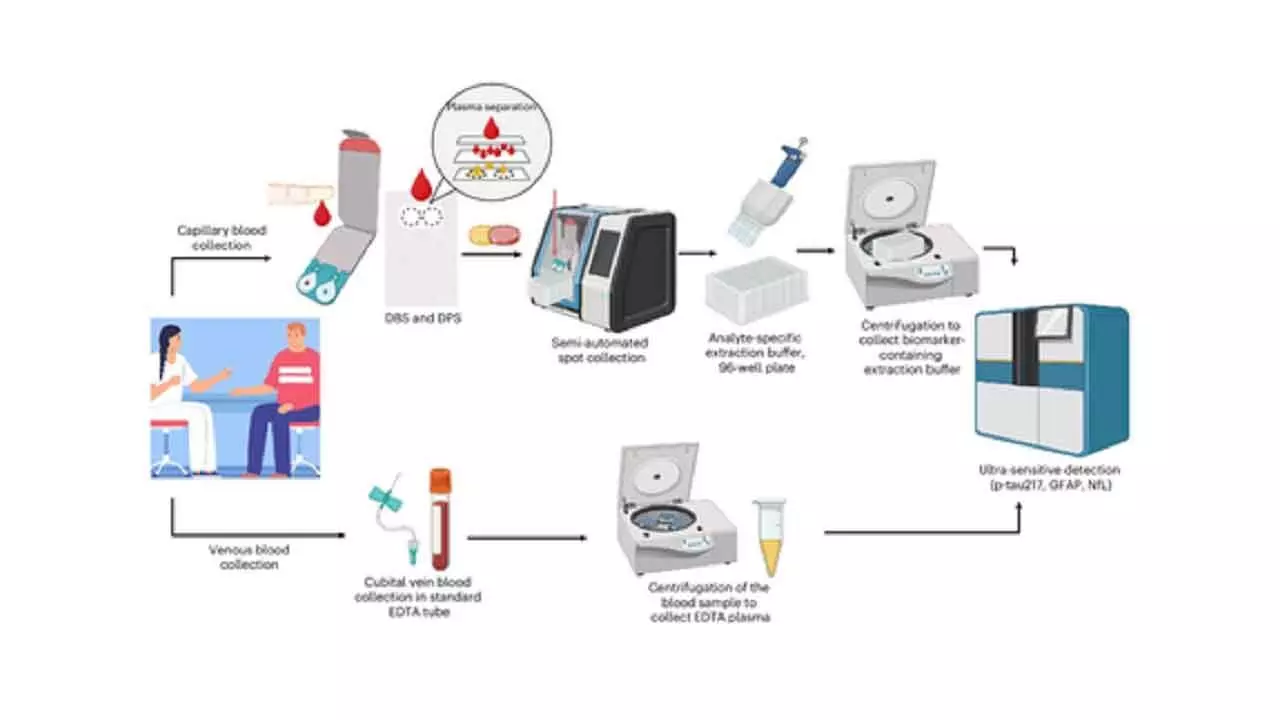
Simple finger-prick blood samples that can be collected at home and mailed to laboratories without refrigeration or prior processing can help detect Alzheimer's disease biomarkers accurately, according to an international study.
The research, published in the journal Nature Medicine, represents the first large-scale validation of the accessible testing approach that removes geographic barriers and opens brain disease research to global populations without requiring specialised health care infrastructure.
Alzheimer's disease is usually confirmed through brain scans or spinal fluid tests, which are invasive and expensive. Blood tests that measure biomarkers, such as p-tau217, are emerging as accurate and accessible tools for detecting Alzheimer's disease.
"This breakthrough could fundamentally change how we conduct Alzheimer's research by proving that the same biomarkers doctors use to detect Alzheimer's pathology can be measured from a simple finger prick collected at home or in more remote community settings,” said Professor Nicholas Ashton, senior director of US-based Banner Health.





