

Hydrogen emerges as the next big leap in global clean energy transition
Hydrogen emerges as the next big leap in global clean energy transition
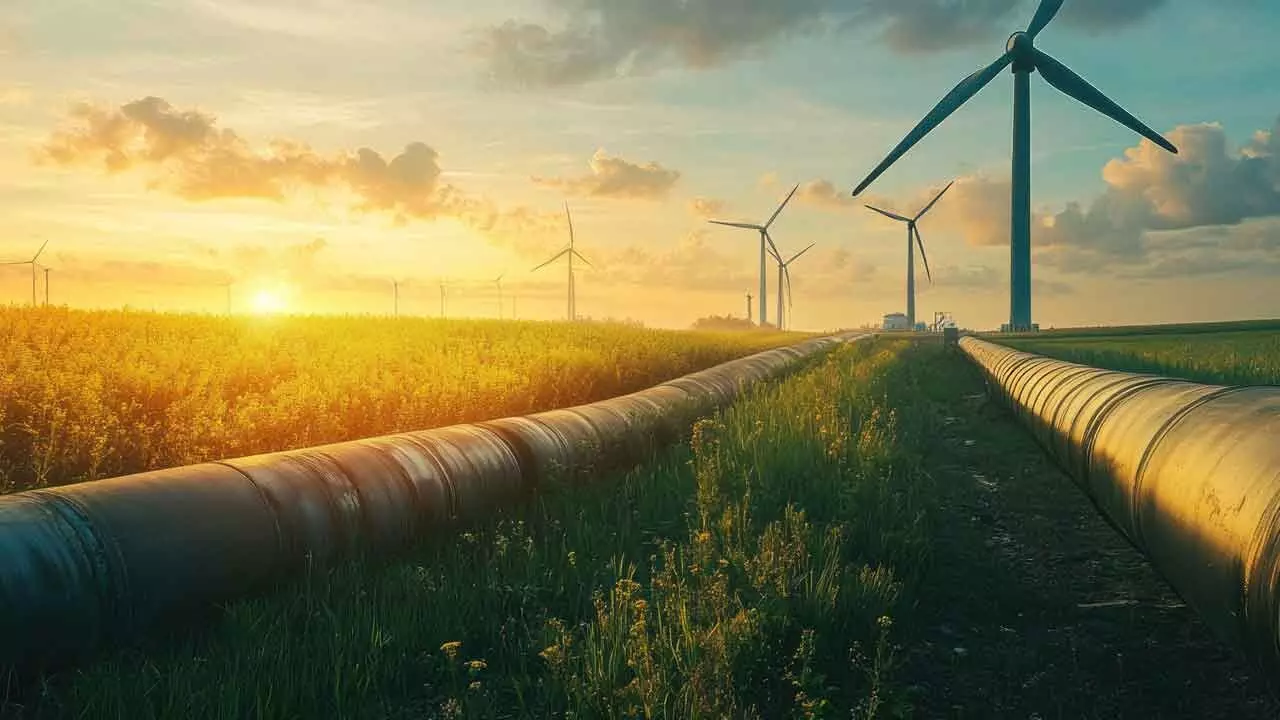
The future of hydrogen energy is promising, with significant global investment and government initiatives aimed at making it a key player in the energy transition, particularly in decarbonizing hard-to-abate sectors such as heavy industry and long-haul transportation.
Key developments include scaling up green hydrogen production using renewable energy, enhancing storage and transportation infrastructure, and integrating hydrogen into sectors where electrification is challenging, such as steelmaking and shipping.
A possible solution to help push the curve down to almost 100% reduction in emissions lies in the fuel used to power the engines. Sustainable aviation fuels (SAF) – carbon-based- would still produce the same CO2 emissions from combustion; however, they can be offset by the manufacturing process of the fuel over the lifecycle.
The offset in emissions for some cases of SAF can be as high as 80%. Until SAF reaches a higher level of production, it will be difficult to completely replace kerosene fuels.
Another alternative is to use liquid hydrogen (LH2) as a fuel. Hydrogen is the most abundant element in the universe, and in its liquid form, it contains about 2.5 times more energy per kilogram than kerosene. When burning, hydrogen only produces water vapor as a by-product, since the fuel has no carbon content to start with.
With regards to local air quality, hydrogen combustion produces up to 90% less nitrogen oxides than kerosene fuel, and it eliminates the formation of particulate matter. From an environmental and energy content perspective, hydrogen has abundant potential.
An advantage, for any fuel, is high energy density, inexhaustibility, cleanliness, convenience, and independence from foreign control. Liquid hydrogen achieves the criteria, along with the potential to completely eliminate combustion emissions.
Another useful feature of hydrogen is that it can be used as a replacement for liquid fuel or as a fuel cell for electrical power. Electrical fuel cells could be suitable for short-range aircraft, while hydrogen combustion would be suitable for long-range and higher payloads.
Hydrogen fuel cells are already common devices found in cars, buses, and aircraft servicing vehicles.
Japan has launched its first-ever hydrogen-powered train — and it runs completely clean smoke. No carbon pollution. No fossil fuels. The only thing it releases into the air is water vapor.
Powered by hydrogen fuel cells, this next-gen train is designed to cut emissions, reduce noise, and make public transport greener than ever before.
Japan aims to replace diesel trains on many routes, bringing the country one step closer to a zero-emission future.
The first passenger train to use hydrogen power for commercial service was the Alstom Coradia iLint, which debuted in Germany in 2018, offering a quiet, zero-emission alternative to diesel, and India is also launching its own version on the Jind-Sonipat route, set to be a powerful hydrogen-powered train for heritage routes.
Hydrogen presents one potential solution, which could be combined with other measures, to fully decarbonize long-range flights. While electric technology must continue to be developed, based on current battery technology, it is only feasible for short-range flights and with limited payloads.
With scaling-up making promising progress, combined with the fast developments of renewable energy, there is potential to substantially reduce the manufacturing costs of renewable hydrogen and therefore, increase the efficiency of its production.





