

Govt must incentivise green energy startups
Govt must incentivise green energy startups
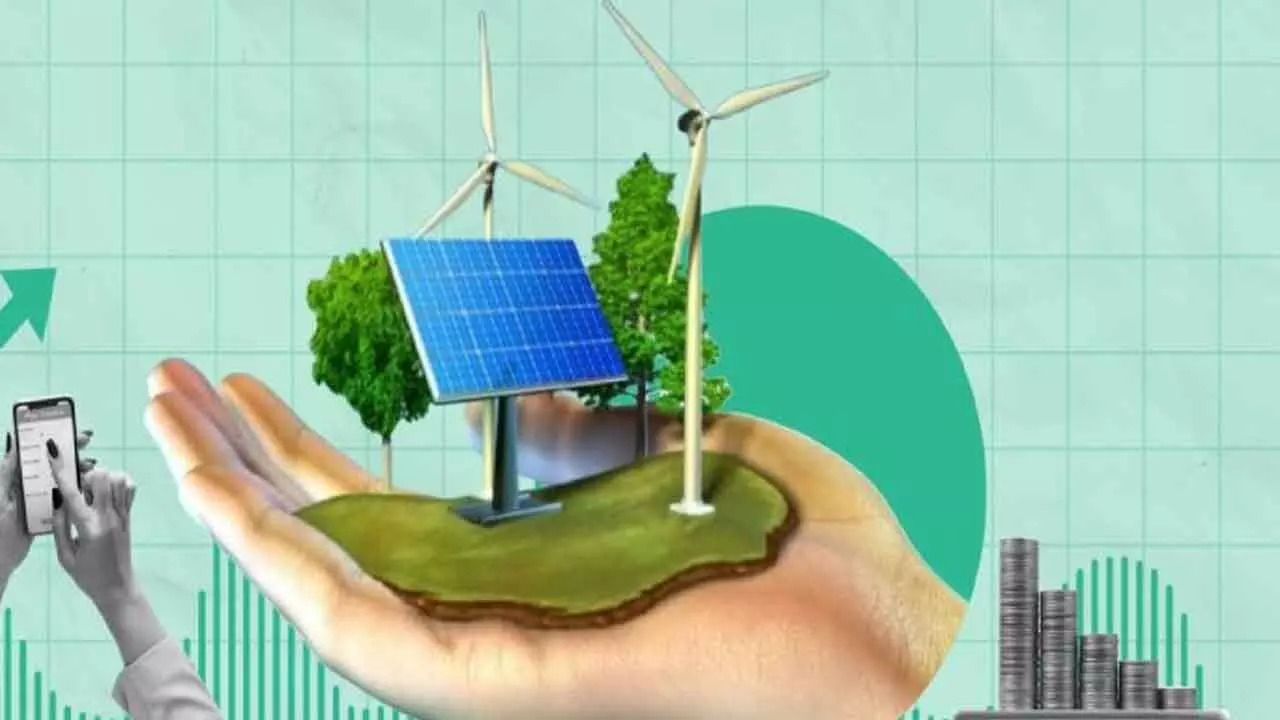
Energy security is critical for India’s economic growth. A nearly $4 trillion economy requires an assured supply of energy of all kinds, both fossil fuels and renewables. The recent West Asia conflict has once again exposed the vulnerabilities in India’s energy security framework.
The near-closure of the Strait of Hormuz has disrupted crude oil flows to a significant extent. A volatile West Asian region has pushed Brent crude prices to around $90 per barrel currently. Just a few days ago, prices had even touched the $120 mark.
Given the fluid nature of the conflict, the movement of crude oil prices remains uncertain. Such a scenario has raised concerns about a possible shortage of LPG and fuel in the country, although the government has denied such possibilities.
However, one clear lesson from the current situation is that India needs an assured and resilient energy supply mechanism under all circumstances.
To achieve this objective, the emphasis on renewable energy cannot be overstated. India has already made commendable progress in expanding its renewable energy portfolio over the years. The country currently produces around 250 GW of renewable energy, which accounts for nearly half of its total power generation capacity.
Solar power is the largest contributor to the renewable energy mix, with an installed capacity of about 120 GW. Wind and hydro power are the other major renewable sources, each contributing more than 50 GW of installed capacity. Bioenergy and nuclear power make up the remaining share of the clean energy portfolio.
The push towards clean energy must be further strengthened in the coming years. The government has already introduced several initiatives to promote renewable energy. Under the FAME India Scheme, subsidies are being provided to electric vehicle manufacturers.
The government has also launched the National Green Hydrogen Mission to support the decarbonisation of heavy industries, particularly in the manufacturing sector.
Similarly, incentives are being offered to startups operating in the green energy space to develop innovative solutions. However, these efforts need to be expanded further. In particular, dedicated schemes for startups working in deep-tech energy solutions should be promoted on a mission mode.
At present, industry–academia collaboration in the green energy space remains inadequate on several fronts. This gap can be addressed if the government establishes Centres of Excellence in leading academic institutions and encourages industry players to invest substantially in research and development.
Several European countries have demonstrated that a significant transition towards green energy is achievable. India too can accomplish this if all stakeholders actively invest in innovative research and scalable technologies in the green energy space.
Meanwhile, as the artificial intelligence wave sweeps across the world, billions of dollars are being invested in building data centres in India. These data centres are major energy consumers. As a result, the pressure on the country’s overall energy demand is expected to rise significantly in the coming years.
Therefore, it would be prudent for policymakers to formulate a clear and long-term strategy that takes into account India’s future energy requirements while accelerating the transition towards sustainable energy sources.
As the AI wave sweeps the world, billions of dollars are being pumped into setting up data centres in India. These data centres are energy guzzlers. So, the pressure on overall energy consumption is all set to increase in coming years. Therefore, it will be wise to come up with a clear plan, keeping the future energy requirement in mind.





