

From megawatts to megawatt-hours: India’s next energy test
From megawatts to megawatt-hours: India’s next energy test
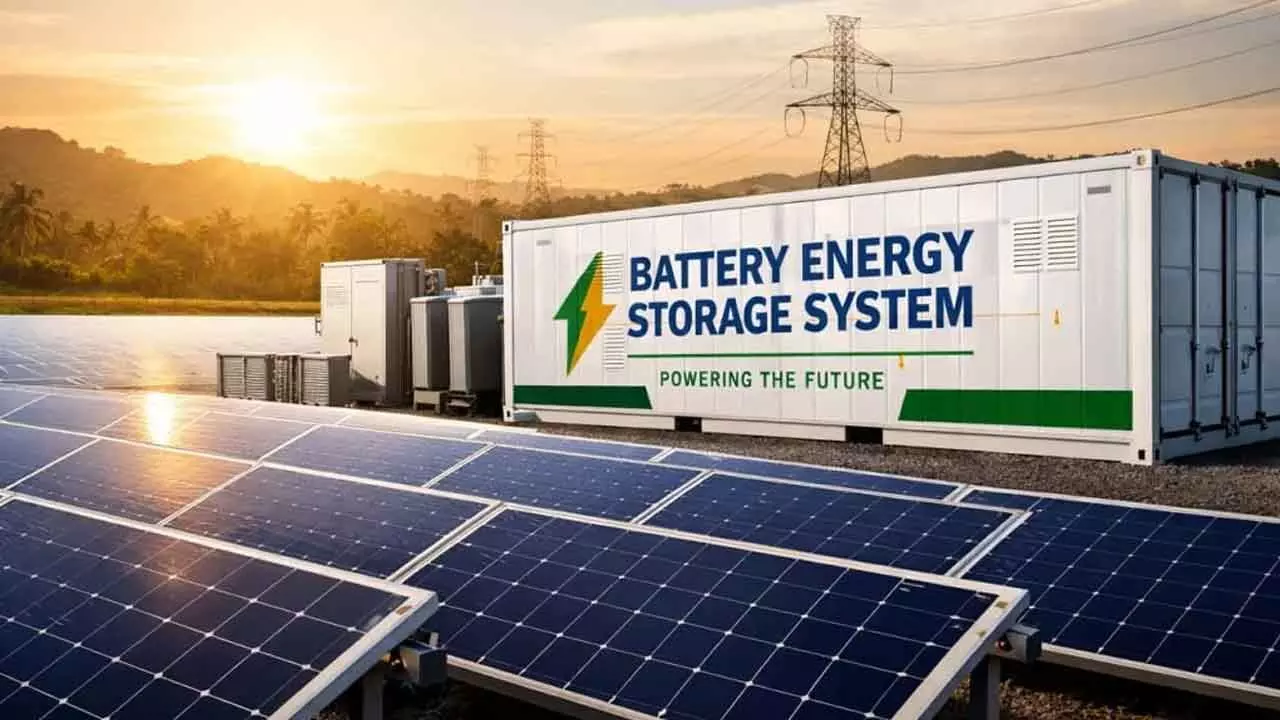
India’s power sector is undergoing a structural shift that is as consequential as it is complex. The country’s generation mix is steadily decoupling from its fossil-fuel past, with renewable energy (RE) emerging not merely as a supplement but as a central pillar of supply.
By the end of FY2026, renewables are projected to account for nearly 26 per cent of total electricity generation — a four-percentage-point increase over the previous year. The transformation is unmistakable.
Between FY2021 and FY2025, electricity demand grew at a robust compound annual rate of 7–8 per cent, broadly mirroring India’s average GDP growth of around 8 per cent.
While demand growth moderated in the first nine months of FY2026 due to an early and prolonged monsoon, the medium-term trajectory remains firm.
Structural drivers — a renewed manufacturing push, accelerating electric vehicle adoption, the proliferation of data centres and the emergence of a green hydrogen ecosystem — are all inherently power-intensive. In that sense, the recent lull appears cyclical rather than structural.
On the supply side, the acceleration has been striking. Installed capacity additions in the first nine months of FY2026 surged, with renewable energy accounting for over 90 per cent of incremental capacity.
According to Infomerics Ratings, renewable additions touched a record 49 GW during the period, keeping India aligned with its 500 GW non-fossil target by FY2030. Renewables also contributed nearly 64 per cent of incremental electricity generation growth in 9MFY26, underscoring not just capacity expansion but rising utilisation.
Looking further ahead, the ambitions become even starker. By FY2032, renewables — led primarily by solar — are projected to account for nearly 59 per cent of total installed capacity, while peak demand is estimated at 458 GW.
Yet herein lies the crux: solar power is abundant during the day, but peak demand often stretches into non-solar hours. The energy transition, therefore, is no longer merely about megawatts installed; it is increasingly about megawatt-hours stored.
Energy Storage Systems (ESS), including Battery Energy Storage Systems (BESS) and pumped storage projects (PSPs), will be critical to balancing the grid of the future.
Of the planned 236 GWh of BESS capacity by FY2032, however, a mere 0.2 per cent was operational as of June 2025, with less than 10 per cent under development. While India currently operates around 5 GW of PSPs and has over 12 GW under construction, the scale and pace required remain formidable.
Financing and contracting complexities further complicate the picture. Tariffs for BESS-linked renewable projects remain elevated due to high battery costs.
Distribution utilities, anticipating further cost corrections, have delayed signing power purchase agreements (PPAs). For independent power producers, the ability to secure remunerative PPAs is central to credit viability. Without predictable offtake, balance sheets weaken and capital deployment slows.
That said, the policy architecture offers some insulation. The Renewable Purchase Obligation framework mandates that distribution utilities source over 43 per cent of their power from renewables by FY2030, and a significant share of capacity under construction is expected to be contracted under this mechanism.





