

Clean energy to dominate future installed power capacity
India plans to double power capacity by 2036
image for illustrative purpose
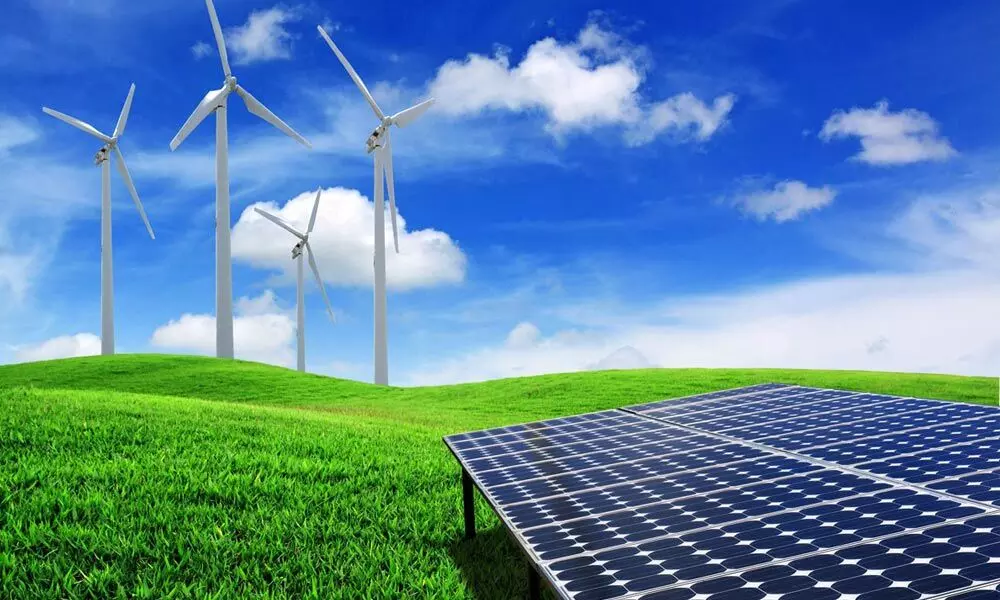
New Delhi: India is set to significantly expand its power generation capacity over the next decade, with a strong push towards clean energy, according to a new government projection on Thursday.
The Central Electricity Authority (CEA) has estimated that the country’s installed power capacity will more than double from the current 520 gigawatt (GW) to 1,121 GW by 2035-36. A major share of this growth will come from non-fossil fuel sources, which are expected to contribute around 70 per cent of the total capacity.
The projection shows a sharp rise in renewable energy, led by solar and wind. Solar power alone is expected to reach 509 GW, while wind energy may contribute 155 GW. Other clean sources such as large hydro, nuclear, biomass, and small hydro will also add to the energy mix.
At the same time, coal-based capacity is projected to remain significant at 315 GW, ensuring stability in the power system.
The CEA, in its Generation Adequacy Plan, said the government has mapped out a cost-effective strategy to meet future electricity demand. The report suggests there is clear visibility on capacity addition plans until 2035-36, with multiple projects already under construction or in advanced stages of planning.
Alongside generation, energy storage is expected to play a key role. The country is planning to add 174 GW of storage capacity, including battery energy storage systems and pumped storage projects.
These technologies will help manage the variability of renewable energy and ensure a steady power supply.
The report highlighted that several projects are already underway. Over 40 GW of coal-based capacity is under construction, while more projects are in the pipeline. In the renewable segment, around 155 GW of capacity is currently being built, with additional projects under tendering and planning stages.





