

Understanding Digital Marketing: A Strategic Guide to Online Growth
How search, content, data, and digital channels work together to build modern business success
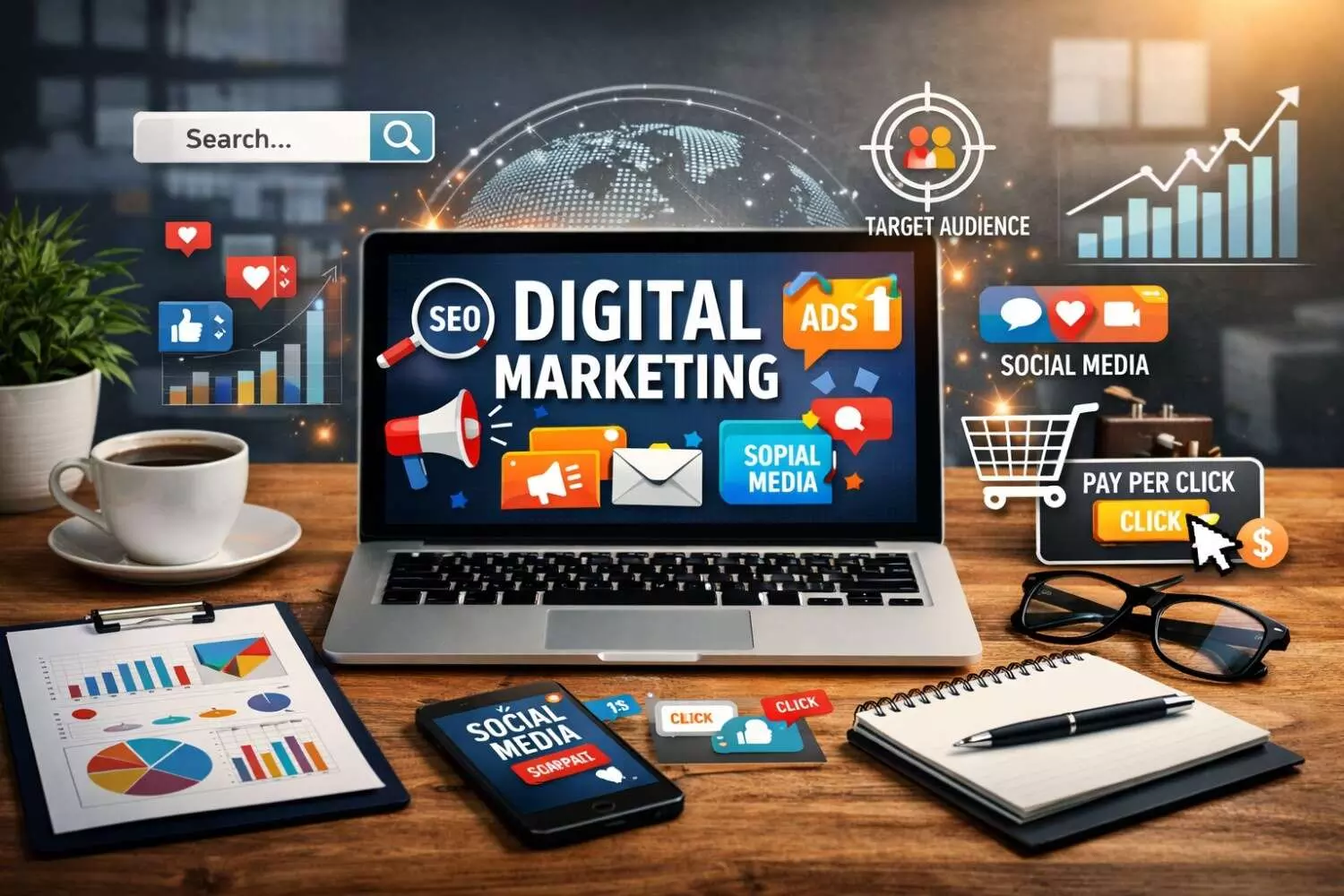
image for illustrative purpose
Understanding Digital Marketing
Digital marketing refers to the use of online channels and technologies to promote products, services, and brands. It has become a central part of modern business strategy as consumers increasingly rely on the internet to research, compare, and engage with organisations. Unlike traditional marketing, digital marketing allows activity to be tracked, measured, and adjusted with a high level of accuracy.
At its core, digital marketing focuses on delivering the right message to the right audience at the right time. This is achieved through a combination of data analysis, creative content, and platform-specific strategies that align with how people search, browse, and communicate online.
Search Engines and Online Visibility
Search engines play a significant role in digital marketing, as they are often the first place users turn when looking for information or solutions. Search engine optimisation, commonly known as SEO, is the process of improving a website’s visibility in organic search results. This involves technical improvements, content optimisation, and ensuring that a website meets user expectations in terms of relevance and usability.
Alongside organic search, paid search advertising allows businesses to appear prominently for selected queries. This approach provides immediate visibility and can be tightly controlled through budgets, targeting, and bidding strategies. When managed effectively, paid search can complement SEO by capturing demand while longer-term organic efforts develop.
Content as a Marketing Asset
Content marketing is a foundational element of most digital marketing strategies. It focuses on creating useful and relevant content that addresses the needs, questions, or interests of a specific audience. Common formats include articles, guides, videos, and downloadable resources.
Well-planned content supports multiple channels. It helps improve search engine rankings, provides material for social media, and gives value to email subscribers. Research published by the Content Marketing Institute highlights that organisations with a documented content strategy tend to achieve stronger engagement and more consistent results than those producing content on an ad hoc basis.
Email and Direct Communication
Email marketing remains one of the most established digital channels. Its effectiveness lies in its ability to deliver targeted messages directly to individuals who have chosen to receive them. Modern email marketing places emphasis on relevance, timing, and personalisation rather than volume.
Automation tools allow businesses to send messages based on user behaviour, such as sign-ups or purchases. Industry data from Campaign Monitor regularly shows that email marketing delivers a strong return on investment when campaigns are well structured and respectful of user preferences.
Social Media and Audience Engagement
Social media platforms provide opportunities for brands to engage directly with their audiences. These channels support both organic interaction and paid promotion, allowing businesses to share content, respond to feedback, and build long-term relationships.
While algorithms now limit organic reach on many platforms, social media remains valuable for brand awareness and community building. Paid social advertising adds further precision, offering detailed targeting based on interests, demographics, and behaviours.
The Role of Data and Measurement
Data and analytics are central to digital marketing decision-making. Analytics platforms provide insight into how users arrive at a website, what they engage with, and where conversions occur. This information allows marketers to identify what is working and where improvements are required.
The ability to measure performance supports a continuous improvement mindset, where campaigns are refined based on evidence rather than assumptions.
Working With Agencies
As digital marketing activity becomes more complex, some organisations choose to work with a Digital Marketing Agency. Agencies typically bring together expertise across multiple disciplines, such as SEO, paid advertising, content, and analytics. This can be particularly valuable for businesses that lack in-house resources or require specialist knowledge to compete effectively online.
Closing Perspective
Digital marketing is an evolving discipline shaped by technology, consumer behaviour, and data. While platforms and tactics change, the underlying principles of relevance, clarity, and measurable outcomes remain consistent. Businesses that approach digital marketing strategically and with a focus on long-term value are best placed to benefit from its continued growth.





