

Green methanol takes flight: A scalable path to net-zero aviation
As air travel grows, sustainable aviation fuel could deliver the bulk of aviation’s net-zero journey
Green methanol takes flight: A scalable path to net-zero aviation
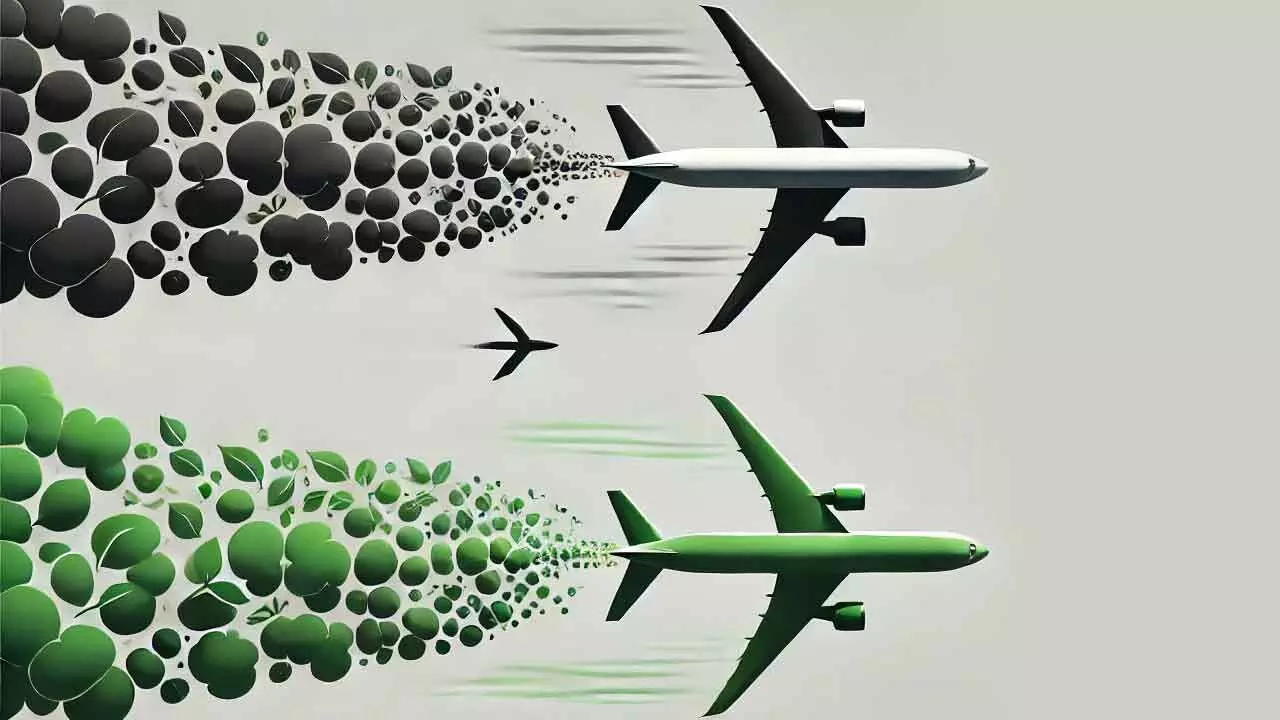
Air travel currently accounts for around 3.1% of global CO₂ emissions, and this share is expected to rise in the coming years. Researchers at the German Aerospace Center (DLR) project that global air traffic could grow by 3.5% annually until 2040, highlighting the urgency of decarbonising aviation.
Sustainable Aviation Fuel (SAF) is widely considered the need of the hour for the aviation sector, one of the hardest industries to abate. While aviation contributes roughly 2–3% of global CO₂ emissions today, its relative share is likely to increase as other sectors decarbonise more rapidly.
Why SAF Matters
SAF is chemically similar to conventional jet fuel and can be used in existing aircraft and airport infrastructure without modification. At present, it is typically blended with fossil jet fuel at ratios of up to 50%.
Crucially, SAF can reduce lifecycle CO₂ emissions by up to 80% compared with traditional jet fuel. The International Air Transport Association (IATA) estimates that SAF could deliver around 65% of the emissions reductions required for aviation to reach net-zero by 2050.
Beyond carbon dioxide, SAF significantly reduces particulate matter and sulphur emissions, helping to cut the climate-warming effects of contrails by 26–50%.
The Scaling Challenge
Despite growing interest and policy support, SAF accounted for just 0.53% of global aviation fuel consumption in 2024. To meet net-zero targets, annual production must rise sharply — to approximately 449 billion litres by 2050.
Cost remains a key barrier. SAF currently costs two to five times more than conventional jet fuel. Feedstocks such as used cooking oil are difficult to source at scale, while newer production routes using alcohols or waste industrial gases are still nascent and even more expensive.
Governments are beginning to intervene. The United States’ SAF Grand Challenge targets 3 billion gallons of domestic SAF production by 2030 and 35 billion gallons by 2050. The UK has mandated 2% SAF by 2025, rising to 10% by 2030, while the European Union aims for 70% SAF usage by 2050.
Green Methanol: A Promising Pathway
One of the most promising routes to scalable SAF production is green methanol. Methanol is already among the world’s most widely produced chemicals, with annual output of around 110 million tonnes.
Conventional methanol relies on fossil fuels such as coal or natural gas. Green methanol, by contrast, is produced either from biogenic feedstocks (such as biomass gasification) or from captured CO₂ combined with green hydrogen generated using renewable electricity.
Through a multi-step catalytic process, methanol dehydration to dimethyl ether (DME), Methanol-to-Olefins (MTO), oligomerisation, and hydrogenation , green methanol can be converted into synthetic kerosene, a high-yield, drop-in sustainable aviation fuel. Although CO₂ is released when synthetic kerosene is burned, the process is carbon-neutral on balance: the same amount of CO₂ emitted during combustion is first removed from the atmosphere during fuel production.
Industry Momentum
To accelerate deployment, Johnson Matthey and Honeywell UOP have partnered to develop a methanol-to-jet fuel solution. The collaboration aims to unlock more than $200 million in additional SAF value over the lifetime of a typical CO₂-to-methanol plant, helping airlines meet tightening global mandates.
The Road Ahead
As passenger numbers continue to rise, demand for scalable and cost-effective SAF has never been greater. While challenges around feedstock availability and cost remain, green methanol-based SAF offers a viable pathway to replacing fossil jet fuel, particularly for long-haul aviation, while also reducing non-CO₂ climate impacts such as contrails.
If scaled effectively, this approach could play a decisive role in shrinking aviation’s carbon footprint, without grounding global air travel.





