

Record agri output likely this year despite GST cuts & US tariffs
We are hopeful of record foodgrain production in 2025-26, surpassing last year's 357.73 MT, says Agriculture Secretary Devesh Chaturvedi
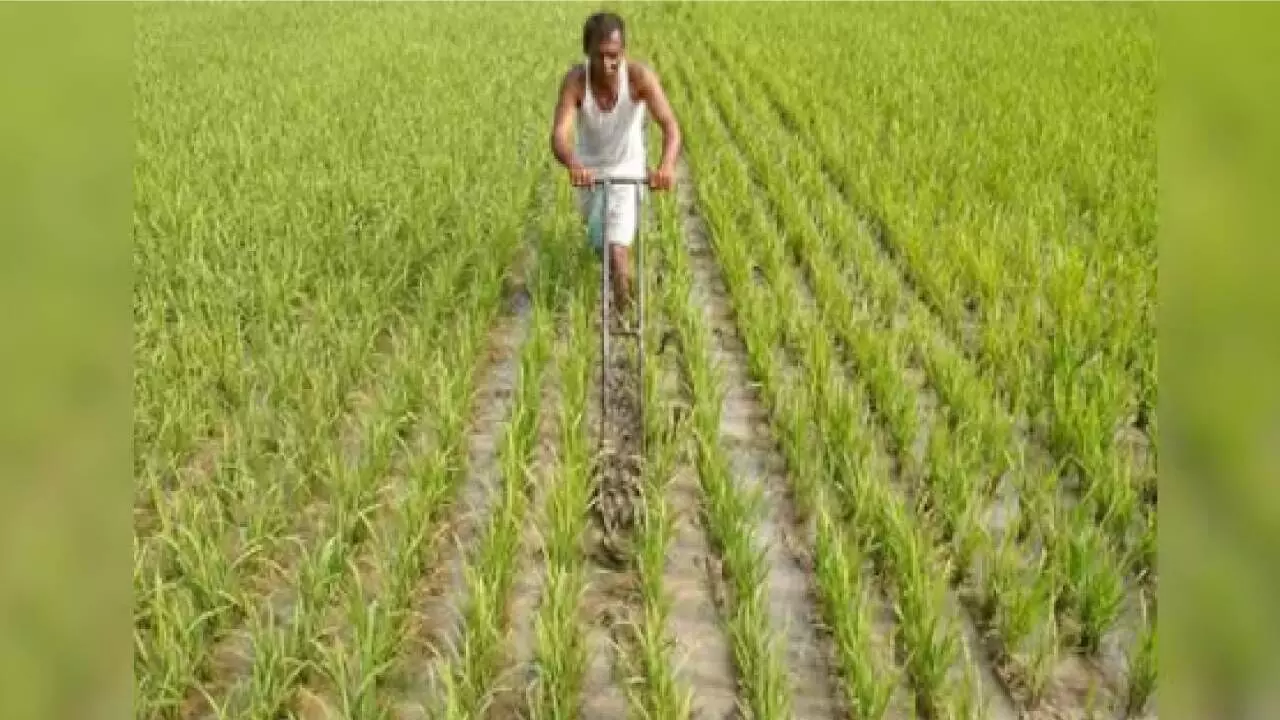
image for illustrative purpose
New Delhi: India's agriculture sector closed 2025 with a projection of record foodgrain output surpassing last year's 357.73 million tonnes (MT) despite US tariffs disrupting farm exports, while landmark GST reforms delivered input cost relief, and stakeholders await passage of key seed and pesticide bills in 2026 to tackle fake inputs.
The year showed both resilience and fragility -- GST rate reductions delivered noticeable cost savings, while American tariff wall compelled market diversification, officials said.
"We are hopeful of achieving record foodgrain production this year 2025-26 (July-June). Kharif output remained positive and rabi sowing is progressing well," Agriculture Secretary Devesh Chaturvedi said.
Above-normal southwest monsoons boosted kharif sowing, with the agriculture ministry's first advance estimate projected kharif foodgrain output at a record 173.33 MT for 2025-26, up from 169.4 MT in 2024-25.
Rice production is predicted to exceed 124.5 MT, with maize at 28.3 MT. However, excessive September rains wreaked havoc on crops in the western and eastern regions.
Rabi sowing as of December 19 reached 659.39 lakh hectares -- up 8 lakh hectares year-on-year. Wheat covered 301.63 lakh hectares (from 300.34 lakh hectares) while pulses expanded to 126.74 lakh hectares (from 123.02 lakh hectares).
Despite production advances, government think-tank NITI Aayog member Ramesh Chand estimated agriculture and allied sector growth of 4 per cent for the 2025-26 fiscal year, down from 4.6 per cent before, citing base effects.
Amid disconnect between record production and farmers' income, the year saw persistent protests by Samyukta Kisan Morcha (Non-Political) and Kisan Mazdoor Morcha in February at Punjab-Haryana borders, with demands for legal minimum support price guarantees based on Swaminathan formula, loan waivers, and pensions.
Police cleared the camps in March, ending farmer leader Jagjit Singh Dallewal's 123-day hunger strike. Farmer unions later held rallies against the India-UK FTA and draft seed bills.





