

Lay Turf vs Seed: Which Is Better? A Complete Guide to Choosing the Right Lawn Establishment Method
Turf or seed? A practical guide to choosing the right method for a lush, long-lasting lawn.
Side-by-side comparison of freshly laid turf and newly seeded soil, highlighting two paths to a healthy green lawn.
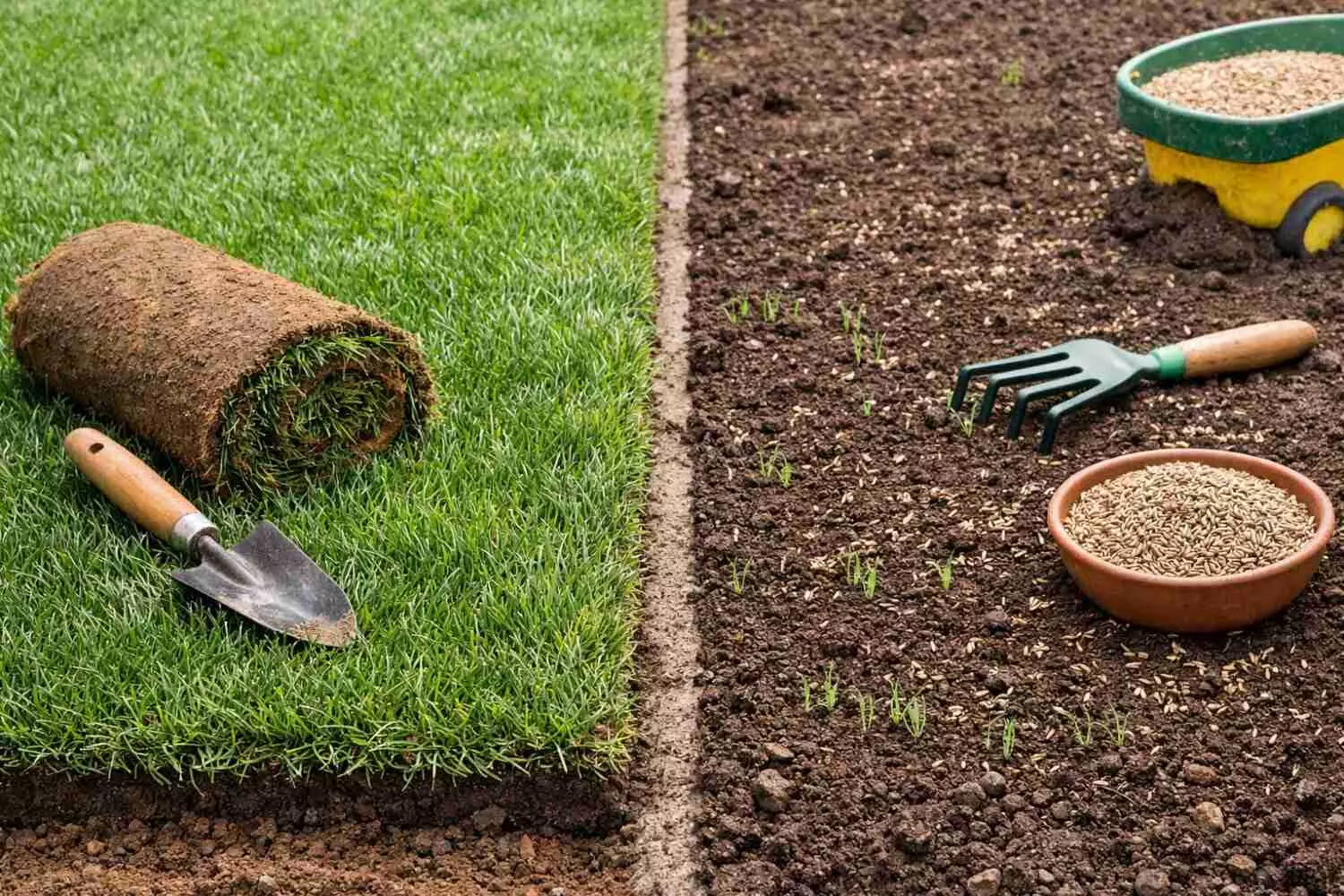
The first big choice that one makes when it comes to creating a lush, healthy lawn is whether to lay turf or to spread grass seed. Both of them can give beautiful and durable lawns, and each of them has its own benefits, prices, and maintenance needs. It is also a common misconception that seeding always results in a better lawn by those homeowners who assume that seeding is always the answer. As a matter of fact, turf and seed both can give a great performance when selected and laid properly. The only distinction is your budget, time, and the amount of effort you are ready to put into the initial phases.
In this detailed comparison, we shall be comparing turf and seed on all the important parameters including cost, speed, appearance, environmental effects, and performance in the long run. At the end of it, you will be in a position to know which method is best suited in your lawn goals.
What Is Turf?
In other countries, turf or sod is fully grown grass which is cultivated on special farms and which is harvested with a thin layer of soil and roots attached. It comes in rolls or strips and is laid directly on prepared soil, and gives an instant lawn.
Among the greatest merits of turf, there is instant visual effect. Your lawn appears full and professionally done immediately it is laid. Turf also aids in stabilising soil within a short time and minimises erosion and runoff. Due to its cultivation in a controlled environment, its quality and consistency is highly predictable.
Turf however is more expensive in the short run. You are not only paying the grass but also paying to cultivate, harvest, transport and install. It is also physically cumbersome and must be handled with care and installed accurately to ensure that the root is in contact with soil.
What Is Lawn Seed?
Grass seed is made up of separate seeds which are sown on the prepared soil. When the seeds are well watered and taken care of, they germinate and slowly grow to produce a complete lawn.
Seeding is much cheaper as compared to turf and is therefore suitable to large spaces or limited budgets. The other important advantage is the extensive grass selection. Using seed, you are able to select a combination depending on shade, drought tolerance, high traffic, or particular climates.
The negative is the time and susceptibility. Lawns planted with seeds take weeks or even months to grow to full strength and young seedlings are susceptible to drought, heavy rain and birds. During the initial stages, it is necessary to water it regularly and be patient.
Cost Comparison: Turf vs Seed
The factor that homeowners consider is cost. Turf costs more to purchase initially since you are purchasing mature grass and delivery and installation. Seed is, on the other hand, significantly less expensive initially, even with high quality blends.
But, long-term costs are subject to change. Turf has a quicker growth and it can eliminate the necessity of frequent reseeding or soil restoration. The seeded lawns can also need additional watering and re-seeding in case some areas fail to germinate. When you have a tight budget, seed is the cost-effective solution, however, turf may be a viable investment to get immediate outcomes and less risk at the beginning.
Time to Grow a Useful Lawn
Turf is the best when you require quick coverage to be green. After two to three weeks, it is possible to walk on the lawn with little damage. This renders turf ideal in the sale of property, activities or recently constructed houses.
On the other hand, seed takes time. Germination normally lasts between one and three weeks and full establishment may require several months depending on the climate and type of grass. Turf is obviously the winner in case you want a lawn in a hurry.
Appearance and Uniformity
Turf provides a professional appearance on the first day. Since it is cultivated in controlled conditions, it does not have patchy spots and uneven growth. This is suitable in front lawns or places that are in the view of many people.
Lawns planted with grass can also appear beautiful, yet, to get an ideal look, the soil should be properly prepared, the seeds should be scattered evenly, and the lawns have to be taken care of regularly. This may be caused by uneven watering or soil conditions resulting in patchy growth thus necessitating reseeding.
Root Development and Long-Term Health
Seed may have an advantage in long-term root development. The grass planted grows roots in the local soil and this may lead to deeper and stronger root systems in the long run.
The roots of turf are required to penetrate down the sod layer into the soil. This takes place through good soil contact and watering. When planted improperly, turf may not be able to form good roots. When installed and properly maintained, though, turf can be as healthy and strong as seeded grass.
Maintenance Requirements
Both turf and seed have to be maintained, although the initial stages are very different. The initial weeks of turf require frequent watering to enable the roots to take root in the soil. When it is established, it is just like any other grown-up lawn.
Lawns which are seeded need closer attention during germination. The soil should be kept constantly wet and this usually requires watering it a number of times per day especially in hot weather. In case the soil becomes dry, germination may not take place and hence patchy areas.
Stability of Soils and Erosion
Turf is also very efficient in managing erosion in that it is supplied with a complete root system and soil layer. It fixes the soil instantly and therefore is suitable in slopes or prone to run-offs.
Lawns planted are weak until the grass grows. Seeds can be washed away by heavy rain or wind particularly on slopes. Mulch or erosion mats are helpful but the best bet in the short term is turf as far as stabilising the soil is concerned.
Weather and Time of the Year
Turf and seed are better installed in moderate weather. The turf must be laid when the weather is mild so that it does not dry or freeze. Seed has to be subjected to certain soil temperatures to germinate, depending on the type of grass.
Cool-season grasses are best sown in early autumn or spring whereas warm-season grasses are sown in late spring or early summer. The time of year plays a crucial role and the selection of season can contribute greatly to the success.
Tip: The best time to fertilise a new lawn (whether turf or seed) is shortly after the grass has established enough leaf growth to use nutrients effectively, usually 4-6 weeks after seeding or 2–4 weeks after turf establishment, depending on grass type and soil fertility.
Sustainability and Environmental Impact
Turf production uses water, fertilisers and machinery and transportation of sod contributes to carbon footprint. Nonetheless, a lot of turf farms are embracing sustainable practices in order to minimize the effect on the environment.
Seed tends to be less productive in terms of footprint, however, it might need additional water to establish. Seed can be green when it is watered sustainably and the soil is managed in a sustainable manner.
Where Turf Is the Better Choice
The turf would be good when you require instant results like in staging of the property, events or new construction projects. It is also the most suitable one in slopes, high-traffic zones, and those homeowners, who want lower maintenance in the initial stages. Turf is a sure bet when you need to have a uniform, guaranteed look and can afford it.
When Seeding Is the Better Alternative
Large areas, small budgets or homeowners that want custom grass blends are better suited to seed. It is best suited to gardeners who like to take care of the lawn and can spend time on initial maintenance. Seed enables you to customize your lawn to shade, drought as well as traffic.
Weather and Success in Establishment
The weather is a significant factor in the success of the lawn. Turf grows best in cool and moist climates whereas seed needs good soils temperatures and uniform moisture. Both methods may be inhibited by extreme heat, drought or by heavy rainfall, although seed is more susceptible at early stages.
Common Mistakes to Avoid
The most common turf errors are bad soil preparation, under-watering, early mowing and improper installation. In the case of seed, the errors can be uneven distribution, irregular watering and seeding during the wrong season of the year. These are some of the errors that should be avoided to increase your chances of success.
Maintenance Once It has been established
After being laid, the turf and the seeded lawns need the same care. Frequent mowing, deep watering, periodic fertilisation, weed control, and periodic aeration are necessary in the long term health. Regular care makes the grass thick and strong, irrespective of the method of its establishment.
Final Verdict: Turf or Seed?
It has no universal answer since the most appropriate option is determined by your budget, time frame, and objectives of the lawn. Turf would be ideal when quick outcomes are required, and instant use is needed. Seed is the best in saving cost, flexibility and long-term customisation.
A common strategy adopted by many homeowners is to use a hybrid tactic by laying turf on high impact areas and seed on larger or less noticeable areas. With proper consideration and adherence to best practices, you will be able to have a lush healthy lawn that will add value to your property over the years.
Conclusion
The choice of turf or seed results in success, but planning, soil preparation, proper timing, and regular care are the key to success. The two approaches can create beautiful lawns when properly executed, and working with trusted suppliers like A View Turf can further ensure quality results. With the knowledge of the variations in price, upkeep, and longevity, you will be able to make the correct choice and have a rich, healthy lawn that will fit your lifestyle and surroundings.





