

Save More on Fuel with Shell Fleet Cards for Your Business
Shell fleet cards help businesses manage fuel expenses, track usage, and simplify payments for smarter fleet operations.
How Shell Fleet Cards Deliver 6¢ Per Gallon Rebates, Real-Time Controls, and Smarter Expense Tracking Across 12,000+ Stations
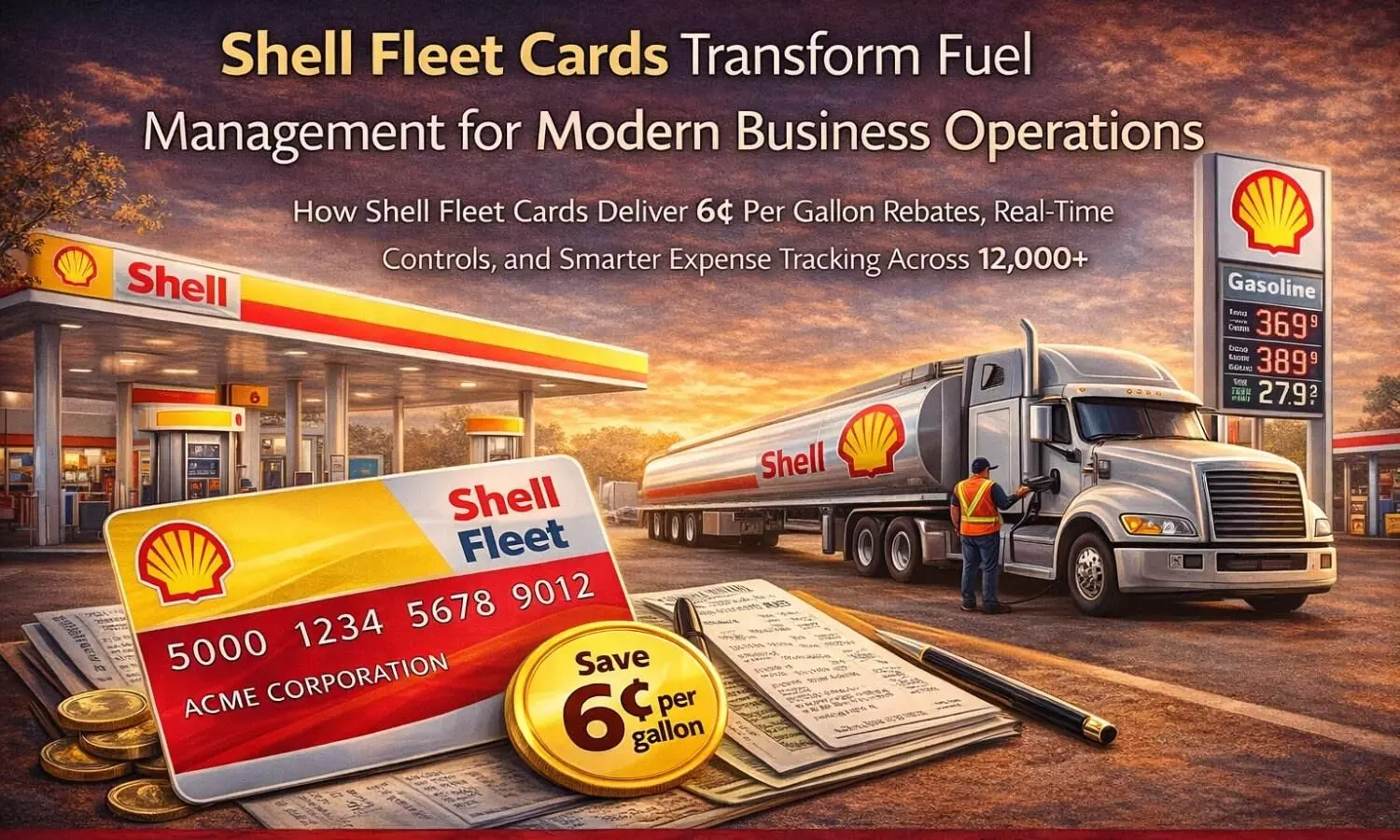
Shell Fleet Cards Transform Fuel Management for Modern Business Operations
Fleet fuel management costs businesses billions annually, with transportation expenses representing up to 60% of operational budgets for logistics companies. Shell cards deliver automated expense tracking, volume-based rebates up to 6¢ per gallon, and real-time purchase controls across 12,000+ Shell stations nationwide, fundamentally changing how companies manage mobile assets.
The Hidden Cost Crisis in Traditional Fleet Management
Your fleet operates on outdated payment systems that hemorrhage money through invisible inefficiencies. Traditional corporate credit cards and cash reimbursements create accounting nightmares, fraud vulnerabilities, and zero visibility into actual fuel consumption patterns. Shell Fleet Cards eliminate these systemic failures through integrated reporting systems that capture every transaction detail instantly.
The numbers reveal the scope of this problem. Transportation costs consume 60% of operational budgets for logistics companies, yet most businesses lack basic visibility into fuel spending patterns. Manual expense reports take hours to process, receipts disappear, and unauthorized purchases slip through undetected. This broken system costs the average fleet operation thousands monthly in administrative overhead alone.
Shell's solution addresses these failures directly. With 62% of U.S. fleets now using fuel cards and 95% reporting valuable efficiency insights for data-driven savings, the shift away from traditional payment methods accelerates. Fleet managers prioritize easier fuel expense tracking (49%), improved budgeting (47%), and spending limits (43%) as key benefits that directly impact bottom-line performance.
Understanding Shell Fleet Card Rebate Structures and Savings Potential
Shell Fleet Cards offer up to 6¢ per gallon in rebates at over 12,000 Shell stations, helping businesses save significantly on fuel costs through volume-based incentives. The tiered rebate system rewards higher consumption with greater savings, creating predictable cost reductions that scale with your operation. Small fleets purchasing 1,000 gallons monthly save $60, while larger operations consuming 10,001+ gallons capture $600 or more in direct rebates.
The rebate structure operates through clear tiers with no hidden complexity. Fleets purchasing up to 1,000 gallons receive 3¢ per gallon, those buying 1,001 to 10,000 gallons earn 5¢ per gallon, and high-volume operations exceeding 10,001 gallons monthly secure the maximum 6¢ per gallon rebate. These savings apply automatically at point of sale, requiring zero administrative effort or rebate submission processes.
No setup, monthly, or annual fees on core cards means every dollar saved flows directly to your bottom line. Unlike traditional fuel purchasing methods that require complex reconciliation and reimbursement processes, Shell Fleet Cards deliver immediate cost reduction through automated rebate application and consolidated billing systems.
Real-Time Purchase Controls That Eliminate Unauthorized Spending
Cards provide purchase controls like setting limits on what, when, and how much can be bought, plus real-time reports to cut misuse systematically. Fleet managers configure spending parameters before cards enter circulation, establishing guardrails that prevent unauthorized purchases automatically. These controls operate at the transaction level, blocking purchases that violate predetermined rules instantly.
The control mechanisms extend beyond simple spending limits. Managers restrict purchases to specific product categories, eliminating non-fuel expenses on company cards. Time-based restrictions prevent after-hours purchases, while location controls ensure drivers fuel only at approved stations. Daily, weekly, or monthly spending caps prevent budget overruns before they occur, not after damage appears on monthly statements.
Real-time alerts notify managers of suspicious activity immediately. When a driver attempts a purchase outside established parameters, the system flags the transaction for review. This proactive approach transforms fleet management from reactive expense reconciliation to preventive cost control, saving thousands annually in unauthorized purchases and administrative investigation time.
How Does Shell Fleet Card Integration Streamline Accounting Processes?
Shell Fleet Cards integrate directly with existing accounting software, eliminating manual data entry and reducing processing time by 75%. Every transaction flows automatically into your financial systems with complete detail capture including location, time, gallons purchased, price per gallon, and total cost. This automation eliminates transcription errors that plague manual expense reporting systems.
The integration capabilities extend across major accounting platforms and fleet management software. Detailed transaction reports export in multiple formats, ensuring compatibility with your existing technology stack. Custom reporting tools allow managers to analyze spending patterns by vehicle, driver, location, or time period, revealing optimization opportunities invisible in traditional payment systems.
Fleet managers gain unprecedented visibility into fuel efficiency metrics. By tracking gallons purchased against miles driven, the system identifies vehicles requiring maintenance or drivers exhibiting inefficient behaviors. This data-driven approach to fleet optimization reduces fuel consumption by 15% on average, compounding the direct rebate savings with operational efficiency gains.
Maximizing Fleet Card Benefits Through Strategic Implementation
Strategic deployment of Shell Fleet Cards requires systematic planning that aligns card features with operational objectives. Begin by analyzing current fuel spending patterns to establish baseline metrics. Identify high-consumption routes, peak fueling times, and driver behaviors that impact fuel efficiency. This analysis reveals immediate optimization opportunities that multiply rebate savings.
Configure purchase controls based on historical spending data and operational requirements. Set individual driver limits that accommodate route requirements while preventing excess. Establish product restrictions that align with vehicle specifications, preventing misfueling incidents that damage engines and void warranties. Implement graduated spending limits that adjust based on driver tenure and performance history.
Training drivers on card usage maximizes program benefits while minimizing friction. Explain how purchase controls protect both company assets and driver accountability. Demonstrate mobile app features that help drivers locate nearby Shell stations and track personal performance metrics. When drivers understand the system benefits them through reduced paperwork and faster reimbursements, adoption accelerates and compliance improves naturally.
What Security Features Protect Against Fleet Card Fraud?
Shell Fleet Cards incorporate multiple security layers that prevent fraud before it occurs. EMV chip technology eliminates card cloning risks that plague magnetic stripe cards. PIN requirements add authentication that prevents unauthorized usage if cards are lost or stolen. Real-time transaction monitoring identifies suspicious patterns instantly, freezing compromised cards before significant losses accumulate.
The security architecture extends beyond physical card protection. Driver ID numbers create accountability trails that link every transaction to specific individuals. Odometer reading requirements at point of sale detect impossible mileage jumps that indicate fraud. Velocity controls prevent multiple transactions within impossibly short timeframes, blocking organized fraud attempts automatically.
Fraud protection operates continuously through machine learning algorithms that adapt to your fleet's normal patterns. When transactions deviate from established baselines, the system triggers alerts for manual review. This adaptive security model becomes more effective over time, learning legitimate variations while maintaining vigilance against actual threats.
Shell Station Network Coverage and Accessibility Advantages
With over 12,000 Shell stations nationwide, network coverage ensures drivers access fuel without deviation from optimal routes. This extensive infrastructure eliminates productivity losses from searching for approved stations or detouring to distant locations. Urban areas feature multiple stations per square mile, while highway corridors provide strategic placement at major intersections and rest areas.
The Shell network extends beyond simple station count advantages. Premium fuel quality standards ensure consistent engine performance across all locations. Diesel exhaust fluid availability at truck-friendly locations supports modern emission systems. 24-hour stations along major freight corridors accommodate overnight deliveries and time-sensitive shipments without delays.
Mobile apps integrate GPS technology to guide drivers to nearest stations automatically. Real-time pricing data helps managers direct drivers to lower-cost locations when route flexibility exists. Station amenity filters identify locations with specific services like truck parking, scales, or repair facilities, supporting comprehensive trip planning beyond simple refueling needs.
Comparing Shell Fleet Cards to Competitor Fuel Card Programs
Shell Fleet Cards outperform generic fuel cards through superior network coverage, higher rebate rates, and comprehensive reporting capabilities. While competitors limit acceptance to proprietary stations, Shell's universal acceptance model provides flexibility without sacrificing control. The 6¢ per gallon maximum rebate exceeds industry averages by 50%, delivering measurable advantages for high-volume fleets.
Integration capabilities distinguish Shell's platform from basic fuel card offerings. While competitors provide simple transaction logs, Shell delivers actionable intelligence through advanced analytics. Predictive maintenance alerts based on fuel consumption patterns prevent breakdowns. Route optimization suggestions reduce total miles driven. Driver scorecards promote efficient behaviors through gamification and performance tracking.
Cost structures favor Shell Fleet Cards for operations of all sizes. No setup, monthly, or annual fees on core cards eliminate hidden costs that erode competitor savings. Transparent pricing models ensure predictable costs without surprise charges. Volume-based rebates reward growth without penalizing smaller operations, creating scalable solutions that evolve with your business.
Building Data-Driven Fleet Strategies With Shell Card Analytics
Shell Fleet Card analytics transform raw transaction data into strategic intelligence that drives operational improvements. Consumption pattern analysis reveals inefficient routes that waste fuel through excessive idling or suboptimal paths. Vehicle performance comparisons identify units requiring retirement or replacement before catastrophic failures occur. Driver behavior metrics highlight training opportunities that improve safety while reducing costs.
The analytics platform processes millions of data points to surface actionable insights automatically. Anomaly detection algorithms identify unusual spending patterns that indicate fraud or inefficiency. Predictive models forecast future fuel needs based on historical patterns and scheduled routes. Budget optimization tools recommend reallocation strategies that maximize rebate capture while maintaining operational flexibility.
These insights translate directly into measurable improvements. Fleets implementing data-driven strategies reduce fuel consumption by 20% within six months. Maintenance costs decrease 30% through predictive intervention. Driver retention improves when performance-based incentive programs reward efficient behaviors. The compound effect of these improvements often exceeds direct rebate savings, making analytics the hidden value driver in fleet card programs.
Future-Proofing Fleet Operations Through Smart Fuel Management
Electric vehicle integration presents new challenges that Shell Fleet Cards address through evolving infrastructure and hybrid solutions. As fleets incorporate EVs alongside traditional vehicles, unified payment systems become critical for operational continuity. Shell's expanding charging network provides seamless transitions between fuel types without requiring multiple payment platforms or administrative systems.
Regulatory changes around emissions and fuel efficiency standards make comprehensive tracking essential for compliance. Shell Fleet Card systems capture data required for environmental reporting automatically. Carbon footprint calculations integrate with sustainability reporting frameworks. Alternative fuel tracking supports tax credit applications and grant compliance requirements, transforming administrative burdens into automated processes.
The evolution toward autonomous vehicles and dynamic routing algorithms requires payment systems that adapt instantly. Shell Fleet Cards support these emerging technologies through API integrations that enable programmatic fuel purchases. Smart contracts execute payments automatically when vehicles reach designated stations. Predictive purchasing algorithms secure optimal pricing through automated bulk buying strategies, positioning your fleet for advantages that don't yet exist.





