

Maximize Savings with Marathon Fleet Fuel Cards Today
Marathon fleet fuel cards help businesses save on fuel costs, track expenses, and simplify fleet management for better efficiency.
How Automated Rebates, Real-Time Controls, and Nationwide Coverage Cut Fleet Fuel Costs by 10–15% Annually
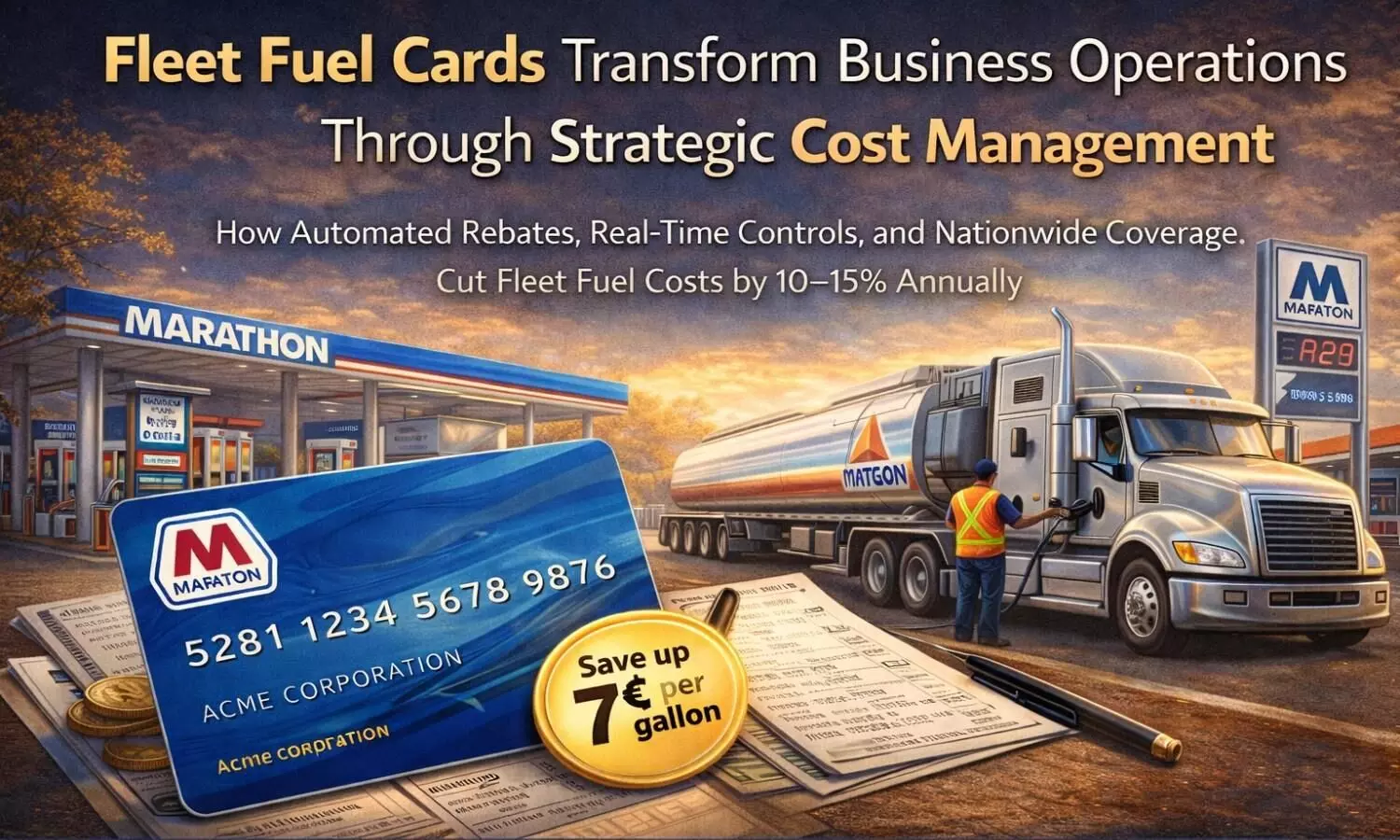
Fleet Fuel Cards Transform Business Operations Through Strategic Cost Management
Fleet fuel cards eliminate traditional expense reporting while reducing fuel costs by 10-15% annually through automated rebates and negotiated pricing at over 10,000 locations nationwide. Companies managing 10+ vehicles save an average of $500 per vehicle monthly when switching from credit cards to dedicated fleet fuel management systems.
The Hidden Cost Crisis in Traditional Fleet Management
Every fleet manager faces the same fundamental problem: fuel expenses consume 30% of total operating budgets while traditional payment methods create accounting nightmares. Credit cards offer no control over unauthorized purchases. Reimbursement systems drown accounting teams in paperwork. Cash transactions disappear into untraceable voids.
Marathon Fleet Cards save up to 7¢ per gallon at over 5,400 Marathon locations nationwide, transforming this chaos into automated efficiency. The U.S. fuel card market, driven by fleet efficiency needs, grows at 5.5% CAGR from $281.8 million in 2024 to $482.9 million by 2034. This explosive growth reflects a simple truth: businesses recognize that manual fuel management systems belong in the past.
Fleet operations without dedicated fuel cards lose thousands monthly through unauthorized purchases, missed rebates, and inefficient routing. Marathon Fleet Cards provide automatic accounting, detailed reports, online/mobile access, and purchase alerts for expense control. These tools convert scattered fuel data into actionable intelligence that drives profitability.
What Makes Fleet Fuel Cards Essential for Business Growth?
Fleet fuel cards revolutionize expense management through three critical mechanisms: automated rebate capture, purchase controls, and real time reporting. Traditional payment methods force businesses to choose between control and convenience. Fleet cards deliver both simultaneously.
New accounts earn 15¢ per gallon promotional rebates for the first 4 billing cycles on Marathon fuel purchases, immediately impacting bottom line performance. Beyond initial savings, the systematic capture of volume discounts and negotiated rates generates consistent monthly savings that compound over time. A 50 vehicle fleet averaging 200 gallons per vehicle monthly captures $1,000 in rebates during promotional periods alone.
The elimination of expense reports saves 20 hours of administrative work monthly for typical fleet operations. Drivers stop collecting receipts. Managers stop approving reimbursements. Accounting departments stop reconciling credit card statements. No setup fees, monthly fees, or card fees apply to Marathon Fleet Cards, making the transition cost neutral from day one while delivering immediate operational improvements.
Understanding Fleet Card Provider Networks and Coverage
Geographic coverage determines fleet card effectiveness more than any other single factor. National fleets require acceptance at 95% of fuel stations along their routes. Regional operations need density within specific territories. Marathon's network of 5,400 locations provides comprehensive coverage across major transportation corridors.
Fleet managers evaluate three network types when selecting fuel management solutions. Proprietary networks like Marathon offer maximum discounts at branded locations while maintaining broad acceptance elsewhere. Universal cards provide widespread acceptance but typically offer lower rebates. Hybrid solutions combine branded discounts with universal coverage through partnership agreements.
The practical impact of network selection appears in routing efficiency. Drivers using Marathon Fleet Cards access guaranteed pricing at predictable locations, eliminating detours to find accepting stations. This predictability reduces fuel consumption by 3% through optimized routing while ensuring drivers never encounter payment rejection at critical refueling stops.
How Do Fuel Management Systems Reduce Operating Costs?
Modern fuel management systems attack costs through five simultaneous strategies: rebate optimization, purchase controls, fraud prevention, tax reporting automation, and consumption analytics. Each component contributes measurable savings that accumulate into significant annual reductions.
Rebate optimization begins with base discounts but extends through volume tiers and promotional periods. Marathon Fleet Cards automatically apply the maximum available discount at each transaction without manual intervention. Purchase controls restrict transactions to fuel only purchases during business hours at approved locations. This eliminates personal use charges that typically add 8% to fleet fuel budgets.
Fraud prevention through real time alerts stops unauthorized transactions before they impact budgets. Managers receive immediate notifications of suspicious activity including unusual locations, excessive gallons, or multiple rapid transactions. Tax reporting automation eliminates quarterly filing preparation costs while ensuring compliance with IFTA requirements. Consumption analytics reveal inefficient vehicles, excessive idling, and unauthorized routing that waste thousands monthly.
Fleet Tracking Integration with Payment Systems
The convergence of fleet tracking technology and fuel payment systems creates unprecedented operational visibility. GPS telematics platforms now integrate directly with fuel card systems to validate vehicle location against transaction data. This integration eliminates ghost transactions where cards get used for non fleet vehicles.
Real time data synchronization between tracking and payment platforms enables predictive maintenance scheduling based on actual fuel consumption patterns. Vehicles consuming fuel beyond expected parameters trigger maintenance alerts before costly breakdowns occur. Marathon Fleet Cards integrate with major fleet management software platforms, ensuring compatibility with existing operational systems.
The combined data streams from tracking and payment systems reveal driver behavior patterns that impact fuel efficiency. Aggressive acceleration, excessive idling, and inefficient routing become visible through fuel consumption anomalies. Managers address these behaviors through targeted training that typically reduces fuel consumption by 12% within three months of implementation.
Maximizing Rebates Through Strategic Fuel Purchasing
Strategic fuel purchasing transforms random fill ups into systematic cost reduction programs. Volume concentration at preferred locations unlocks tier based rebates that increase with monthly gallons. Marathon's promotional rebates of 15¢ per gallon during initial billing cycles demonstrate the impact of concentrated purchasing power.
Timing strategies further amplify savings through price arbitrage opportunities. Fleet managers monitor fuel price cycles to concentrate purchases during temporary price dips. Weekly price variations of 5 10¢ per gallon create substantial savings when properly exploited through flexible routing and tank management protocols.
Location optimization involves analyzing historical pricing data to identify consistently lower cost stations within acceptable routing parameters. Marathon Fleet Cards provide detailed transaction histories that reveal pricing patterns across different locations. Smart fleet managers use this data to create preferred station lists that balance convenience with cost optimization, typically achieving 8% additional savings beyond base rebates.
Why Fleet Cards Outperform Credit Cards for Fuel Purchases
Credit cards fail fleet operations through four critical weaknesses: no purchase controls, no automated reporting, no fuel specific rebates, and no driver identification systems. These limitations create expense leakage that compounds into thousands of dollars monthly for moderate sized fleets.
Fleet specific payment solutions address each weakness through purpose built features. Purchase controls restrict transactions to fuel and approved maintenance categories. Automated reporting eliminates manual expense compilation while providing real time spending visibility. Fuel rebates through programs like Marathon Fleet Cards deliver savings unavailable through generic credit programs. Driver PINs create accountability trails that link every transaction to specific operators.
The security advantages extend beyond simple purchase controls. Fleet cards eliminate the need for drivers to carry high limit credit cards that create theft risks. Lost cards get instantly deactivated without impacting other payment systems. Fraudulent transactions become immediately visible through anomaly detection algorithms that recognize unusual purchase patterns.
Essential Features of Modern Fuel Management Solutions
Contemporary fleet fuel management demands five non negotiable features: mobile account access, real time transaction alerts, customizable purchase controls, integrated reporting APIs, and multi level authorization hierarchies. Marathon Fleet Cards provide automatic accounting, detailed reports, online/mobile access, and purchase alerts for expense control that meet these requirements.
Mobile accessibility enables managers to monitor and control fleet expenses from anywhere. Drivers submit maintenance requests through mobile apps while managers approve exceptions in real time. This immediacy prevents operational delays while maintaining strict expense controls. Real time alerts create instant visibility into potential problems before they escalate into budget overruns.
Customizable controls accommodate diverse fleet structures from owner operators to enterprise operations. Individual cards receive specific gallons limits, daily transaction caps, time restrictions, and geographic boundaries. These granular controls prevent both intentional misuse and accidental overspending while maintaining operational flexibility for legitimate business needs.
Building Comprehensive Fleet Expense Control Systems
Effective fleet expense control extends beyond fuel management into comprehensive spend optimization. Fuel cards serve as the foundation for broader expense management systems that encompass maintenance, repairs, and operational supplies. Integration between these systems creates holistic visibility into total cost of ownership.
The implementation process begins with baseline establishment through historical expense analysis. Current spending patterns reveal optimization opportunities that guide system configuration. Marathon's no fee structure eliminates adoption barriers while promotional rebates provide immediate positive ROI during transition periods.
Successful implementations follow structured deployment phases: pilot testing with select vehicles, gradual rollout across fleet segments, and continuous optimization based on usage data. This measured approach ensures smooth adoption while identifying configuration adjustments before full deployment. Most fleets achieve complete implementation within 60 days while maintaining uninterrupted operations.
How Fleet Analytics Drive Operational Excellence
Data generated through fleet fuel card programs creates intelligence that drives operational improvements far beyond simple cost reduction. Transaction patterns reveal vehicle utilization rates that inform replacement decisions. Fuel efficiency metrics identify training opportunities that improve driver performance. Geographic purchase data optimizes routing algorithms that reduce total miles driven.
Marathon Fleet Cards generate comprehensive datasets that feed advanced analytics platforms. These platforms transform raw transaction data into actionable insights through pattern recognition and anomaly detection. Fleet managers discover that certain vehicles consistently consume 15% more fuel than identical models, triggering maintenance investigations that reveal underlying mechanical issues.
Predictive analytics anticipate future fuel needs based on historical patterns and planned operations. This forecasting enables strategic fuel purchasing during favorable pricing periods while ensuring adequate cash flow management. The combination of historical analysis and forward planning typically reduces fuel budget variance by 75% compared to reactive purchasing approaches.
The Future of Fleet Fuel Management
Fleet fuel management evolves rapidly through technological advancement and changing energy landscapes. Electric vehicle integration, alternative fuel adoption, and autonomous vehicle deployment reshape traditional fueling paradigms. Modern fleet cards already adapt to these changes through expanded acceptance networks and new transaction types.
Marathon positions itself for this evolution through infrastructure investments and partnership strategies. The company's network expansion focuses on high traffic commercial corridors where fleet density justifies enhanced services. No setup fees, monthly fees, or card fees apply to Marathon Fleet Cards, maintaining accessibility as the market evolves.
The convergence of payment technology, vehicle telematics, and artificial intelligence creates unprecedented optimization opportunities. Fleet managers who establish robust fuel management foundations today position themselves to leverage these advancing capabilities. The U.S. fuel card market's projected growth to $482.9 million by 2034 reflects this technological transformation's impact on fleet operations. Organizations that delay adoption face competitive disadvantages as early adopters capture efficiency gains that compound annually into insurmountable operational advantages.





