

Maximize Savings and Efficiency with Exxon Mobil Fleet Cards
Exxon Mobil fleet cards help businesses manage fuel expenses, improve efficiency, and simplify reporting for smarter fleet operations.
How Exxon Mobil’s BusinessPro Card helps fleets save 6¢ per gallon, prevent fraud, and streamline fuel expense management with real-time tracking.
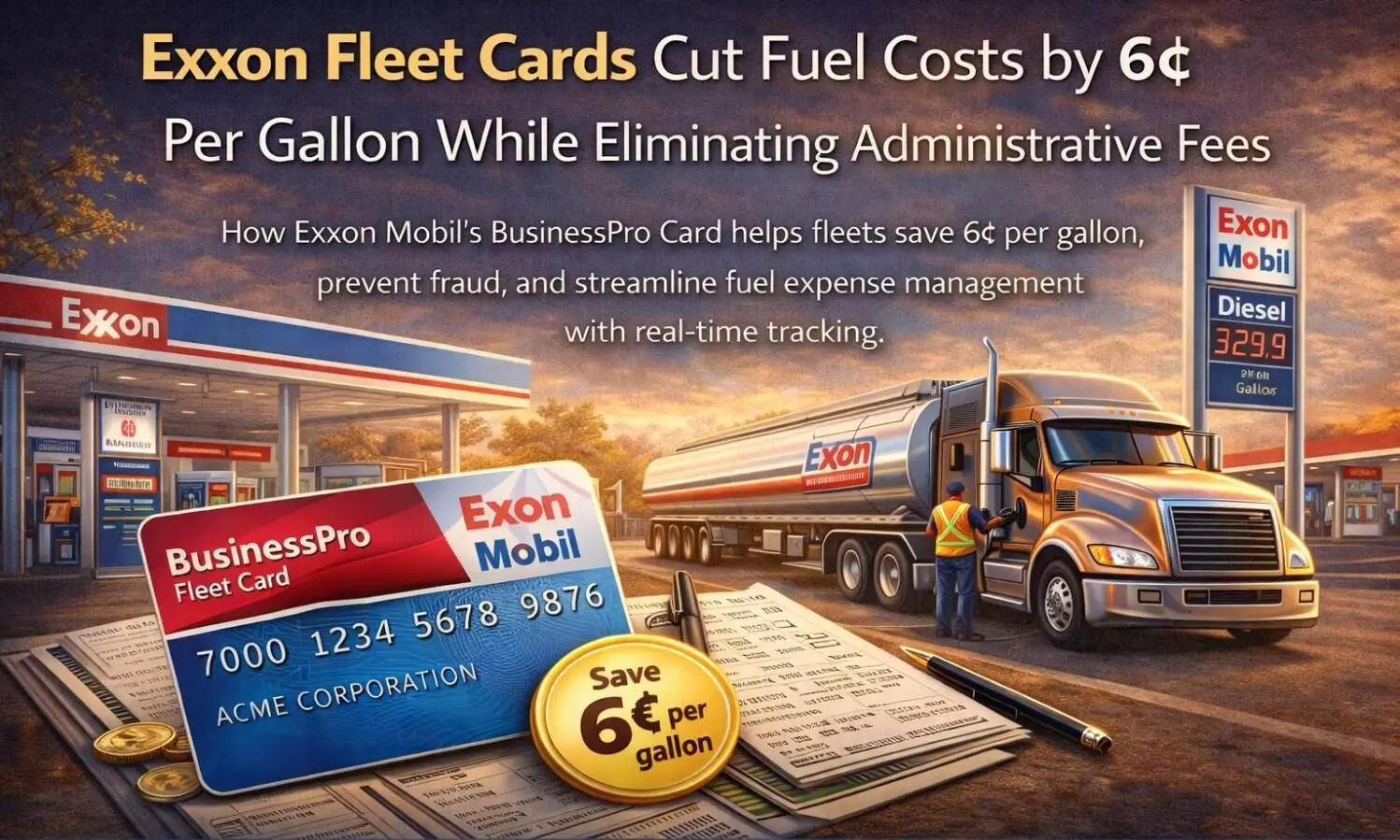
Exxon Fleet Cards Cut Fuel Costs by 6¢ Per Gallon While Eliminating Administrative Fees
Fleet managers operating commercial vehicles spend an average of $5,000 to $8,000 per vehicle annually on fuel costs, making fuel management one of the largest operational expenses. The Exxon Mobil BusinessPro fleet card delivers immediate savings through 6¢ per gallon rebates at over 12,000 stations while providing real-time expense tracking and fraud prevention tools that traditional payment methods cannot match.
Commercial fleet operations require precise fuel expense management, driver accountability systems, and nationwide station access to maintain profitability. Exxon Mobil's fleet card program eliminates setup fees, annual charges, and monthly maintenance costs while accepting transactions at 95% of U.S. gas stations. The BusinessPro card integrates real-time purchase data capture, odometer tracking, and contactless payment technology serving over 1 million North American cardholders.
What Makes Exxon Fleet Cards Different From Standard Business Credit Cards
Traditional business credit cards fail to address the specific challenges of fleet fuel management. They lack dedicated fuel rebate programs, provide limited transaction controls, and offer minimal reporting capabilities for vehicle-specific expenses. Standard cards cannot capture critical fleet data like odometer readings, driver identification numbers, or fuel grade restrictions that fleet managers need for operational control.
The Exxon Mobil BusinessPro fleet card transforms every fuel transaction into actionable fleet intelligence. Each purchase automatically records the vehicle's odometer reading, exact fueling location, gallons purchased, and driver ID verification. This granular data flows directly into fleet management systems, enabling maintenance scheduling based on actual mileage, route optimization analysis, and immediate detection of unauthorized purchases. With no setup fees or annual charges, fleet operators save hundreds of dollars per card compared to traditional fleet payment solutions that typically charge $2 to $5 monthly per card plus activation fees.
The card's acceptance at 95% of U.S. gas stations eliminates the routing inefficiencies that plague brand-restricted fuel programs. Drivers maintain productivity by refueling at the nearest station rather than detouring miles to find specific brands. This universal acceptance combines with Exxon and Mobil's network of 12,000 branded stations where the 6¢ per gallon rebate applies, creating both flexibility and maximum savings opportunities.
How Fleet Fuel Cards Prevent Unauthorized Purchases and Fraud
Fuel fraud costs transportation companies an estimated $750 million annually through unauthorized purchases, personal vehicle fueling, and transaction manipulation. Standard payment methods cannot distinguish between legitimate fleet purchases and fraudulent activity until manual review catches discrepancies weeks or months later. By then, losses have accumulated and identifying responsible parties becomes nearly impossible.
Exxon's BusinessPro system implements multiple fraud prevention layers starting with driver-specific PIN requirements for every transaction. Fleet managers set purchase restrictions by fuel type, daily gallon limits, transaction frequency caps, and approved purchase times. The system instantly flags transactions outside these parameters, sending real-time alerts to fleet managers who can immediately investigate suspicious activity. Location tracking verifies that purchases occur along assigned routes, while odometer entry requirements create an audit trail that reveals impossible mileage jumps indicating personal use.
The 2024 contactless payment upgrade adds another security dimension by eliminating physical card handling at pumps. Over 1 million cardholders now complete transactions through encrypted tap-to-pay technology that reduces skimming risks and speeds up refueling stops. Each contactless transaction maintains the same detailed data capture as traditional swipes while adding enhanced encryption protocols that protect sensitive fleet information.
Real-Time Expense Tracking Transforms Fleet Management Decisions
Fleet managers operating without real-time fuel data make decisions based on outdated information, missing opportunities to optimize routes, reduce costs, and improve vehicle utilization. Paper receipts and monthly statements provide historical records but offer no immediate visibility into current spending patterns or driver behaviors that impact profitability.
The Exxon Mobil fleet card delivers purchase data within minutes of each transaction, enabling immediate response to operational issues. Managers identify vehicles consuming excessive fuel that may require maintenance, detect drivers taking inefficient routes based on fueling patterns, and spot unauthorized afterhours purchases that indicate policy violations. This real-time visibility transforms reactive fleet management into proactive optimization where problems get solved before they impact budgets.
Integration capabilities allow automatic data flow into existing fleet management software, eliminating manual entry errors and reducing administrative workload by up to 15 hours monthly for a 50-vehicle fleet. Customizable reporting breaks down costs by vehicle, driver, department, or project, providing the granular analysis needed for accurate job costing and client billing. The system's odometer tracking automatically calculates miles per gallon for each vehicle, flagging efficiency drops that indicate maintenance needs before breakdowns occur.
Why 95% Station Acceptance Matters for Fleet Routing Efficiency
Limited fueling options force drivers into costly detours that waste time, increase mileage, and reduce daily productivity. Brand-restricted fuel cards claiming thousands of locations often cluster stations in urban areas while leaving rural routes underserved. Drivers lose 20 to 30 minutes detouring to approved stations, accumulating thousands of unproductive miles annually that increase vehicle wear and maintenance costs.
Exxon's 95% nationwide acceptance rate ensures drivers fuel at the most convenient location regardless of brand, maintaining schedule efficiency across urban and rural routes. This universal acceptance proves especially valuable for long-haul trucking, delivery services, and field service operations covering multiple states. Drivers complete more deliveries, service calls, or shipments daily when fueling stops don't require route deviations.
The combination of broad acceptance with concentrated savings at 12,000 Exxon and Mobil stations creates strategic fueling opportunities. Fleet managers identify branded stations along regular routes where drivers capture the 6¢ per gallon rebate, while maintaining flexibility to fuel anywhere when schedules demand it. This dual approach maximizes both savings and operational efficiency without compromising either objective.
Understanding Fuel Rebate Programs and Volume Discounts
Commercial fuel rebates operate through negotiated agreements between card issuers and station networks, passing wholesale pricing advantages to fleet customers. The Exxon Mobil BusinessPro card's 6¢ per gallon rebate at branded stations represents immediate savings applied at purchase, not complicated rebate submissions or delayed account credits. A fleet consuming 1,000 gallons monthly saves $720 annually through this single rebate program.
Volume-based fuel programs reward larger fleets with tiered discounts reaching 8¢ to 10¢ per gallon for operations exceeding 5,000 gallons monthly. These enhanced rebates stack with the base 6¢ savings at Exxon and Mobil stations, potentially delivering $6,000 or more in annual savings for a 20-vehicle fleet. Unlike competitive programs requiring minimum purchase commitments or charging fees for low-volume months, Exxon's program maintains zero fees regardless of fuel consumption levels.
Additional savings opportunities emerge through diesel exhaust fluid (DEF) purchases, oil changes, and vehicle maintenance services at participating locations. Fleet cards capturing these ancillary purchases in the same reporting system simplify expense management while qualifying for commercial service discounts. The consolidated reporting eliminates the need for separate maintenance cards or reimbursement processes that complicate accounting and delay payment reconciliation.
Driver Management Features That Reduce Administrative Burden
Managing driver compliance, tracking individual performance, and maintaining accurate records consume hours of administrative time that could focus on growth activities. Paper-based systems rely on drivers submitting receipts, manually entering mileage logs, and following honor-system policies that prove difficult to verify or enforce consistently.
The BusinessPro card assigns unique driver IDs that link every purchase to specific individuals, creating accountability without micromanagement. Managers set driver-specific parameters including daily purchase limits, approved fuel grades, and geographic boundaries that automatically enforce company policies. The system generates driver scorecards showing fuel efficiency metrics, purchase patterns, and policy compliance rates that support performance reviews and training decisions.
Automated exception reporting highlights only transactions requiring attention rather than forcing managers to review every purchase. Unusual purchase patterns, efficiency drops, or policy violations trigger alerts that prompt investigation while compliant transactions process without intervention. This exception-based management reduces oversight time by 75% compared to manual review processes while actually improving fraud detection and policy enforcement.
How Do Fleet Cards Handle Multi-State Operations?
Interstate commerce presents unique challenges including varying fuel taxes, price disparities between states, and complex International Fuel Tax Agreement (IFTA) reporting requirements. Fleet cards must capture location-specific data for accurate tax filing while maintaining consistent functionality across state lines where regulations and station agreements differ.
Exxon's nationwide network ensures consistent card acceptance and rebate programs regardless of state boundaries, eliminating confusion about where cards work or what discounts apply. The system automatically captures purchase locations with GPS precision, simplifying IFTA quarterly filing by providing pre-sorted transaction reports organized by jurisdiction. This automated tax reporting saves 10 to 15 hours quarterly for fleets operating across multiple states.
Price optimization tools within the card platform identify lowest-cost fueling locations along planned routes, accounting for both pump prices and applicable rebates. Drivers receive routing suggestions that balance fuel costs with operational efficiency, potentially saving hundreds of dollars monthly through strategic fueling decisions. The platform's historical price tracking reveals patterns that inform long-term route planning and contract negotiations.
Mobile App Integration and Digital Fleet Management Tools
Modern fleet operations demand mobile accessibility that enables real-time decision-making from any location. Desktop-only platforms force managers to delay responses until returning to offices, missing opportunities to address issues immediately. Drivers lacking mobile tools cannot access account information, find stations, or report problems efficiently.
The Exxon Mobil fleet card mobile app provides complete account management capabilities from smartphones and tablets. Managers approve transactions, modify driver permissions, and review real-time reports while traveling or working remotely. Push notifications alert managers to exception transactions requiring immediate attention, enabling instant response to potential fraud or policy violations.
Drivers access their own transaction histories, locate nearby stations with current fuel prices, and submit maintenance requests through the same mobile platform. The station locator prioritizes Exxon and Mobil locations where rebates apply while showing all accepting stations when branded options aren't convenient. Integration with navigation apps provides turn-by-turn directions that optimize routes based on fuel stop requirements.
Maintenance Tracking Through Fuel Card Odometer Data
Vehicle maintenance represents the second-largest fleet expense after fuel, yet many operations rely on estimated mileage or time-based service schedules that don't reflect actual usage. This approach leads to premature maintenance that wastes money or delayed service that causes breakdowns. Accurate odometer tracking transforms maintenance from guesswork into precision scheduling.
Every Exxon fleet card transaction captures current odometer readings, building comprehensive mileage histories for each vehicle. The system calculates daily usage rates, identifies vehicles approaching service intervals, and generates maintenance alerts before critical mileage thresholds. This proactive scheduling reduces breakdown incidents by 40% while extending vehicle lifespan through timely service.
Maintenance integration capabilities connect fuel card data with service management platforms, automatically scheduling appointments when vehicles reach predetermined mileage intervals. Service providers receive vehicle histories showing fuel efficiency trends, mileage patterns, and previous maintenance records that inform diagnostic decisions. This data continuity ensures vehicles receive appropriate service based on actual usage patterns rather than generic recommendations.
Comparing Exxon Fleet Cards to Competitor Programs
Fleet card providers offer varying combinations of rebates, fees, acceptance networks, and management tools that significantly impact total value. Shell, BP, and Chevron cards provide similar fuel rebates but often include monthly fees ranging from $2 to $5 per card that erode savings for smaller fleets. These fees accumulate to $1,200 annually for a 20-card fleet before considering setup and transaction charges.
WEX and Voyager universal cards claim broader acceptance but typically offer lower rebates at branded stations and charge transaction fees for non-fuel purchases. Their complex pricing structures include hidden costs like statement fees, rush card charges, and minimum usage requirements that surprise fleet managers expecting transparent pricing. The Exxon Mobil BusinessPro card's zero-fee structure eliminates these hidden costs while maintaining competitive rebate rates.
Fuel card comparison must consider total cost of ownership including fees, rebate values, acceptance rates, and administrative time requirements. Exxon's combination of 6¢ rebates, 95% acceptance, zero fees, and automated reporting delivers measurable advantages over competitors requiring manual processes or charging multiple fees. The contactless payment capability serving over 1 million users provides additional differentiation as security concerns drive adoption of tap-to-pay technology.
Implementation Steps for Transitioning to Fleet Fuel Cards
Successful fleet card implementation requires systematic planning that minimizes disruption while maximizing adoption rates. Organizations rushing implementation without proper preparation experience driver resistance, data inconsistencies, and delayed benefit realization. A phased approach ensures smooth transition from existing payment methods to comprehensive fleet card programs.
Start by auditing current fuel expenses to establish baseline costs and identify savings opportunities. Review three months of fuel receipts, credit card statements, and reimbursement records to understand spending patterns, preferred stations, and driver behaviors. This analysis reveals potential savings from rebate programs and highlights problem areas requiring additional controls. Configure card parameters based on actual usage patterns rather than theoretical limits that may prove too restrictive or too lenient.
Driver training determines program success more than any technical factor. Conduct hands-on training sessions demonstrating card usage, mobile app features, and policy requirements. Address driver concerns about privacy and monitoring by explaining how data improves safety and maintenance rather than enabling surveillance. Establish clear policies regarding personal use, approved purchases, and consequence for violations. Roll out cards in phases starting with willing early adopters who can demonstrate benefits to skeptical drivers, building momentum through peer influence rather than mandates.
The transition from traditional fuel payment methods to fleet cards represents a fundamental shift in operational efficiency and cost control. With zero fees eliminating hidden costs, 6¢ per gallon rebates delivering immediate savings, and real-time tracking preventing fraud while optimizing operations, the Exxon Mobil BusinessPro card transforms fuel management from an administrative burden into a competitive advantage. Fleet managers gain the visibility and control needed to reduce costs, improve efficiency, and scale operations profitably in an increasingly competitive transportation marketplace.





