

How Sunoco Business Gas Cards Save Money On Fuel Purchases
Sunoco business gas cards help companies manage fuel costs, track spending, and boost efficiency. Read how they simplify fleet operations.
How the Sunoco Business Fleet Card Delivers 15¢ Per Gallon Savings, Real-Time Controls, and Smarter Expense Tracking for Growing Companies
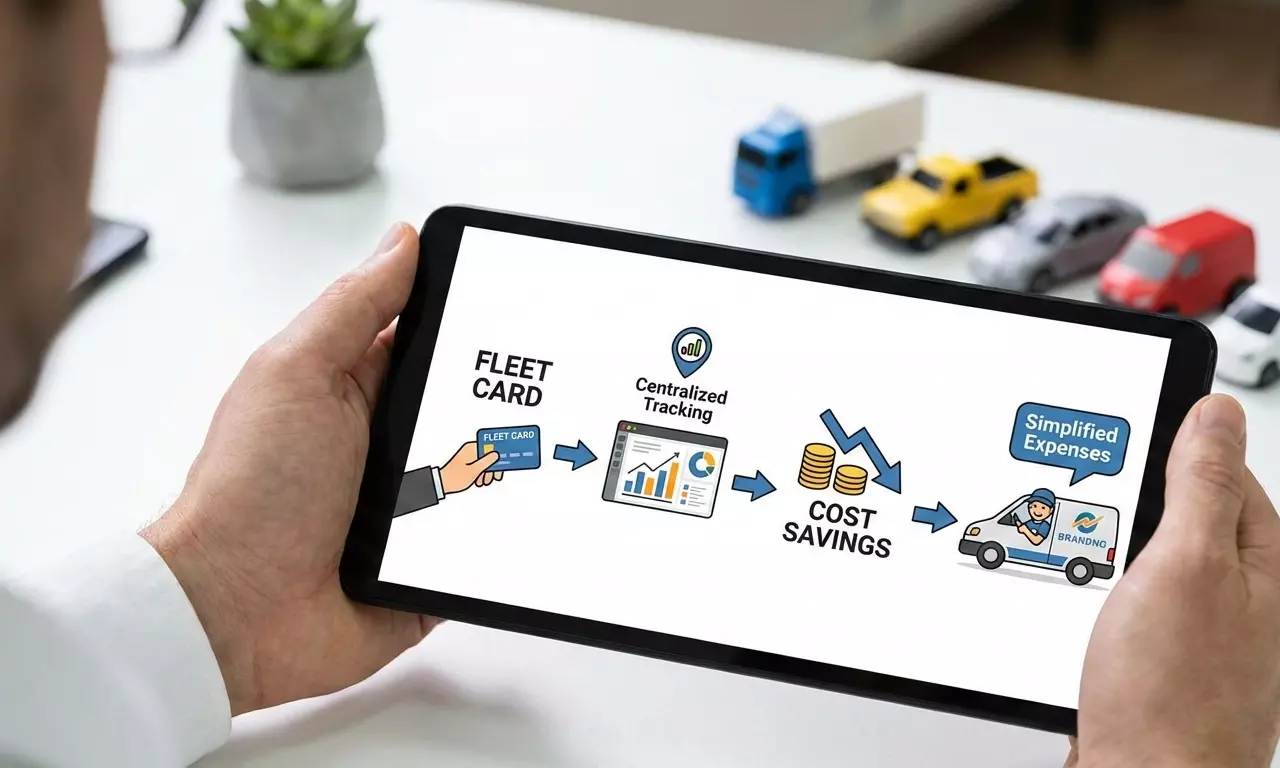
How Small Business Fleet Cards Streamline Fuel Management and Cut Operating Costs
Small businesses lose an average of $2,500 annually to inefficient fuel tracking and uncontrolled fleet spending. The Sunoco Business Fleet Card transforms this operational weakness into a competitive advantage, offering up to 15¢ per gallon savings and real-time expense control across 5,000 stations nationwide.
The Hidden Cost of Traditional Fleet Fuel Management
Every small business with vehicles faces the same fundamental problem: fuel expenses spiral out of control without proper tracking systems. Traditional methods like employee reimbursements, personal credit cards, or cash advances create accounting nightmares while obscuring actual fuel costs. These outdated approaches leave businesses vulnerable to expense padding, unauthorized purchases, and missed opportunities for bulk discounts.
The financial impact compounds quickly. A five-vehicle fleet averaging 500 miles per week can waste thousands annually through poor fuel management alone. Without centralized purchasing power or negotiated rates, small businesses pay retail prices while larger competitors leverage volume discounts. This disparity creates an uneven playing field where operational inefficiency directly undermines profitability.
What Makes Business Gas Cards Different From Regular Credit Cards
Business gas cards operate on fundamentally different principles than standard commercial credit cards. While traditional cards treat fuel as just another expense category, dedicated fleet cards provide specialized controls, reporting, and rebate structures designed specifically for vehicle operations. The distinction becomes clear in practical application: a business gas card can restrict purchases to fuel only, set gallon limits per transaction, and automatically track mileage data per vehicle.
The Sunoco Business Fleet Card exemplifies these advantages with no setup fees, card fees, or annual fees. Unlike generic credit cards that charge 3% processing fees on fuel purchases, dedicated fleet cards eliminate these hidden costs while providing superior data capture. Real-time tracking replaces monthly statement reconciliation, transforming fuel management from reactive accounting to proactive cost control.
Regular credit cards fail to address the unique challenges of fleet operations. They cannot differentiate between authorized and unauthorized purchases at the point of sale, cannot enforce fuel-only restrictions, and provide no mechanism for capturing vehicle-specific data. These limitations make them unsuitable for serious fleet management, regardless of company size.
How Fleet Fuel Cards Reduce Operating Expenses
The mathematics of fleet fuel savings are straightforward and compelling. New Sunoco Business Fleet Card accounts save 15¢ per gallon for the first 6 months on fuel at Sunoco stations. For a business purchasing 1,000 gallons monthly, this translates to $900 in immediate savings during the promotional period. After six months, ongoing rebates continue based on volume tiers: 3¢ per gallon for 500 to 3,999 gallons monthly, scaling up to 6¢ for purchases exceeding 10,000 gallons.
Beyond per-gallon savings, fleet cards eliminate numerous hidden costs. Administrative burden decreases dramatically when expense reports, reimbursement processing, and receipt management disappear. Driver PINs and customizable purchase controls prevent unauthorized spending before it occurs, not weeks later during expense audits. The ability to set limits by amount, location, or time ensures every transaction aligns with company policy automatically.
The comprehensive reporting provided by business fleet cards reveals spending patterns invisible to traditional payment methods. Managers identify inefficient routes, excessive idling, and off-route purchases through detailed transaction data. This visibility alone typically reduces fuel costs by 10 to 15% as drivers modify behavior knowing their purchases are monitored in real-time.
Essential Features Every Small Business Fleet Card Should Offer
Effective fleet management requires specific capabilities that distinguish professional solutions from consumer products. Real-time spending visibility stands as the foundation, providing immediate alerts for unusual activity and enabling rapid response to potential issues. The Sunoco system delivers this through online portals and mobile apps, ensuring managers maintain control regardless of location.
Purchase controls must extend beyond simple spending limits. Geographic restrictions prevent cards from working outside designated service areas, while time-based controls can limit purchases to business hours. Product restrictions ensure cards only purchase authorized items like fuel and oil, preventing their use for unauthorized purchases. Driver PIN requirements add another security layer, creating an audit trail linking every transaction to specific employees.
Reporting capabilities separate basic tracking from actionable intelligence. Detailed reports should capture not just purchase amounts but gallons purchased, price per gallon, odometer readings, and location data. The ability to export this information to accounting systems eliminates manual data entry while ensuring accurate cost allocation across departments or projects. Access to over 5,000 Sunoco stations nationwide ensures drivers can fuel up without deviating from optimal routes.
Best Practices for Managing Multiple Driver Cards
Successfully managing a multi-driver fleet requires systematic approaches to card distribution, monitoring, and accountability. Each driver should receive an individually assigned card with a unique PIN, creating clear responsibility for every transaction. This individual accountability dramatically reduces misuse while simplifying expense allocation for client billing or departmental budgeting.
Establishing clear usage policies before distributing cards prevents confusion and sets expectations. Define acceptable purchase types, daily or weekly limits, and approved fueling locations. Communicate consequences for policy violations and implement progressive discipline for repeat offenders. Regular audits of transaction reports identify patterns suggesting inefficiency or misuse, enabling corrective action before problems escalate.
The Sunoco Business Fleet Card's control features support these best practices through customizable restrictions. Managers can adjust limits instantly as business needs change, temporarily increase allowances for long trips, or immediately deactivate lost or stolen cards. This flexibility ensures policies remain practical while maintaining strict cost control.
Common Fleet Management Mistakes That Business Gas Cards Prevent
Small businesses repeatedly fall into predictable traps when managing vehicle expenses without proper tools. The most expensive mistake involves treating fuel as an uncontrollable cost rather than a manageable expense category. Without transaction-level visibility, businesses cannot identify waste, negotiate better rates, or optimize routes. Business gas cards transform this blind spot into a data-rich environment for continuous improvement.
Another critical error occurs when companies fail to separate personal and business fuel purchases. Employees using personal credit cards inevitably mix expenses, creating tax complications and reimbursement disputes. The Sunoco Business Fleet Card eliminates this problem entirely by providing dedicated payment methods for business fuel only. Clear separation simplifies accounting, ensures tax compliance, and prevents expense report padding.
The absence of spending controls invites abuse and inefficiency. Without real-time monitoring, unauthorized purchases go undetected for weeks or months. Traditional expense management relies on after-the-fact detection and correction, a reactive approach that recovers little value from identified problems. Fleet cards prevent these issues proactively through automated controls and instant notifications.
Integrating Fuel Cards With Existing Accounting Systems
Modern fleet cards must seamlessly integrate with existing business infrastructure to deliver maximum value. The Sunoco Business Fleet Card provides detailed transaction data in formats compatible with major accounting platforms, eliminating manual entry and reducing errors. Automated data flow ensures fuel expenses appear correctly in financial statements without additional processing.
Integration extends beyond simple transaction recording. Proper implementation maps fuel purchases to specific vehicles, projects, or cost centers automatically. This granular tracking enables accurate job costing for service businesses, precise client billing for consultants, and departmental budgeting for larger organizations. The ability to assign custom accounting codes to each card ensures transactions flow to correct general ledger accounts without manual intervention.
Regular reconciliation becomes effortless when transaction data automatically populates accounting systems. Month-end closing accelerates as fuel expenses no longer require manual verification against receipts. This efficiency gain alone justifies fleet card adoption for many businesses, transforming a time-consuming administrative task into an automated process.
Calculating ROI on Business Fleet Card Programs
The return on investment for fleet card programs extends far beyond per-gallon rebates. Consider a 10-vehicle fleet consuming 2,000 gallons monthly. During the first six months, the 15¢ per gallon Sunoco promotion generates $1,800 in direct savings. Ongoing rebates at the 3¢ tier provide $720 annually thereafter. These immediate savings represent only the beginning of total value creation.
Administrative efficiency delivers substantial additional value. Eliminating expense reports, reimbursement processing, and manual reconciliation saves approximately 10 hours monthly for a typical small business. At $25 per hour for administrative staff, this represents $3,000 annual savings. Reduced processing errors and faster month-end closing provide additional unquantified benefits.
Fraud prevention and spending control generate the largest long-term savings. Industry studies indicate uncontrolled fleet spending exceeds optimal levels by 20 to 30%. For our example fleet spending $6,000 monthly on fuel, implementing proper controls through business gas cards could reduce costs by $1,200 to $1,800 monthly. Combined with rebates and administrative savings, total annual benefits can exceed $20,000 for a modest fleet.
Security Features That Protect Against Fuel Card Fraud
Fleet card security requires multiple layers of protection against both external threats and internal misuse. The Sunoco Business Fleet Card implements driver PINs as the first defense line, ensuring only authorized personnel can complete transactions. This simple measure eliminates most opportunistic fraud while creating an audit trail for every purchase.
Real-time transaction monitoring provides the second security layer. Unusual activity triggers immediate alerts, enabling rapid response to potential problems. Suspicious patterns like multiple transactions within minutes, purchases exceeding vehicle tank capacity, or activity outside normal operating hours prompt investigation before significant losses occur. The ability to instantly deactivate compromised cards limits exposure to discovered breaches.
Customizable restrictions form the final security barrier. Geographic limits prevent card use outside service territories, while time restrictions disable cards during non-business hours. Product restrictions ensure cards only purchase fuel and authorized maintenance items, preventing their use for personal purchases. These controls work automatically, requiring no manual oversight while providing comprehensive protection.
Why Small Businesses Need Dedicated Fuel Management Solutions
Small businesses face unique challenges that make dedicated fuel management essential rather than optional. Unlike large corporations with dedicated fleet managers and sophisticated tracking systems, small businesses must achieve similar control with limited resources. The Sunoco Business Fleet Card levels this playing field by providing enterprise-grade capabilities without complexity or cost barriers.
Growth creates additional fuel management challenges that basic payment methods cannot address. As fleets expand from two vehicles to ten, informal tracking systems collapse under increased volume. What worked for a couple of trucks fails catastrophically when applied to larger operations. Professional fleet cards scale seamlessly, maintaining control and visibility regardless of fleet size.
The competitive landscape demands operational efficiency from every business aspect. Companies that fail to control fuel costs operate at permanent disadvantage against those leveraging modern management tools. With access to over 5,000 Sunoco stations nationwide and no setup or annual fees, the Business Fleet Card removes traditional barriers to professional fuel management. The combination of immediate savings, long-term rebates, and operational improvements transforms fuel from an uncontrolled expense into a managed cost center.





