

What Size Battery Backup Does Your Home Need?
Find out what size battery backup your home needs. Learn how to calculate kWh, power output, and backup time for whole-home or essential loads.
A step-by-step guide to choosing the ideal home battery backup system for reliable power during outages and long-term energy savings.
The selection of proper backup battery size determines how effectively your residence manages power outages and excessive power costs. A system that is too tiny will fail fast under high demand. A system that is too large will cause financial losses because of its unused capacity.
Homeowners need to adjust their battery capacity and power output according to their actual home energy needs. Your energy consumption and essential devices and backup duration requirements determine the correct backup system size for your needs. This article shows you how to calculate battery size step by step. The article explains essential factors that determine capacity choices which help users make smart spending decisions while avoiding common size selection mistakes.
How Do You Calculate the Right Battery Size for Your Home?
Step 1: List Essential Appliances and Their Wattage
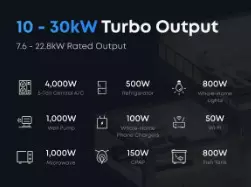
Identify the appliances that you want to use during a power outage. The majority of homes choose to power their refrigerators together with their lighting and internet routers and medical devices and sump pumps and heating equipment. The wattage rating of each appliance should be checked because manufacturers provide this information on product labels and through their operation manuals. You need to measure both starting and operating wattages of motorized devices which include refrigerators and air conditioners. Starting wattage can be much greater which impacts peak power needs. Add the running wattages together to calculate the total continuous load. The correct battery size determination starts from this list. Accurate appliance data prevents undersized systems and unplanned shutdowns in crucial situations.
Step 2: Estimate Daily Energy Use in kWh
You need to calculate daily energy consumption after you create a list of appliances. The daily energy consumption of each appliance requires you to multiply its wattage by the total hours of expected operation. The value needs conversion to kilowatt-hours (kWh) through a division process which requires dividing it by 1,000. A 200-watt refrigerator which runs for 10 hours will use 2 kWh of electricity. The results need to be added together after you compute the operation of each device. The final figure shows your battery capacity for one full day of backup. Review previous utility bills to double-check your estimates. Your estimated kWh usage permits you to select a battery which provides enough storage to meet your daily requirements without purchasing extra unneeded capacity.
Step 3: Determine Backup Duration and Peak Power (kW)
The backup power duration needs to be determined by you. Some residents expect brief outages to last for a few hours while others expect power outages to continue for multiple days. Your daily kWh requirement should be multiplied by the number of days you need power supply. The total storage capacity of the system gets established through this process. The next step involves finding out the highest power consumption requirement which needs to be measured in kilowatts (kW). The total running capacity needs to include all operating loads together with motor startup peak demands. The inverter needs to maintain its performance capacity during peak power demands without reaching its maximum limit. A high-capacity battery will experience failure when strong loads exceed its power output capacity because of insufficient kW delivery. The system requires power and capacity alignment to maintain operational continuity during emergencies while preventing unnecessary shutdowns and performance limitations.
What Factors Affect the Battery Backup Size You Need?
Whole-Home Backup vs. Essential Load Backup
Your backup strategy strongly affects the size of your home power battery backup system. A whole-house home power battery backup can power almost any circuit, including air conditioning, electric cookers, and washing machines. This strategy necessitates more capacity and higher power output, which raises the cost. An essential-load home power battery backup focuses solely on crucial appliances, including refrigeration, lighting, and communication systems. This option decreases the system's size and installation difficulty. Homeowners in locations with frequent or extended outages frequently choose more extensive coverage. Others choose important circuits to cut costs. Assess outage frequency, climatic conditions, and household priorities. Matching your backup scope to real threats allows you to choose a battery capacity that combines comfort, resilience, and cost.
Solar Panel Integration and Charging Speed
Your choice of battery size depends on the solar panels because their charging speed and solar output determine your selection. The solar panels will charge the battery during the day, which will increase the duration of backup power. A solar array that has an appropriate design needs less capacity to support its solar energy requirements. The system experiences slow charging rates because of two factors, which include either restricted roof space or insufficient sunlight. You need to calculate your system's solar output in kilowatts and its daily energy production. The inverter needs to process incoming solar power together with battery charging from both sources. The battery requires sufficient solar energy to reach complete charging capacity, which will not happen during power interruptions. The combination of solar capacity and battery storage provides ongoing system functionality while protecting against system failures during extended power interruptions.
Future Energy Needs and EV Charging
Energy consumption patterns show an upward trend that continues throughout the entire duration of a day. Homeowners who want to install electric vehicle chargers and heat pumps and other equipment should assess their future power needs. The demand for electric vehicle charging requires a significant amount of electricity and daily power consumption. Future expenses will increase if you only design your battery system according to your current power needs. Your installer needs to help you create a plan that covers all of the future needs of your home. The modular extension feature of some battery systems allows users to expand their systems according to their specific needs. The process of advance planning enables you to protect your current investments while decreasing future installation expenses. Your battery backup system will remain effective because you projected your energy requirements for the future and your home will gain new capabilities through technological advancements.
Conclusion
The process of selecting the correct battery backup size requires both detailed calculations and practical implementation work. Start by using trustworthy appliance information to calculate daily energy consumption in kWh and determine maximum power requirements. You should assess your backup power requirements together with the decision between complete home protection and essential area protection. The proper system size needs to consider both solar power integration and upcoming energy requirements. A properly designed battery system delivers reliable operation while maintaining unnecessary expense. The financial loss results from oversizing while undersizing creates a decrease in protection. Homeowners can use a systematic process to find a system which will meet their current and upcoming requirements. The battery backup system becomes a reliable and affordable solution for home resilience through intelligent scaling.





