

Indian Gods and their significance in the modern world
In an age of AI and climate anxiety, Hindu gods remain relevant as living symbols, offering timeless insights into leadership, ethics, ecology, and well-being.
Indian Gods and their significance
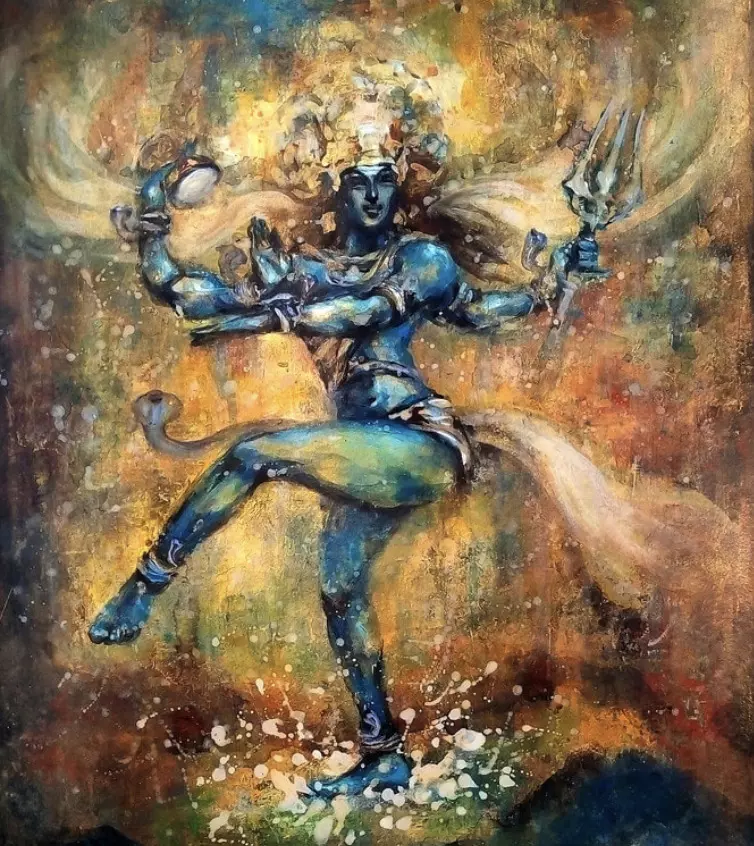
In a world shaped by AI, climate anxiety, and rapid change, Hindu gods remain deeply relevant, not as relics of faith, but as living symbols. Reinterpreted across philosophy, leadership, ecology, and mental well-being, these ancient deities continue to offer flexible, timeless frameworks for navigating modern life.
In an era dominated by artificial intelligence, climate anxiety, geopolitical uncertainty, and relentless digital acceleration, ancient belief systems might appear out of place. Yet, across India—and increasingly across the world—millions continue to draw meaning from Hindu gods whose origins stretch back thousands of years. Far from fading into mythology, these deities are being reinterpreted, debated, digitized, and rediscovered, offering philosophical frameworks that speak directly to modern dilemmas of identity, ethics, sustainability, and mental well-being.
Hinduism, unlike many structured religions, does not revolve around a single prophet or doctrine. Instead, it presents a vast civilizational worldview in which gods are not merely objects of worship but symbolic representations of cosmic principles and human aspirations. In today’s context, their relevance lies less in ritual alone and more in the ideas they embody.
A Living Tradition, Not a Frozen Past
Hindu gods are often misunderstood as static idols from an ancient past. In reality, they form part of a living, evolving tradition. Each generation reinterprets them based on its social, political, and technological environment. From Vedic hymns to temple sculptures, from Bhakti poetry to Bollywood, and now from social media reels to digital art NFTs, these deities continue to adapt.
This adaptability may explain Hinduism’s endurance. Rather than demanding uniform belief, it allows plurality—multiple gods, multiple philosophies, and multiple paths to meaning. In a modern world increasingly skeptical of rigid ideologies, this flexibility resonates strongly.
Brahma, Vishnu, and Shiva: The Cosmic Cycle and Modern Balance
At the heart of Hindu cosmology lies the Trimurti—Brahma the creator, Vishnu the preserver, and Shiva the destroyer. Together, they represent the cyclical nature of existence: creation, maintenance, and transformation.
In modern terms, this triad mirrors life cycles in technology, business, and even personal growth. Startups are born, scale, and eventually pivot or dissolve. Careers are built, sustained, and reinvented. Shiva’s destruction is not nihilistic; it is regenerative, making space for renewal.
Management thinkers and leadership coaches increasingly reference this philosophy to explain change management and innovation. The lesson is simple but profound: resisting change leads to stagnation, while conscious transformation enables progress.
Vishnu and the Avatar Concept: Ethics in Action
Vishnu’s defining feature is his avatars—divine incarnations who descend to restore balance whenever righteousness (dharma) is threatened. From Rama to Krishna to Buddha, each avatar addresses a crisis specific to its era.
In the modern world, the avatar concept offers a powerful ethical metaphor. It suggests that moral responsibility is contextual, not abstract. One cannot apply the same solutions to every crisis; ethics must respond to circumstances.
Krishna’s role in the Bhagavad Gita—guiding a conflicted Arjuna on a battlefield—has found renewed relevance in corporate boardrooms, therapy sessions, and leadership seminars. His message emphasizes duty without attachment, action without ego, and purpose beyond personal gain—ideas that resonate deeply in an age of burnout and moral ambiguity.
Shiva: The God of Paradox and Inner Freedom
Perhaps no deity embodies modern contradictions better than Shiva. He is both ascetic and householder, destroyer and benefactor, meditative yogi and cosmic dancer (Nataraja).
In a time when people struggle to balance productivity with mental health, ambition with peace, Shiva represents integration rather than escape. His meditative form aligns with the global rise of yoga and mindfulness, practices now backed by neuroscience and psychology.
Meanwhile, Nataraja’s cosmic dance symbolizes the rhythm of the universe—constant motion governed by underlying order. Scientists and physicists have famously drawn parallels between this imagery and subatomic particle movement, reinforcing the idea that ancient symbolism can coexist with modern science.
Durga and Kali: Feminine Power in a Gender-Conscious Era
As global conversations around gender equality intensify, Hindu goddesses are being revisited with fresh eyes. Durga represents strength, courage, and moral clarity, while Kali embodies raw truth, time, and the destruction of illusion.
Unlike traditions where divinity is predominantly male, Hinduism places the Shakti—the feminine cosmic energy—at the center of creation. In this worldview, power is not supplementary but foundational.
Modern feminist scholars and artists increasingly interpret Kali as a symbol of resistance against oppressive norms. Her fearsome appearance challenges conventional ideas of beauty and submission, asserting that empowerment does not require palatability.
Durga’s annual worship during Navaratri has also evolved into a cultural platform addressing social issues—from women’s safety to environmental responsibility—demonstrating how ritual can intersect with activism.
Ganesha: Problem-Solving for the Startup Generation
No deity has crossed into modern professional spaces as seamlessly as Ganesha, the elephant-headed god of beginnings and obstacle removal. His image adorns startup offices, exam halls, and even digital apps.
Symbolically, Ganesha represents strategic intelligence: a large head for thinking, big ears for listening, and a small mouth for measured speech. In a hyper-competitive, decision-heavy world, these traits are aspirational.
Importantly, Ganesha’s broken tusk—used to write the Mahabharata—signifies sacrifice for knowledge. In an age obsessed with instant success, this reminder of patience and perseverance feels particularly relevant.
Rama: Leadership, Ethics, and Public Scrutiny
Rama, the hero of the Ramayana, has long been upheld as an ideal king and moral figure. In modern India, his symbolism is both revered and contested, reflecting broader debates around governance, nationalism, and ethics.
Beyond political interpretations, Rama’s relevance lies in the concept of Maryada Purushottam—one who upholds ethical boundaries even at personal cost. In a world of constant public scrutiny, social media outrage, and blurred moral lines, this ideal provokes difficult but necessary questions: Is ethical leadership always comfortable? And should personal sacrifice be expected of public figures?
These debates underscore how ancient narratives continue to influence contemporary moral discourse.
Gods in the Digital Age
Hindu gods have not been left behind by technology. Virtual temple tours, online darshan, devotional apps, AI-generated chants, and Instagram art pages have transformed worship into a hybrid physical-digital experience.
Critics argue this risks commercialization, while proponents see it as democratization—making faith accessible to younger, global audiences. What is undeniable is that these gods are no longer confined to temples; they live in algorithms, timelines, and digital communities.
Environmental Consciousness and Sacred Ecology
Many Hindu gods are deeply connected to nature—rivers as goddesses, trees as sacred, animals as divine companions. Ganga, Yamuna, Nandi, and even the peepal tree reflect an ecological worldview where nature is not a resource but a relative.
As climate change accelerates, these ideas are gaining renewed attention. Environmentalists argue that spiritual reverence for nature can complement scientific conservation efforts by fostering emotional and cultural responsibility.
Faith as Philosophy, Not Escape
In the modern world, Indian gods are increasingly interpreted less as miracle-workers and more as philosophical archetypes. They offer narratives for resilience, balance, justice, and self-realization.
For a generation navigating uncertainty, these deities provide something rare: meaning without rigidity. They do not demand blind belief but invite reflection.
Ancient Gods, Contemporary Mirrors
Indian gods endure not because they resist modernity, but because they absorb it. They function as mirrors—reflecting human fears, hopes, contradictions, and aspirations across time.
In a world searching for grounding amid rapid change, their continued relevance suggests a powerful truth: progress does not always require abandoning the past. Sometimes, it means learning how to read it anew.





