

Why does Netflix want to buy Warner Brothers? To copy, not kill, traditional TV
Initial responses – and passionate outcries – have largely centered on fears over job cuts, subscription fee rises, anti-trust concerns regarding the increased market share either bid would create, and the potential negative impact that Netflix's acquisition might have on the future of the film industry
Why does Netflix want to buy Warner Brothers? To copy, not kill, traditional TV
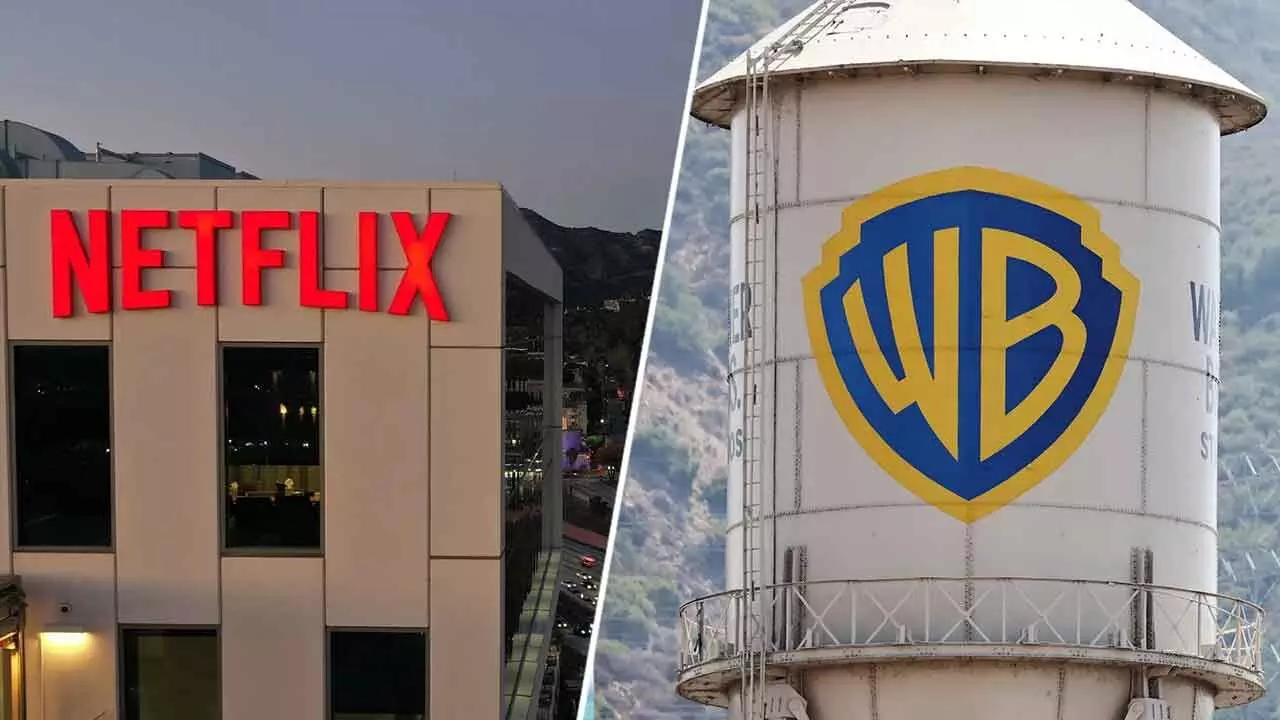
The recent news that Netflix has agreed to buy part of Warner Brothers Discovery (WBD) for $ 83 billion (£61.8 billion), followed by Paramount Global's hostile counterbid to acquire WBD in its entirety for $108.4 billion (£81 billion), has triggered shockwaves through Hollywood and the wider entertainment industry.
Initial responses – and passionate outcries – have largely centered on fears over job cuts, subscription fee rises, anti-trust concerns regarding the increased market share either bid would create, and the potential negative impact that Netflix's acquisition might have on the future of the film industry.
While these issues are no doubt important, one aspect of the Netflix deal has been relatively overlooked: the streamer's decision to cut out Discovery's portfolio of cable channels from its agreed acquisition of WBD. But this element of the deal is significant for what it reveals about the current state, and future, of the television industry.
Netflix's decision to excise Discovery's cable channels from the agreement indicates its desire to avoid ownership of the legacy TV infrastructure of broadcast, cable and satellite television. It also reflects the broader trend of linear TV businesses becoming less attractive to media corporations as audiences continue to migrate online.
At first glance, Netflix's exclusion of Discovery seems to confirm what we've been told for over a decade: streaming is killing traditional TV. Since launching House of Cards in 2013, Netflix has cultivated an image as television's great disruptor, a tech company that rendered the old broadcast model obsolete.
What's more, this is a reputation that journalistic and scholarly debate has often burnished. But as we argue in our new book, Television Goes Back to the Future: Rethinking TV's Streaming Revolution, this narrative of revolution is overstated and oversold. Beneath the rhetoric, streamers have persistently adopted, adapted, and often directly copied the conventions of legacy television.
The Netflix-WBD deal is no exception to this trend. Netflix's own announcement celebrates combining its “innovation” with Warner Bros' “century-long legacy of world-class storytelling”. Yet in potentially acquiring HBO, Netflix is set to buy the very cable TV innovator it originally modelled its prestige drama strategy on. This deal, then, represents less of a break from television history than prevailing narratives suggest.
Back to the evergreen future
This is evident in the rationale underpinning Netflix's aims to acquire WBD's vast back catalogue of film and television. For decades, channels like TBS, TNT, and in the UK, Gold and Dave, have built their business models on syndicated repeats of evergreen programming, such as studio sitcoms and police procedurals. Streaming platforms have adopted the same approach.
For example, both Suits and Lost recently became streaming hits years after their original linear TV runs ended. When Netflix UK recently announced Friends would be leaving the platform at the end of the year, subscribers responded with uproar, revealing just how much “reruns” matter to streaming audiences.
The Warner catalogue – which includes Friends – offers Netflix a ready-made library to meet this demand. Amazon's $ 8.5 billion purchase of MGM in 2022 reflected a similar calculation, with the studio's library alone valued at $ 3.4 billion.
What this tells us is that the film and TV back catalogue, long the foundation of cable television, has become equally foundational to streaming. Should the Netflix-WBD deal succeed, it would represent another step in what industry observers call “the great rebundling”.
Under the American cable model that solidified in the 1980s, viewers pay a monthly fee for a large package of channels rather than selecting them individually.
(Authors are from University of Salford)





