

Rajinikanth at 75: How the Superstar Continues to Belong to the Common Man
Rajinikanth turns 75, celebrating five decades of iconic style, mass appeal and unmatched stardom, proving he still remains the superstar of the common man.
Rajinikanth at 75: Celebrating five decades of unmatched stardom and mass legacy.
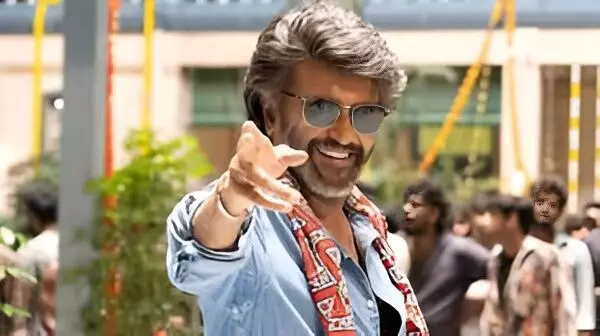
As Rajinikanth turns 75, the question is no longer how big he is, but how he has managed to remain this big, this relevant and still relatable for five decades. For millions, “Thalaivar” is not merely a title — it is an emotion, a lived experience shaped by struggle, style, humility and resilience.
A Journey from the Margins
The epic tale of Rajinikanth in the film world was not heroism first of all. The 1970s era initiated the journey of Rajinikanth as a complex and very interesting opponent through the films like Apoorva Raagangal, Moondru Mudichu, and 16 Vayathinile who was hard to decipher and incredibly engaging. The line he became most famous for during that period “Idhu eppadi irukku?” was not as confident; it was more like a challenge - a promise that he would not be put into a box.
These roles shaped him. They gave him emotional depth — a mixture of anger, arrogance, vulnerability and undeniable charisma. He played the villain, but audiences couldn’t look away.
By the late ’70s, the transition began. With Bairavi, Murattu Kaalai, Billa and Aarilirunthu Arubathu Varai, Rajinikanth moved to full-fledged hero roles while keeping his rugged realism intact. This blend of earthiness and attitude laid the foundation for the “Superstar” phenomenon.
The Icon of Style
Rajinikanth changed the definition of stylishness in the films. His signature movements like smoking flipping, throwing looks up, and wrapping shawls with style were not just tricks; they were projections of one's character. His well-known dialogue from Padayappa—“En vazhi, thani vazhi”—wasn't just a phrase he lived by but one he shared with society: his path would forever be the one he chose.
His evolving wardrobe mirrored his evolution:
The 1970s showcased the working-class simplicity.
The ’80s ushered in urban cool — jackets, glares, denim, cigarette flicks.
The ’90s saw him blend rural authenticity with iconic mass style in films like Muthu, Annamalai and Baashha.
The 2000s brought grandeur — Sivaji’s flashy suits and Enthiran’s futuristic designs.
Recent films like Kabali, Kaala, Petta and Jailer embraced earthy tones, power dressing and quiet intensity.
These looks didn’t stay on screen. They became a part of everyday India — college corridors, bus stands, festival crowds. With Coolie, the phenomenon is alive again.
A Hero for the Common Man
Rajinikanth’s most iconic films carry one message: Anyone can rise. Anyone can fall. Anyone can fight back.
Baashha's dangerous past auto driver, Annamalai's betrayed friend who reconstructs his life, and Muthu's ordinary man who turns into a king — these characterizations replied as Rajini lived through the same arc in real life. His journey from bus conductor to Superstar made him a person, an inspiration, and a friend.
His dialogue from Annamalai sums up his work ethic:
“Naan solrathaiyum seiven, sollathathayum seiven.”
(I’ll do what I say — and also what I don’t.)
To millions of middle-class youth, he represented possibility.
The Risk-Taker
Contrary to the belief that he always played safe, Rajinikanth’s filmography is filled with bold choices:
Sivaji tackled corruption with Shankar-scale spectacle.
Enthiran and 2.0 redefined Indian sci-fi.
Baba combined spirituality and commercial cinema.
Chandramukhi revived the horror-comedy blockbuster era.
Kabali and Kaala reflected socio-political themes.
Kochadaiiyaan attempted motion-capture before India was ready.
He may not experiment often, but when he does, he pushes boundaries.
The Comeback Machine
Rajinikanth’s career has seen its highs and lows. But he has always returned stronger.
Baba faltered; Chandramukhi soared.
Kochadaiiyaan and Lingaa disappointed; Kabali electrified global audiences.
After dips, Petta, Annaatthe, and Jailer reminded everyone why he’s still the box-office emperor.
His line from Muthu remains timeless:
“Naan eppo varuven, epdi varuvennu yarukkum theriyathu... aana vara vendiya nerathula varuven.”
(No one knows when or how I’ll return, but I will return when the time is right.)
The Man Behind the Myth
Off-screen, Shivaji Rao is strikingly different from Rajinikanth the Superstar:
Soft-spoken, simple, grounded.
Walks into events in a kurta and slippers.
Discourages smoking despite once being known for on-screen cigarette flicks.
Comfortable stepping away from the spotlight, even laughing at his own legend.
He once said he had a “Duryodhana moment” — when he realised the importance of doing everything differently, with intention. His walk, his head tilt, his smile — all were crafted, yet felt instinctive.
Thalaivar at 75
Today, Rajinikanth is more than a film star. He is:
A cultural force
A generational bridge
A symbol of aspiration
A phenomenon that refuses to age
With Coolie turning theatres into carnival grounds and Jailer 2 already generating buzz, Rajinikanth continues to open films like a man in his 30s, not 70s.





